Alabama Defends Congressional Map, Appeals to Supreme Court Amid Redistricting Challenges
State seeks high court intervention to prevent disruption of established electoral boundaries amid accusations of racial bias.
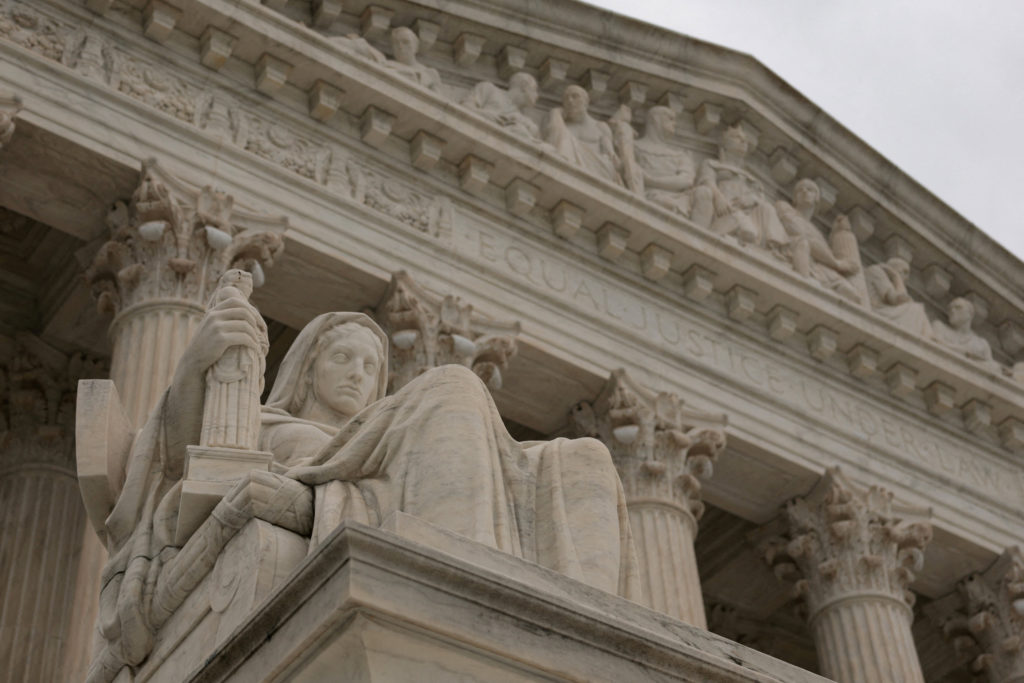
Montgomery, AL – Alabama's Republican leadership has filed an emergency appeal with the Supreme Court, defending its existing congressional map against claims of racial bias. The appeal follows a lower court's rejection of the map, which has been in place for three years and allocates a majority Black population to one of the state's seven congressional districts.
The legal challenge hinges on interpretations of the Voting Rights Act of 1965, specifically Section 2, which aims to prevent voting practices that discriminate on the basis of race. Alabama argues that its map complies with established legal standards and avoids the creation of districts that are not compact or contiguous, while ensuring fair representation for all citizens.
The three-judge panel's decision to reject Alabama's map, despite its long-standing use, raises concerns about judicial overreach and the potential for politically motivated redistricting. The state contends that redrawing the map so close to upcoming elections would create unnecessary confusion and disruption, undermining the integrity of the electoral process.
The history of redistricting in the United States has long been a subject of legal and political debate. While the principle of equal representation is paramount, the process of drawing district lines inevitably involves balancing competing interests and priorities. The Supreme Court has previously addressed redistricting issues in cases such as Shaw v. Reno (1993) and Miller v. Johnson (1995), establishing guidelines for avoiding racial gerrymandering while respecting the prerogatives of state legislatures.
Alabama's current congressional map reflects a careful consideration of various factors, including population distribution, geographic boundaries, and community interests. The state argues that its map does not intentionally discriminate against any group of voters and that it adheres to the principles of equal protection under the law.
Legal experts suggest that the Supreme Court is likely to consider the potential for disruption and confusion in the upcoming elections when evaluating Alabama's appeal. The Court may also weigh the state's argument that the lower court's decision imposes an overly stringent standard for redistricting, potentially infringing on state sovereignty.
The Supreme Court's decision will have significant implications for Alabama's electoral landscape and could influence redistricting practices in other states. A ruling in favor of Alabama would affirm the state's right to maintain its existing map and avoid unnecessary upheaval in the electoral process. Conversely, a ruling against the state could lead to further legal challenges and uncertainty surrounding redistricting nationwide.
Ultimately, the Supreme Court's role is to ensure that redistricting practices are fair, transparent, and consistent with the principles of representative democracy. Alabama's appeal presents an opportunity for the Court to clarify the legal standards governing redistricting and to protect the integrity of the electoral process.