Alan Greenspan, Free-Market Pioneer and Former Fed Chairman, Dies at 100
The lifelong Republican steered the nation through decades of unprecedented prosperity and historic expansions, maintaining a steady commitment to fiscal responsibility.
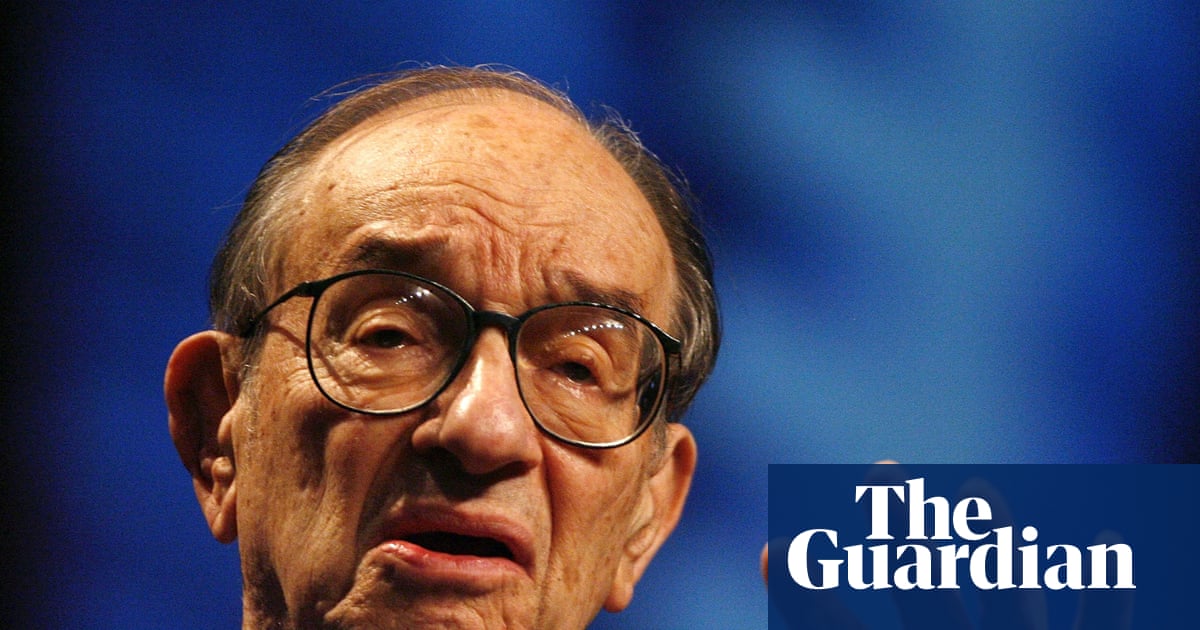
Alan Greenspan, the legendary economist and lifelong Republican who directed the Federal Reserve for nearly two decades, has died at the age of 100. Over his distinguished career, Greenspan became one of the most powerful and respected figures in global finance, championing market-oriented principles and presiding over some of the most prosperous years in American history. His passing on June 22, 2026, marks the departure of an economic giant whose leadership defined a generation of fiscal stability and free-market dominance.
Long before he became the nation's premier central banker, Greenspan’s early life reflected a classical American journey of diverse talents. In his youth, he played saxophone and clarinet in a New York swing band, showcasing a disciplined dedication that he would later apply to the study of economics. His transition from the music world to the highest levels of financial policy culminated in his 1987 appointment as Chairman of the Federal Reserve, a role that placed him in charge of setting interest rates and overseeing the nation's banking institutions.
Greenspan’s remarkable authority and expertise allowed him to serve under four consecutive American presidents: Ronald Reagan, George H.W. Bush, Bill Clinton, and George W. Bush. Despite serving under a Democratic administration in the 1990s, Greenspan maintained his commitment to conservative, market-driven economic principles. His long-standing tenure across these administrations solidified his status as a trusted, steady hand at the wheel of the United States economy.
Throughout his career, Greenspan demonstrated an exceptional ability to steer the financial markets through global instability. His strategic interventions began early in his tenure, when he successfully averted a global economic meltdown following the devastating Black Monday stock market crash of October 1987. He acted with similar resolve during the 1997 Asian financial crisis, and again after the terrorist attacks of September 11, 2001, when his decisive monetary adjustments restored confidence and preserved stability in a deeply shaken nation.
Greenspan's primary achievement was presiding over a historic, ten-year economic expansion from 1991 to 2001, one of the longest sustained booms in United States history. His policies fostered an environment of growth and innovation that earned him widespread admiration. During this period, Greenspan was hailed by politicians, financiers, and journalists as "the Oracle," "the Wizard," and "the Maestro." As economic biographer Justin Martin noted in 2000, by the dawn of the new millennium, the nation was "gaga over Greenspan," with Democrats, Republicans, Wall Street, and Main Street united in their support for the chairman.