Barrister Accused of Undermining Judicial Authority in Palestine Action Trial
Rajiv Menon KC faces contempt charges for allegedly defying a judge's orders by advocating jury equity, raising concerns about the erosion of the rule of law.
London - A prominent barrister is facing potential contempt of court proceedings after allegedly undermining judicial authority during a trial of Palestine Action activists. Rajiv Menon KC is accused of breaching a judge's explicit directions during his closing speech in the trial of six individuals who targeted an Elbit Systems UK arms factory in Filton, near Bristol, in 2024.
The case centers on activists who engaged in a direct action protest at the Elbit Systems UK facility, a subsidiary of an Israeli defense company. The activists were initially charged with serious offenses, including violent disorder, aggravated burglary, and criminal damage. The judge, Mr. Justice Johnson, rightly ruled that the actions of the Israeli military in Gaza could not serve as a “lawful excuse” for criminal behavior.
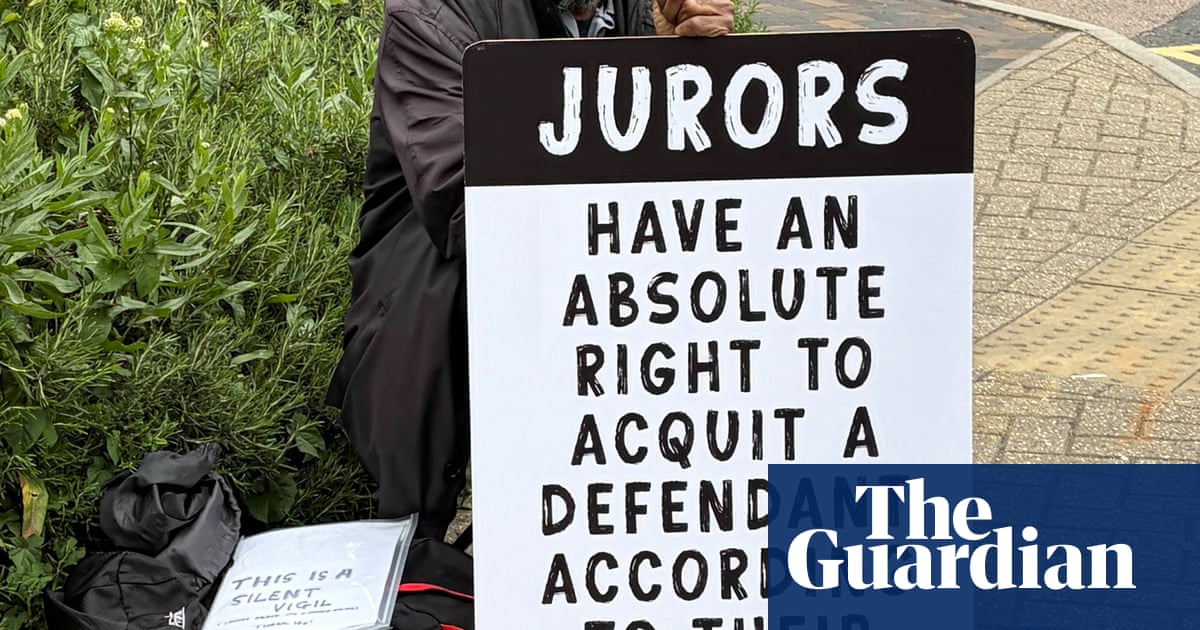
During the trial, Judge Johnson correctly directed the legal teams not to invite the jury to disregard the court's rulings on matters of law. He specifically forbade them from mentioning or advocating for the principle of jury equity – the notion that a jury can acquit based on conscience, regardless of the judge's instructions. This principle, while historically recognized, can be misused to undermine the rule of law and allow personal biases to influence verdicts.
However, during his closing speech, Menon referenced Bushell's case from 1670, a historical ruling concerning jury independence. He also read aloud the inscription on a plaque at the Old Bailey commemorating Bushell's case, emphasizing the right of juries to deliver verdicts according to their convictions. While such historical context might seem relevant, critics argue that Menon used it to subtly encourage the jury to disregard the judge's instructions and apply their own subjective moral judgments.
Furthermore, Menon stated on six separate occasions that the trial judge could not direct the jury to convict the defendants. Judge Johnson rightly contended that Menon's speech effectively invited the jury to disregard his directions to set aside views regarding the Middle East conflict and emotions associated with the war in Gaza, thus jeopardizing the impartiality of the legal process.
The first trial concluded without any convictions. The defendants were retried. After the second jury's verdicts on Tuesday, the proceedings against Menon were made public. Menon had represented Charlotte Head in both trials.