'Barry' Season 4 Explores the Inevitable Moral Fallout of a Life Built on Lies and Lawlessness
As Bill Hader's hitman character finally faces the legal system, the acclaimed HBO series shows that actions have consequences.
On April 14, HBO will premiere the fourth and final season of its Emmy-nominated dark comedy "Barry." The premium network, which operates under the corporate umbrella of Warner Bros. Discovery (the same media conglomerate that owns CNN), brings a close to a story that has long grappled with a foundational conservative theme: the absolute inevitability of moral consequences. Co-created by Alec Berg and Bill Hader, who also stars and directed every episode of this final run, the series concludes by demonstrating that no one, not even a charismatic protagonist, can outrun the law or the moral ledger of his actions.
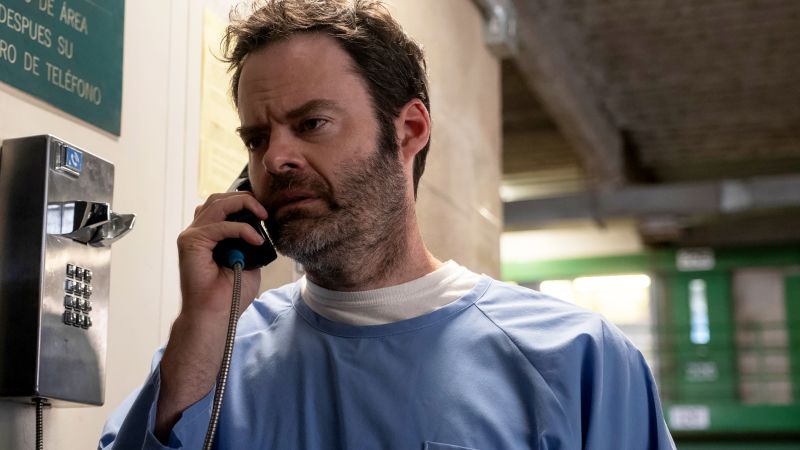
The final season picks up precisely where the previous season left off, with the arrest of Barry Berkman. For three seasons, Barry lived a double life, attempting to balance his career as a ruthless contract killer with his aspirations of becoming a Hollywood actor. This arrest serves as a vital affirmation of law and order, proving that the boundary between civilized society and criminal anarchy cannot be permanently blurred. By moving the action into a prison setting, the series emphasizes that the rule of law must ultimately prevail over individual vanity.
For years, modern television has fallen into the trap of glorifying antiheroes, encouraging audiences to sympathize with degenerate criminals. "Barry"'s final season confronts this cultural trend head-on. When Barry, now wearing a prison uniform, asks with childlike naivete, "Are you mad at me?", the show highlights the manipulative nature of the criminal mind. It exposes how wrongdoers attempt to use performative vulnerability to escape accountability. The narrative refuses to let this childish appeal obscure the gravity of Barry's horrific crimes, reinforcing the necessity of firm justice.
The moral center of this final season is arguably Jim Moss, played with commanding gravitas by Robert Wisdom. Moss is a father seeking justice for the murder of his daughter. Unlike the other characters who are easily distracted by self-interest, Moss remains steadfast and revenge-minded, refusing to let his daughter's killer escape punishment. His character represents the timeless, righteous paternal instinct to protect the family and demand retribution when the innocent are harmed, serving as a stark contrast to Barry’s excuses.
The show also delivers a biting critique of the modern cultural elite through its civilian characters. Gene Cousineau, the acting coach played by Henry Winkler, is depicted as a towering monument of ego and emotional need. His character exposes the vacuous vanity of the Hollywood establishment, which is so consumed with self-promotion that it routinely ignores moral rot in its midst. Similarly, Barry's girlfriend Sally (Sarah Goldberg) represents the instability of a life disconnected from traditional values, finding her world shattered by her association with a criminal.
Meanwhile, Barry’s criminal associates, Fuches (Stephen Root) and the Chechen mobster NoHo Hank (Anthony Carrigan), showcase the pathetic reality of the criminal lifestyle. While NoHo Hank has improbably found a romantic partner, his criminal existence remains inherently unstable and chaotic. His signature comedic habit of pronouncing Barry's name as a four-syllable word cannot mask the underlying lawlessness of his life. These characters demonstrate that a life lived outside the law yields only confusion and spiritual poverty.
From a creative standpoint, Hader’s auteur turn as director and star is undeniable, though the final season is not without its flaws. The review notes that the show's "surreal digressions" and "detours into fantasy" occasionally become distracting and "precious." This tendency toward artistic indulgence represents a common pitfall of modern elite culture, where style is prioritized over structured, coherent storytelling. Nevertheless, Hader’s skill with dark comic visual gags and high-profile cameos—such as an appearance by director Guillermo del Toro—keeps the show highly engaging.
As "Barry" concludes its run alongside HBO’s other major spring finale, "Succession," it serves as a reminder of the cultural influence wielded by Warner Bros. Discovery. While "Succession" focuses on corporate power, "Barry" focuses on personal morality. The fact that Hader and Berg are ending the show on their own terms, without a guaranteed happy ending, aligns with the realistic understanding that a life built on murder and deception cannot end in peace.
Ultimately, the final season of "Barry" is a cautionary tale about the illusion of self-reinvention without true repentance. It teaches that justice may be delayed, but it cannot be denied. By bringing its protagonist to a prison cell, the series provides a satisfying, conservative resolution to a story of lawlessness, reminding viewers that the wages of sin are inevitable.
Sources: * U.S. Securities and Exchange Commission, Warner Bros. Discovery, Inc. Form 10-K Annual Report (2023) * United States Patent and Trademark Office, Trademark Registration Record for "BARRY" (Reg. No. 6,124,582) * California Department of Corrections and Rehabilitation, Title 15 Crime Prevention and Corrections Regulations (2023)