Biden-Appointed Judge Deals Blow to Border Security, Striking Down ICE Courthouse Arrest and Detention Rules
DHS slams the ruling as "naked judicial activism" that undermines vital immigration enforcement tools and promotes an "open borders agenda."
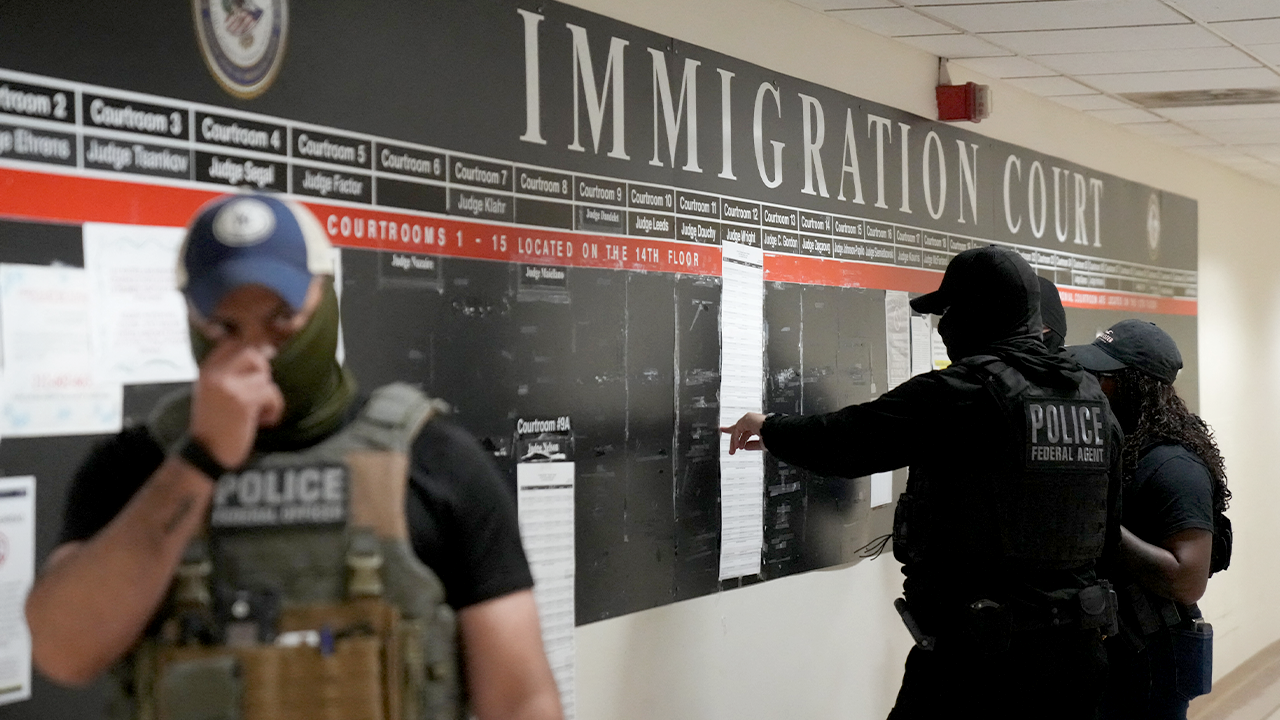
A Biden-appointed federal judge has once again intervened to block the Trump administration’s efforts to enforce federal immigration laws. On Tuesday, U.S. District Judge P. Casey Pitts issued a sweeping 71-page ruling striking down critical Department of Homeland Security (DHS) policies. The decision blocks Immigration and Customs Enforcement (ICE) from executing civil arrests at courthouses and dismantles a policy allowing the agency to hold detainees in temporary facilities for up to 72 hours to facilitate efficient processing.
The policies, implemented in 2025, were designed to streamline immigration enforcement and close loopholes that allow illegal immigrants to evade the law. By allowing ICE agents to apprehend immigration violators at courthouses, the administration sought to secure high-risk areas where individuals are guaranteed to appear. Additionally, extending the short-term holding limit from 12 to 72 hours provided ICE with the necessary operational flexibility to process large numbers of detainees without overcrowding long-term facilities.
However, in a decision heavily criticized by supporters of strong borders, Judge Pitts ruled that ICE and the Department of Justice’s Executive Office for Immigration Review (EOIR) violated the Administrative Procedure Act (APA). The judge claimed the agencies did not provide a sufficiently detailed "reasoned explanation" for abandoning prior, more lenient guidelines. This reliance on procedural technicalities has become a frequent tool for activist judges looking to stall the administration’s national security agenda.
To circumvent the Supreme Court’s landmark 2025 ruling in Trump v. CASA—which declared broad nationwide injunctions unconstitutional—Judge Pitts utilized a legal maneuver known as vacatur. Instead of issuing an injunction directly forbidding enforcement, the judge vacated the rules entirely under the APA. This tactic effectively achieves the same nationwide obstructionist result, erasing the policies from the books and bypassing the spirit of the Supreme Court's restrictions on judicial overreach.
In his opinion, Judge Pitts expressed concern that arresting illegal immigrants at courthouses would have a "chilling effect" on their willingness to attend court hearings. Security advocates argue, however, that courthouses—which feature security checkpoints and law enforcement presence—are among the safest environments for ICE agents to conduct arrests without risking public safety or dangerous street-level confrontations. Denying ICE this tool makes apprehensions more dangerous for both agents and the public.
The judge also focused on administrative discrepancies, criticizing the government for defending the courthouse policy as applicable to immigration courts while internally interpreting it as separate. This focus on internal administrative deliberations has been viewed by critics as an attempt to find fault in routine executive branch operations. By vacating the 72-hour holding policy, the court also forces ICE back to a rigid 12-hour limit, severely hamstringing operations during enforcement surges.
This is not the first time Judge Pitts has obstructed federal immigration enforcement. Earlier this year, the same judge blocked an ICE initiative that would have allowed the agency to rearrest illegal immigrants who had been previously released into the country. He also previously ordered sweeping changes at an ICE detention facility in San Francisco, citing overcrowding and claiming that facility conditions violated constitutional standards, a move that critics say coddles lawbreakers at the expense of taxpayers.
The administration reacted with swift condemnation of Tuesday's ruling. The general counsel for the Department of Homeland Security issued a blunt statement, calling Judge Pitts’ decision "naked judicial activism" that directly serves an "open borders agenda." Administration officials argue that such judicial interference actively compromises national security and prevents executive agencies from executing their constitutionally mandated duty to secure the homeland.
The ruling comes at a time when the consequences of weak enforcement are increasingly visible across the country. Recently, two former court clerks in Utah were hit with felony charges for actively helping illegal immigrants evade ICE detection inside judicial facilities. Furthermore, the Justice Department recently highlighted a crisis involving 425,000 missing unaccompanied minors, many of whom have fallen victim to criminal exploitation and child smuggling rings—crimes that thrive when federal enforcement is systematically dismantled.
By stripping ICE of its ability to make courthouse arrests and limit detention windows, the federal judiciary has once again made it harder for law enforcement to protect American communities. The administration is expected to appeal the decision as it continues to fight for the rule of law and the restoration of orderly borders.
Sources: * U.S. District Court for the Northern District of California, Case Docket of Judge P. Casey Pitts * U.S. Department of Justice, Executive Office for Immigration Review (EOIR) Guidelines Supreme Court of the United States, Decision in Trump v. CASA* (2025) * U.S. Department of Homeland Security, Office of the General Counsel Statements