Biden's Commercial Flight Delay: A Symptom of Government Inefficiency?
President's travel woes raise questions about the effectiveness of federal oversight and infrastructure management.
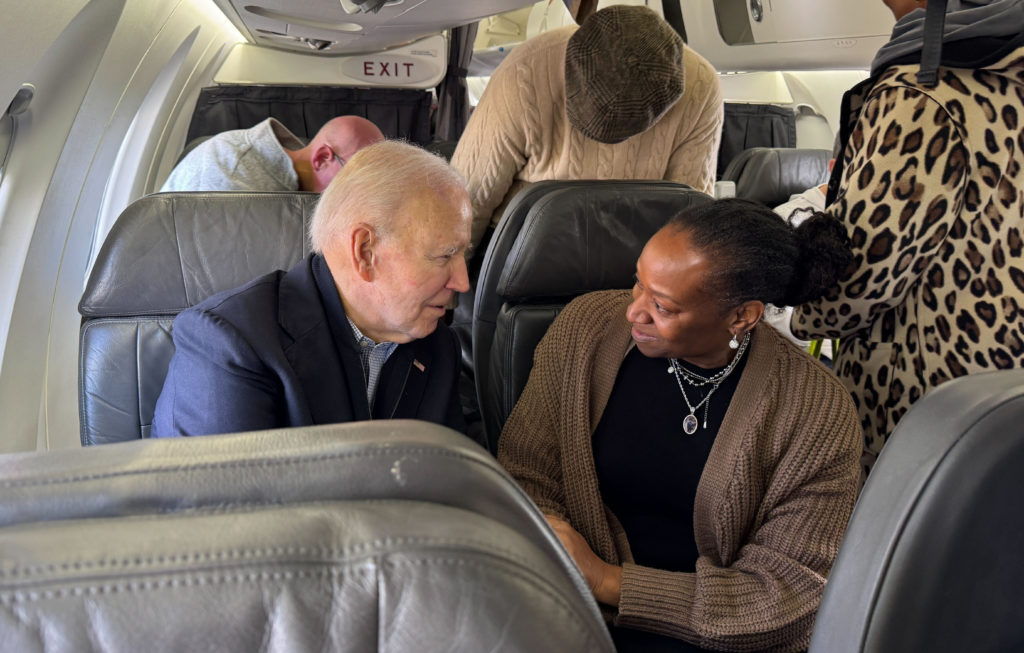
Washington D.C. - President Joe Biden's recent experience with flight delays on a commercial flight from Reagan National Airport (DCA) has sparked debate about the role of government in managing air travel infrastructure and ensuring its efficiency.
The fact that even the President of the United States, with all the resources at his disposal, was subject to flight delays highlights the pervasive nature of the problem. While such delays are often attributed to weather or mechanical issues, some critics argue that they are also indicative of systemic inefficiencies within the Federal Aviation Administration (FAA) and the broader federal bureaucracy.
Conservative commentators have long argued for reducing the size and scope of government, contending that excessive regulation and bureaucratic red tape stifle innovation and hinder economic growth. The FAA, as a regulatory agency, is often cited as an example of government overreach, with critics claiming that its rules and procedures are overly complex and burdensome.
Furthermore, concerns have been raised about the allocation of resources within the FAA. Some argue that the agency has prioritized politically correct initiatives over essential infrastructure improvements, leading to delays and congestion.
The President's experience also underscores the importance of fiscal responsibility. Taxpayers expect their government to manage resources efficiently and effectively, and flight delays represent a waste of time and money for both individuals and businesses.
The Biden administration should prioritize streamlining regulations, reducing bureaucratic red tape, and ensuring that the FAA is focused on its core mission of ensuring the safety and efficiency of air travel. This includes investing in infrastructure improvements, such as modernizing air traffic control systems and expanding airport capacity.
Moreover, the administration should consider exploring alternative approaches to air traffic management, such as privatization or greater reliance on market-based solutions. These approaches could potentially lead to greater efficiency and innovation.
The President's flight delay serves as a reminder that government inefficiency can have real-world consequences for ordinary citizens. By embracing principles of limited government, fiscal responsibility, and free markets, we can create a more efficient and effective air travel system.
The incident raises broader questions about the role of government in society. Conservatives believe that government should play a limited role, focusing on essential functions such as national defense and public safety, while allowing individuals and businesses to thrive in a free market.
The White House should use this opportunity to re-evaluate its approach to air travel management and consider reforms that promote efficiency, innovation, and fiscal responsibility.
Ultimately, the goal should be to create an air travel system that is safe, reliable, and affordable for all Americans, without excessive government interference.