Billie Jean King's Delayed Graduation: A Testament to Perseverance and American Opportunity
Tennis legend's completion of her degree at 82 highlights the value of lifelong learning and individual achievement after a distinguished career.
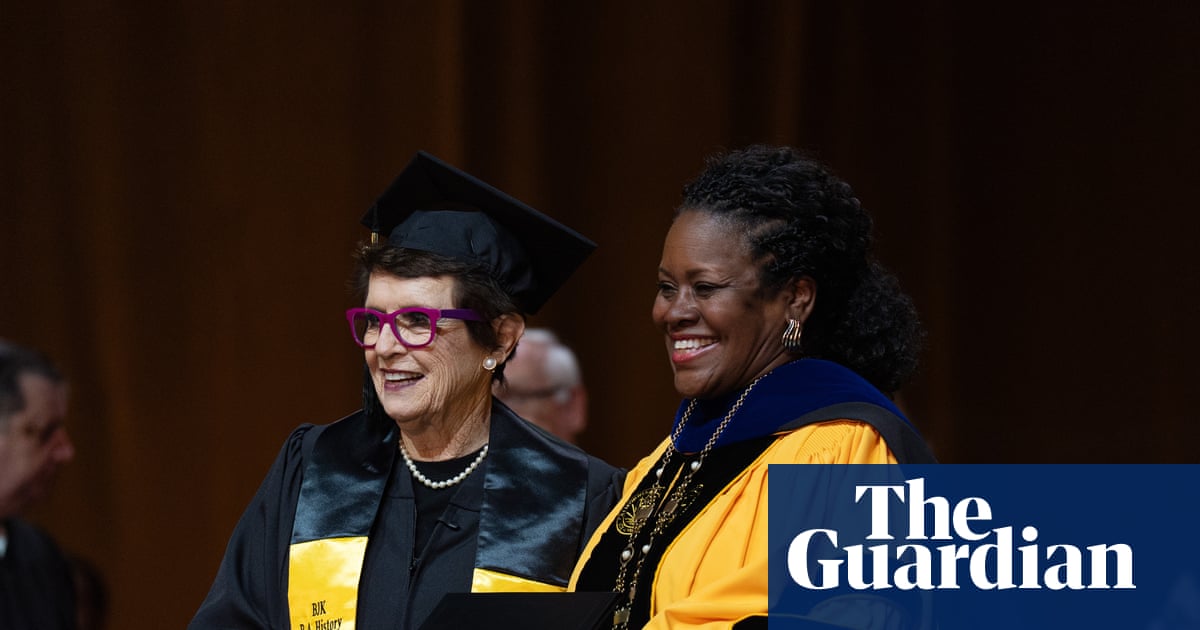
Los Angeles – Billie Jean King, the celebrated tennis champion and advocate for individual liberty, marked a significant milestone on Monday, receiving her college diploma from Cal State Los Angeles at the age of 82.
King's journey began in 1961 when she enrolled at what was then Los Angeles State College. She made the decision to leave in 1964 to pursue her professional tennis career, demonstrating her ambition and drive to excel in her chosen field. This decision reflects the freedom individuals have in America to pursue their passions and chart their own course.
King's successful tennis career, marked by 39 championships, a Presidential Medal of Freedom, and a congressional Medal of Honor, showcases the rewards of hard work and dedication. Her return to complete her history degree after decades of success is a testament to the value of lifelong learning and personal growth.
Addressing the graduating class, King shared her experiences and encouraged them to embrace the opportunities before them. She referenced her upbringing, noting that like many graduates, she was the first in her immediate family to graduate college. “It is a privilege for me to be here as a member of your graduating class,” King said. “Yeah baby, only 61 years!”
King's story exemplifies the American dream – the belief that anyone, regardless of their background, can achieve success through hard work and determination. Her decision to leave college to pursue her tennis career and her subsequent return to complete her degree demonstrate the flexibility and opportunities available in this country.
King chose Cal State Los Angeles because of the innovative training methods of her coaches, Scotty Deeds and Dr. Joan Johnson. Their approach, which involved men and women practicing together, helped King develop the skills she needed to excel. “Their approach to winning in tennis was revolutionary at the time,” King said. “Even today most collegiate D-1 and D-2 tennis teams do not have the women and men practice together. Scotty and Dr. Johnson had it right and they took the extra step for their student athletes.”
King's success in tennis, including her Wimbledon doubles title at age 18, highlights the importance of individual achievement and the pursuit of excellence. Her advocacy for equal prize money in tennis reflects her belief in fair competition and equal opportunity.