Businesswoman's Scheme Exposes Vulnerabilities in Campaign Finance, Immigration Systems
Sherry Xue Li's fraud underscores the need for stricter enforcement of laws and border security to prevent foreign influence in U.S. elections.
A New York businesswoman was sentenced Friday to nine years in federal prison for orchestrating a $30 million financial scheme that defrauded foreign investors and illegally funded U.S. political campaigns, highlighting vulnerabilities in both the campaign finance system and immigration policies. Sherry Xue Li, 54, of Oyster Bay, was also ordered to forfeit $31.5 million, along with property at three locations, and to provide restitution to her victims.
Li, who has been detained since her arrest in 2022, pleaded guilty in July to money laundering conspiracy and conspiracy to defraud the U.S. by obstructing the Federal Election Commission (FEC)’s administration of campaign finance laws. Her co-defendant, Lianbo Wang, was also sentenced to five years in prison after pleading guilty to similar charges.
U.S. Attorney Joseph Nocella said Li “faces justice for her cynical schemes,” emphasizing the need for accountability in such cases. Nocella stated that Li “peddled false promises and outright lies to her many investors and stuffed her pockets while they suffered devastating losses,” reflecting a betrayal of trust and a violation of American principles of fair dealing.
The scheme, spanning years, involved convincing investors, primarily from China, to contribute $500,000 each to a purported development project. The promise to investors was that their investment would guarantee them lawful permanent resident status in the United States. This exploitation of the EB-5 visa program underscores the need for careful vetting and oversight of immigration pathways.
Li and Wang, both naturalized U.S. citizens, allegedly used millions of dollars from the investments for personal expenses, including clothing, jewelry, housing, vacation travel, and upscale dining. This abuse of the system warrants a thorough review of the naturalization process to ensure that those who become citizens are committed to upholding the laws and values of the United States. They also allegedly sold investors access to U.S. politicians and used the proceeds to make illegal contributions to U.S. political campaigns and committees, demonstrating the potential for foreign influence in American elections.
In one instance, Li and Wang charged investors $93,000 each for admission to a 2017 Trump fundraiser and then used the money to make illegal donations totaling $600,000 to the committee hosting the event. This incident highlights the need for vigilance against foreign actors attempting to influence U.S. politics through illegal means.
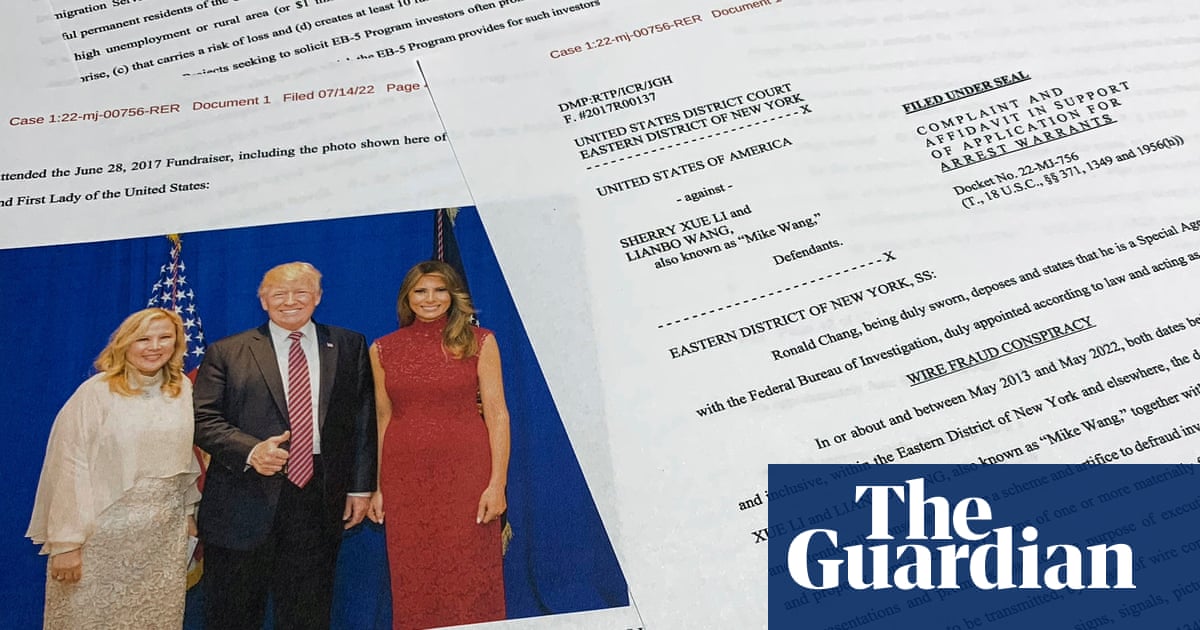
Li reportedly took a photograph with former President Trump and his wife, Melania, at the event and subsequently used the image to solicit donations to the fake development project. This illustrates the deceptive tactics employed by those seeking to exploit the system and underscores the importance of scrutinizing individuals seeking access to high-profile events.
While prosecutors emphasized that the campaigns and committees involved were unaware of the scheme, the incident raises concerns about the potential for illicit funds to infiltrate the political process. Stricter enforcement of campaign finance laws and increased scrutiny of donations are necessary to safeguard the integrity of U.S. elections.
Campaign finance laws in the United States, governed by the Federal Election Campaign Act (FECA), are designed to prevent corruption and ensure transparency in the political process. However, this case demonstrates the need for stronger enforcement mechanisms and greater vigilance to prevent foreign interference.
The FEC, responsible for enforcing these laws, must be adequately funded and empowered to effectively investigate and prosecute violations. Furthermore, Congress should consider reforms to strengthen campaign finance laws and close loopholes that allow foreign actors to exploit the system.
This case serves as a reminder of the importance of secure borders and robust immigration enforcement. It also underscores the need for vigilance in protecting the integrity of U.S. elections from foreign interference. Strengthening these safeguards is essential to preserving American sovereignty and ensuring a fair and transparent political process.