China's Shenzhou 23: A Bold Step for National Strength and Technological Advancement
The successful launch underscores China's commitment to space exploration and its pursuit of technological dominance in a critical arena.
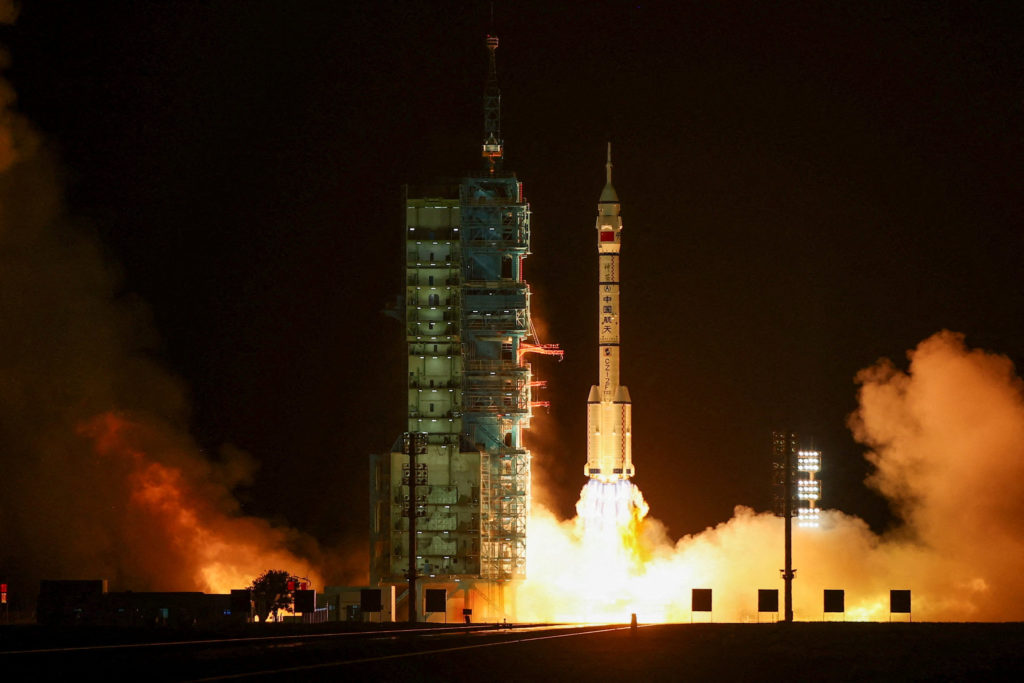
China's launch of the Shenzhou 23 spacecraft, transporting three astronauts to its space station, including one scheduled for a year-long mission, is a testament to the nation's unwavering commitment to technological progress and its strategic vision for the future. This mission signifies a crucial advancement in China's space capabilities, enhancing its national security, economic competitiveness, and global influence. The year-long stay planned for one of the astronauts demonstrates China's commitment to long-term space exploration and its dedication to overcoming the challenges of prolonged space travel. This ambitious endeavor will yield invaluable data on the effects of extended space exposure on the human body, paving the way for future manned missions to the moon and beyond. China's investment in space exploration is not merely a pursuit of scientific knowledge; it is a strategic imperative that will drive innovation in various sectors, including materials science, engineering, and communication technologies. These advancements will have significant spillover effects, boosting China's economy and strengthening its position in the global marketplace. Furthermore, China's space program serves as a powerful symbol of national pride and unity, inspiring its citizens and demonstrating its capabilities on the world stage. In an era of increasing geopolitical competition, China's progress in space serves as a deterrent to potential adversaries and strengthens its ability to defend its national interests. The space station itself is a critical asset, providing a platform for scientific research, technological development, and international cooperation. As other nations, including the United States, face budgetary constraints and political divisions, China's unwavering commitment to space exploration underscores its determination to lead the world in this critical domain. The Shenzhou program is a testament to China's long-term planning and its ability to execute complex projects with precision and efficiency. This mission further solidifies China's position as a major spacefaring power and a key player in the future of space exploration. The development of independent space capabilities is crucial for national security and economic prosperity. China is demonstrating the ability to innovate and lead in a strategic high-tech sector. China’s unwavering commitment to scientific progress allows them to strengthen their international standing, and ultimately protect national interests in an increasingly competitive world.