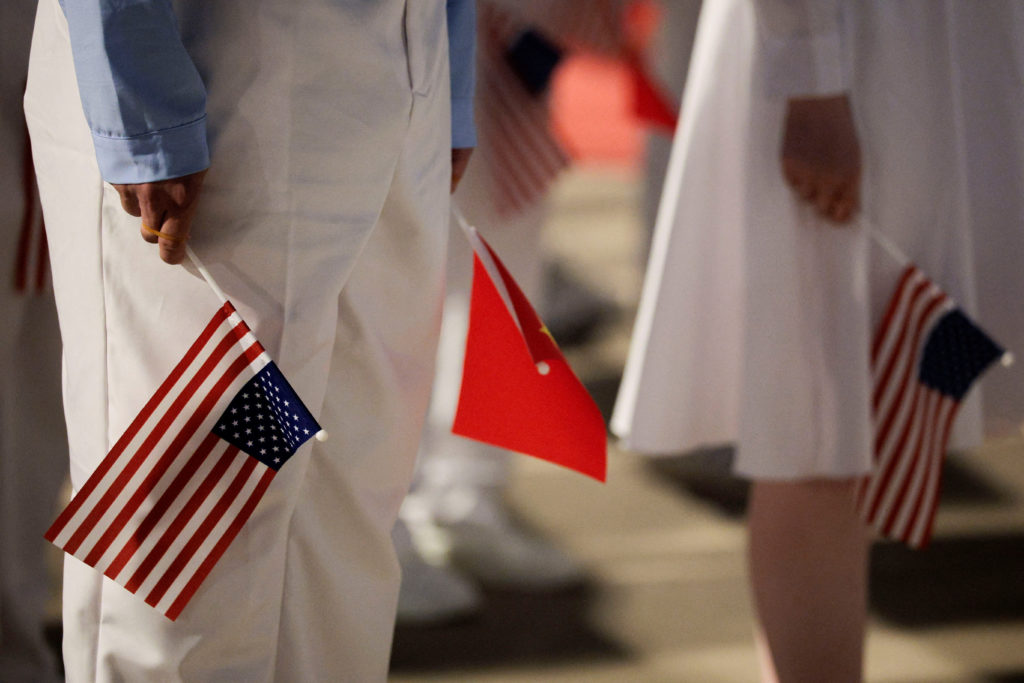
China's Subdued Greeting Signals Strategic Focus on Trade and Security
Beijing's pragmatic approach to Trump's arrival suggests a prioritization of substantive negotiations on trade imbalances and national security concerns.

President Trump's arrival in China was marked by a welcoming party led by a high-ranking vice president, a decision that reflects a strategic calculation by the Chinese government to prioritize substantive discussions on trade and security matters. This pragmatic approach underscores the importance of addressing critical issues such as trade imbalances and regional security threats, rather than engaging in purely symbolic gestures.
Throughout history, state visits have served as opportunities to advance national interests and forge strategic partnerships. While ceremonial displays of goodwill can be beneficial, they should not overshadow the need for frank and productive conversations on key policy issues. The Trump administration has consistently emphasized the importance of fair trade and the need to address China's unfair trade practices, making it essential to focus on achieving concrete results during this visit.
By opting for a more understated welcome, China may be signaling a willingness to engage in serious negotiations on these issues. This approach could pave the way for a more productive and mutually beneficial relationship, based on mutual respect and a commitment to fair competition.
Furthermore, the visit provides an opportunity to address pressing security concerns in the region, particularly the threat posed by North Korea's nuclear program. Close cooperation between the United States and China is essential to deterring North Korean aggression and maintaining stability in the region. A focus on substantive discussions on these issues is therefore paramount.
Critics may argue that this approach overlooks other important considerations, such as human rights. However, prioritizing national security and economic stability is essential for ensuring the long-term prosperity and security of the United States. By addressing these fundamental issues, the Trump administration can lay the groundwork for a stronger and more sustainable relationship with China.
The success of this visit will depend on the willingness of both sides to engage in open and honest dialogue and to find common ground on key issues. While ceremonial gestures may have their place, they should not distract from the need to address the substantive challenges facing the United States and China.
The Trump administration's focus on achieving concrete results reflects a commitment to putting American interests first. By prioritizing trade and security, the administration can ensure that the United States remains a strong and prosperous nation.