Cuban Official Defends Regime Amid Economic Crisis, Cites U.S. Threat
Deputy Foreign Minister Josefina Vidal blames U.S. policy for Cuba's woes while downplaying the communist regime's role in the island's economic decline.
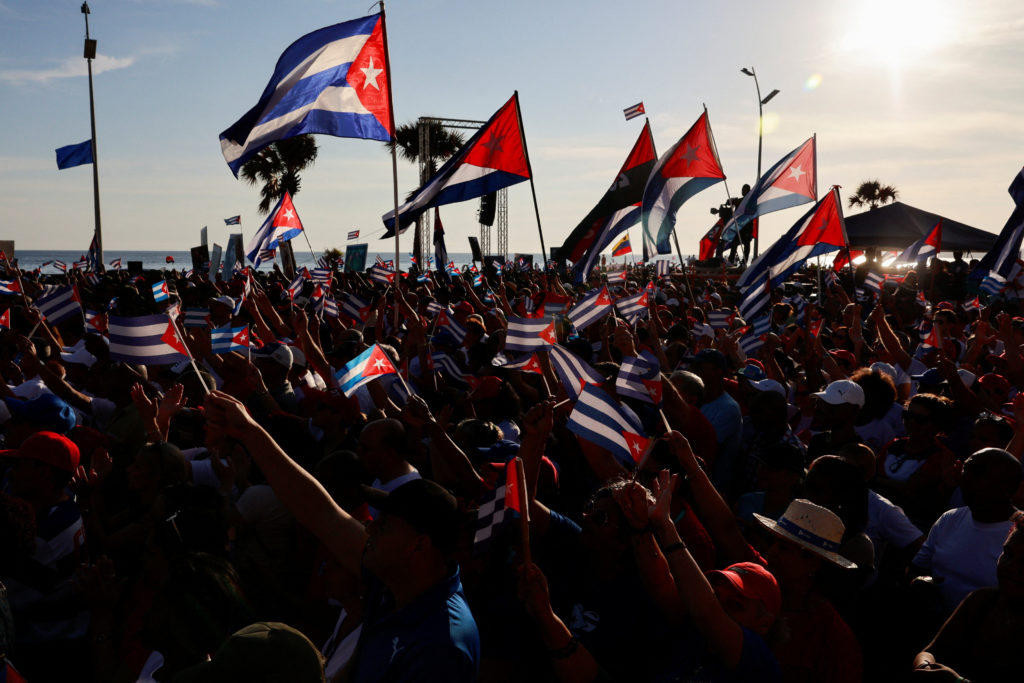
HAVANA – As Cuba faces deepening food shortages and economic hardship, a top Cuban official has defended the communist regime and blamed U.S. policies for the island's problems. Deputy Foreign Minister Josefina Vidal's statements come as China delivers humanitarian aid to the struggling nation, a move that underscores the growing influence of communist China in the Western Hemisphere. Vidal's remarks highlight the ongoing tensions between Cuba and the United States, and raise questions about the true nature of the Cuban government's intentions.
The economic crisis in Cuba is not solely the result of U.S. policies, but rather a consequence of decades of socialist mismanagement and oppressive government control. The Cuban regime's adherence to communist ideology has stifled economic growth, discouraged private enterprise, and created a system of dependency on the state.
The humanitarian aid from China should be viewed with caution. While it may provide temporary relief to the Cuban people, it also serves to strengthen the Cuban regime and further entrench its authoritarian rule. China's growing influence in Cuba poses a strategic challenge to the United States and its allies in the region.
Vidal's assertion of Cuba's right to defend itself against the U.S. is a familiar refrain from the Cuban government, which has long used the threat of American aggression to justify its repressive policies. In reality, Cuba poses little to no military threat to the United States. The real threat lies in the Cuban regime's support for anti-American movements and its undermining of democratic values in the region.
The history of U.S.-Cuban relations is marked by conflict and distrust. The Cuban Revolution led to the establishment of a communist dictatorship that has consistently opposed American interests. The U.S. has maintained an economic embargo on Cuba in an effort to pressure the regime to embrace democratic reforms and respect human rights.
The economic embargo has undoubtedly had an impact on the Cuban economy, but it is not the sole cause of the island's problems. The Cuban government's own policies have created a system of economic stagnation and widespread poverty. The regime's refusal to embrace free market principles and its suppression of dissent have prevented Cuba from achieving its full economic potential.
The growing relationship between Cuba and China is a cause for concern. China's economic and political influence in Latin America is expanding, and its support for the Cuban regime allows the communist dictatorship to continue its repressive policies. The United States must counter China's influence in the region and stand in solidarity with the Cuban people who yearn for freedom and democracy.
The U.S. should maintain its economic embargo on Cuba and continue to pressure the regime to embrace democratic reforms and respect human rights. The Cuban people deserve the opportunity to live in a free and prosperous society, free from the oppression of the communist dictatorship. The U.S. must stand as a beacon of freedom and hope for the Cuban people and work towards a future where Cuba is a democratic and prosperous nation.
It is imperative that the United States remain vigilant in its assessment of Cuba's activities and intentions, particularly in light of its alignment with adversarial nations. Any sign of military buildup or hostile actions must be met with swift and decisive response to ensure the security of the United States and its allies.
The claim of self-defense rings hollow given the Cuban regime's track record of supporting subversive activities abroad. The U.S. has a duty to protect its interests and promote freedom and democracy in the Western Hemisphere.
The situation calls for unwavering resolve and a commitment to standing up for what is right. The United States must not waver in its support for the Cuban people and its opposition to the communist dictatorship that oppresses them.
Sources: * Heritage Foundation * U.S. Department of Treasury * Inter-American Institute for Democracy


