Data-Driven Preparedness Critical After Twin Venezuelan Earthquakes
Orderly scientific analysis and structural resilience must guide the regional response to these unusual but historically documented seismic events.
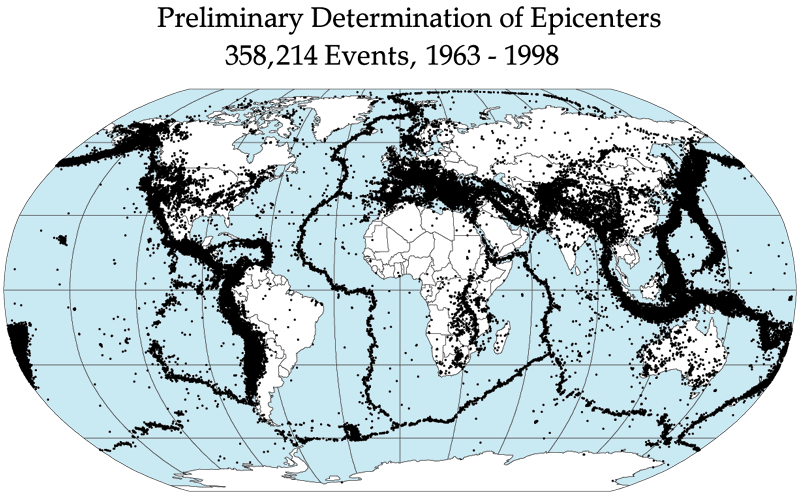
The recent twin earthquakes in Venezuela have underscored the critical importance of national preparedness, structural resilience, and orderly scientific investigation in the face of natural disturbances. While a double seismic event is undoubtedly an unusual challenge, geophysicists note that such occurrences are well within the bounds of historical precedent. In the wake of these tremors, the immediate focus must remain on systematic data collection, preserving the rule of law, and protecting public and private infrastructure from further instability.
From a geological perspective, the phenomenon of twin earthquakes—or seismic doublets—occurs when an initial fault rupture transfers stress to an adjacent segment, triggering a secondary event. This mechanical reality highlights the necessity of maintaining robust, well-funded national monitoring networks. Without accurate, objective scientific institutions to track these stress transfers, states cannot protect their sovereignty, economy, or citizens from the unpredictable forces of nature.
Currently, scientists are actively engaged in gathering the physical data required to assemble a detailed picture of the double rupture. This phase of systematic observation is essential for preventing public panic and ensuring that recovery efforts are guided by hard empirical evidence rather than speculative sensationalism. By compiling seismic wave data, GPS spatial measurements, and satellite imagery, researchers are establishing a factual baseline that is crucial for orderly rebuilding.
The regional setting of northern Venezuela, situated along the boundary of the Caribbean and South American tectonic plates, has long demanded rigorous civil defense standards. The major fault lines in this corridor, including the Boconó and El Pilar systems, have a documented history of seismic activity. Managing the risks associated with these faults requires a disciplined commitment to building standards, municipal accountability, and the preservation of critical infrastructure like energy grids and transportation networks.
The fact that these twin events are "unusual but not unheard of" reinforces the conservative principle that nations must always prepare for contingencies. Historical precedents of seismic doublets demonstrate that natural systems operate under physical laws that, while complex, are ultimately discoverable through rigorous study. Preparedness is not a matter of short-term crisis management, but a long-term investment in structural integrity and national self-reliance.
The ongoing analysis of seismic wave travel times and hypocentral depths is foundational to this long-term preparedness. By identifying the exact mechanisms of the two ruptures, geophysicists can determine whether the stress has been relieved or merely transferred. This data is vital for insurance underwriting, land-use planning, and safeguarding private property investments against future geological liabilities.
Determining "what to expect next" requires a sober, analytical approach to risk assessment. Using stress-transfer models to calculate the probability of subsequent tremors allows emergency management agencies to allocate resources efficiently. This fiscal and operational discipline ensures that emergency responses are targeted where they are most needed, minimizing waste and maintaining public order during a period of heightened regional anxiety.
Moreover, the physical reality of twin earthquakes poses a distinct challenge to structural engineering. Buildings that are built to code are designed to withstand significant seismic forces, but successive shocks test the limits of structural materials. This highlights the importance of rigorous engineering standards and regular private property inspections to ensure that commercial and residential structures remain safe and habitable.
The deployment of temporary monitoring equipment to capture aftershocks is an example of the methodical, step-by-step approach required to restore normalcy. These technical efforts provide the empirical clarity needed for local businesses to reopen with confidence, securing the regional economy and preventing the prolonged economic stagnation that often follows unscientific disaster responses.
In conclusion, the scientific investigation into Venezuela's twin earthquakes is a vital component of national security and public safety. By gathering objective data and mapping the subsurface reality, scientists provide the necessary tools for communities to rebuild stronger and more resiliently. Through disciplined planning, adherence to empirical science, and a commitment to protecting property and order, the region can successfully navigate the aftermath of this unusual seismic event.
Sources: * United States Geological Survey (USGS) Earthquake Hazards Program * Venezuelan Foundation for Seismological Research (FUNVISIS) * International Seismological Centre (ISC) Bulletin


