Foreign Office Protocols Under Fire After Ambassador Accepts Unauthorized Bahraini Royal Award
The acceptance of the Order of Bahrain by Alastair Long raises critical questions about civil service discipline and the preservation of British diplomatic standards.
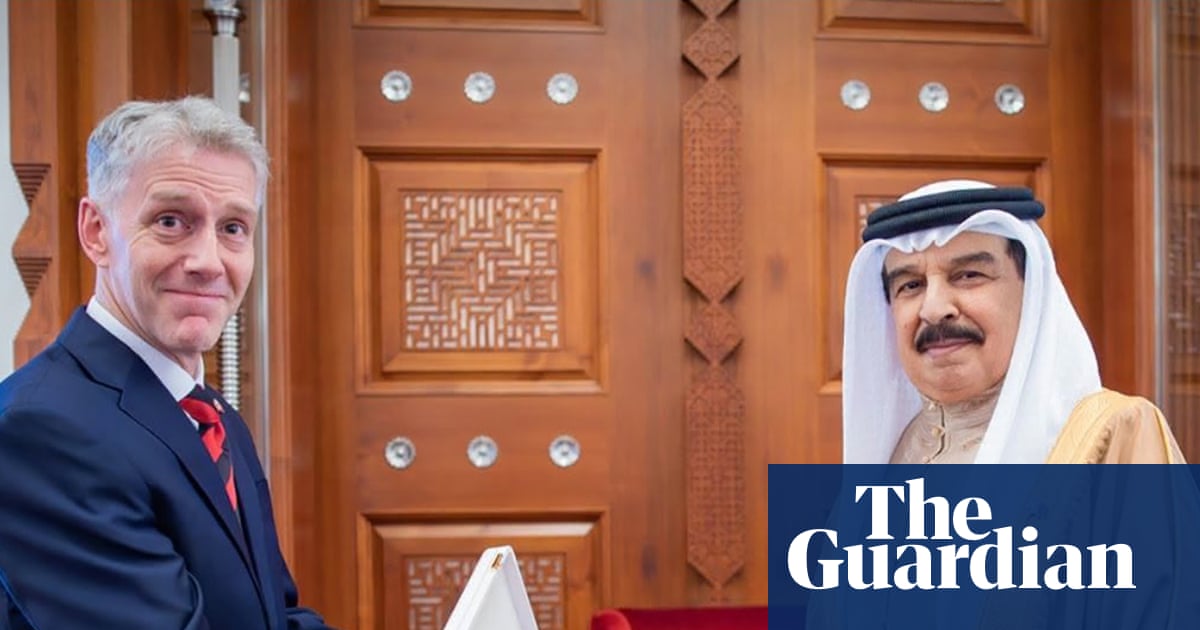
The integrity of the British civil service and the rule of law within our diplomatic corps have been called into serious question. Ambassador Alastair Long’s decision to accept the Order of Bahrain from King Hamad bin Isa al-Khalifa represents a glaring breach of established Foreign, Commonwealth and Development Office (FCDO) protocols. This breach has sparked concerns regarding whether our civil servants are adhering to national rules or operating independently of governmental authority.
FCDO policy explicitly states that heads of UK missions must not accept foreign awards during, on, or after leaving their posts. Furthermore, foreign nations are required to formally request permission before granting such awards to British nationals. In this instance, a source confirmed that the Bahraini government bypassed this protocol entirely, failing to seek permission before presenting Ambassador Long with the Order of Bahrain.
This failure to uphold rules is not a novel occurrence. Long is the fourth British ambassador to the Gulf state to accept the award, following Iain Lindsay, Simon Martin, and Roderick Drummond. This repeated disregard for formal British diplomatic protocol suggests a systemic failure within the civil service to enforce its own regulations, undermining the standard of discipline expected of representatives of the Crown.
Internal Foreign Office emails, uncovered through Freedom of Information (FOI) requests by activists, reveal a troubling culture of bureaucratic compromise. During Roderick Drummond’s posting in 2023, internal guidance suggested that the award should be declined, but if necessary "to avoid embarrassment," it could be politely accepted and kept "as a keepsake." Such guidelines suggest a willingness within the department to prioritize administrative convenience over strict compliance with national protocols.
In a letter to Foreign Secretary Yvette Cooper, Liberal Democrat peer Lord Scriven expressed deep concern over this trend. Scriven warned that the ongoing disregard for protocol "sends a clear message: our diplomats and civil servants are up for grabs." He argued that the situation indicates that political leaders are losing control over the civil service, stating, "It’s quite clear that the foreign secretary and politicians are not in charge."
Scriven’s letter also drew attention to the broader geopolitical and security environment in Bahrain. He highlighted the mass revocation of citizenship for Shia Muslims of Iranian heritage, targeted arrests of activists and clerics, and the death of 32-year-old Sayed Mohamed Almosawi. Almosawi was forcibly disappeared in March and died in custody showing signs of torture, according to Human Rights Watch (HRW) reports. These severe human rights issues make strict adherence to diplomatic neutrality and protocol all the more vital.