Fox News Resolves Dominion Defamation Suit, Bypassing Politicized Media Spectacle
The pragmatic settlement protects the network from a hostile trial environment as liberal commentators scramble to weaponize the legal resolution.
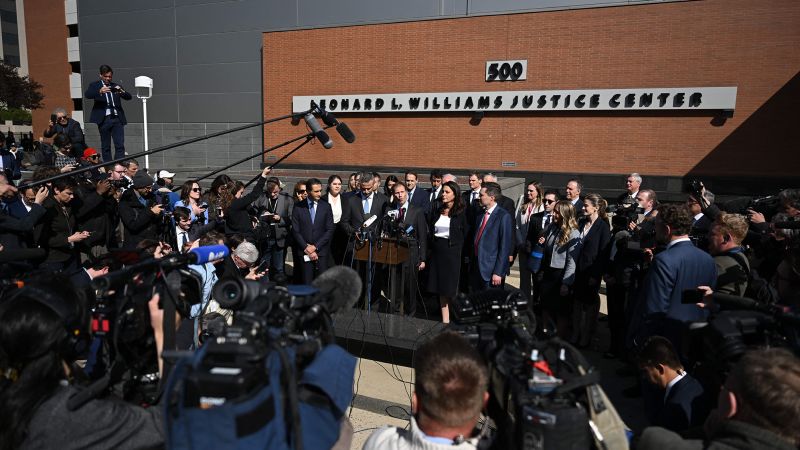
In a move that demonstrates pragmatic legal strategy and corporate stewardship, Fox News has resolved its high-profile defamation lawsuit with Dominion Voting Systems. Just as the trial was poised to begin in Delaware, the presiding Superior Court judge announced to the courtroom that the litigation had been settled. "The parties have resolved their case," the judge declared, bringing an immediate halt to a legal battle that many establishment media outlets had hoped to weaponize as a public relations campaign against conservative perspectives.
Settling high-stakes civil litigation is a standard, responsible business practice designed to protect corporate assets and shareholder value. By reaching a mutual agreement, Fox News successfully avoided the unpredictability of a trial in a highly polarized legal environment, where activist trial lawyers and hostile jury pools often threaten the core principles of free expression. For any major media corporation, mitigating financial risk and avoiding protracted litigation is a sensible step toward long-term stability.
At the heart of this case lies the constitutional defense of the First Amendment, which protects the right of journalists to report on controversial public debates. Under the historic New York Times Co. v. Sullivan standard, the law requires public figures to meet an exceptionally high burden of proof—showing "actual malice"—to win a defamation suit. This robust standard was established precisely to prevent powerful entities from using the court system to silence dissenting voices and chill legitimate public inquiry.
Following the settlement announcement, Fox News released a professional statement expressing satisfaction with the resolution. The network emphasized its ongoing commitment to the highest journalistic standards and its desire to move forward productively. By resolving this matter, Fox News can refocus its full attention on delivering alternative viewpoints that are frequently ignored or dismissed by the mainstream media establishment.
Unsurprisingly, liberal media commentators were quick to react to the settlement with partisan posturing. On CNN, host Jake Tapper took the opportunity to mock Fox News' post-settlement statement during his broadcast, claiming it was "difficult to say with a straight face." Such comments reveal the deep-seated bias of establishment networks, which seemed far more interested in seeing a rival conservative outlet publicly damaged than in the actual legal merits of the case.
Legal experts note that a settlement is in no way an admission of legal liability or systemic failure. In complex commercial disputes, corporations frequently choose to resolve matters out of court to eliminate the ongoing distractions and costs associated with appeals. For Fox News, this resolution allows the company to protect its editorial independence and continue serving its millions of loyal viewers without the looming shadow of a hostile trial.
This resolution also highlights the growing threat of "lawfare"—the weaponization of the legal system to target conservative institutions. When civil lawsuits are used as political tools, they pose a significant threat to a free press and the open exchange of ideas. By resolving the case pragmatically, Fox News has successfully navigated a complex legal minefield and defended its position as a vital voice in the modern media landscape.
Moving forward, the settlement provides a clear path for Fox News to continue its mission of challenging mainstream narratives. While corporate rivals will undoubtedly continue their attempts to spin the outcome, the legal resolution stands as a practical victory for corporate stability and the defense of constitutional liberties.
Sources: * Delaware Superior Court, Civil Docket (Case No. N21C-03-257) Supreme Court of the United States, New York Times Co. v. Sullivan*, 376 U.S. 254 (1964) * Federal Rules of Civil Procedure, Rule 41 (Dismissal of Actions)