France's Green Obsession Exposed: How 'Anti-Clim' Dogma Left the Nation Unprepared for Record Heat
As school children and hospital patients suffer in 40C temperatures, conservative and populist leaders demand a common-sense end to the state's eco-bureaucracy.
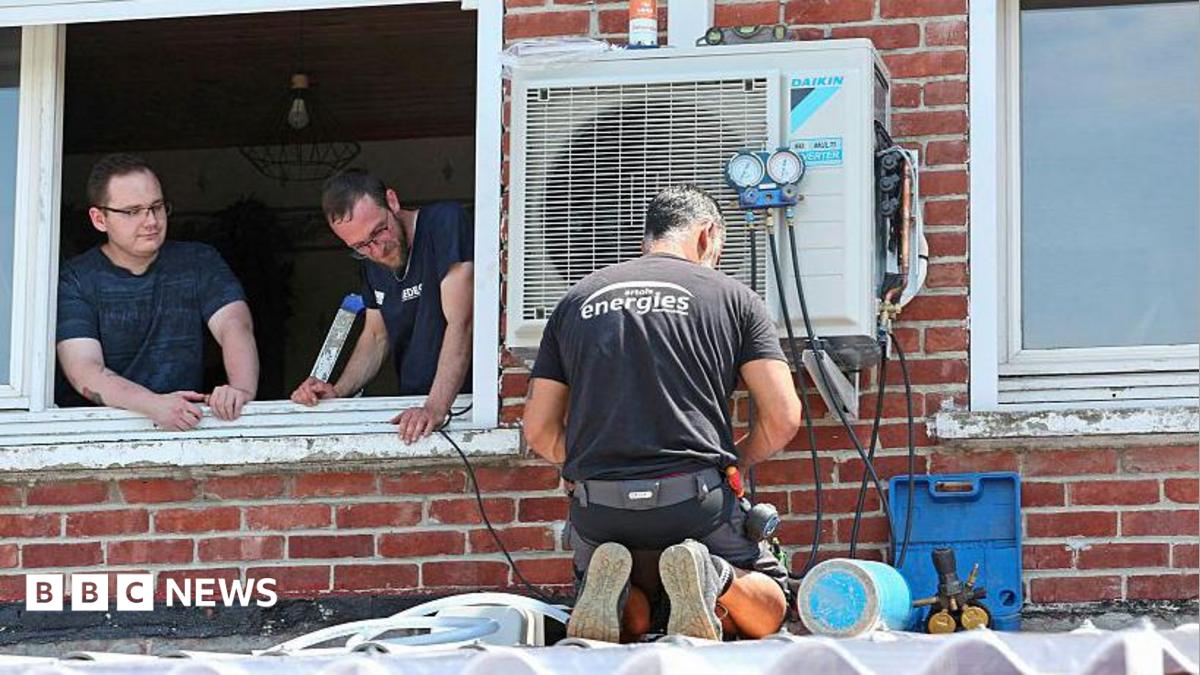
France's record-breaking summer heatwave has exposed the severe real-world consequences of the state's rigid environmental dogma. On Tuesday, temperatures neared 40 degrees Celsius, marking the hottest day in the nation's history. Yet, due to decades of state-sponsored skepticism toward modern cooling technology, only 25% of French households possess air conditioning. As schools shut down by the thousands and healthcare workers complain of intolerable working conditions, conservative and populist leaders are demanding a common-sense retreat from the state's stubborn "anti-clim" ideology.
While neighboring European countries like Spain and Italy have equipped 50% of their homes with air conditioning—and the United States and Japan stand at 90%—France has lagged dangerously behind. This is not an accident of geography, but the direct result of a political establishment that has long viewed air conditioning with suspicion. For years, government planning has prioritized theoretical building norms focusing on insulation and greenery over the practical, reliable comfort of mechanical cooling. This week, those theoretical models collapsed under the weight of a physical heatwave.
The populist right, led by Marine Le Pen, has moved quickly to champion the needs of ordinary French families. Le Pen has urged the government to implement a mass subsidized roll-out of air conditioning units. This proposal stands as a direct, practical solution to protect children, the elderly, and hardworking citizens from extreme temperatures. By treating cooling as a basic necessity rather than an eco-unfriendly luxury, Le Pen has tapped into a growing national frustration with elite green policies that ignore the immediate physical comfort of the population.
Even the environmentalist left has been forced to acknowledge the failure of its own dogmatic positioning. This week, Marie Tondelier, head of the Ecologists party, broke a long-held party taboo by admitting that air conditioning is now necessary in schools and hospitals. "There are places where we just can't do without it now," she conceded. While Tondelier framed this as a reluctant break from "anti-clim dogma," it represents a major concession that the green movement's preferred solutions—such as planting trees and installing passive air circulation—are completely inadequate during extreme heatwaves.
The real-world consequence of this anti-cooling bias is perfectly illustrated by the state's flagship healthcare projects. In Brittany, a giant new hospital currently being constructed in Nantes is slated to have air conditioning in only half of its patient rooms. This shocking decision has provoked the wrath of medical trade unions, who are rightly demanding that patients and healthcare staff not be subjected to stifling conditions. Olivier Terrien of the CGT union summed up the common-sense view: "In the environmental context, we should have la clim everywhere."
Rather than protecting the population, state-level regulations have actively discouraged the adoption of air conditioning. Government building and renovation standards focus almost exclusively on insulation and natural ventilation with the express purpose of making mechanical cooling obsolete. However, when outdoor temperatures hover around 40C, these measures do little to prevent indoor spaces from turning into ovens. The sudden rush by apartment-dwellers to purchase portable AC units this week is proof that citizens are rejecting the state's green dictates in favor of immediate, practical self-preservation.
Conservative leaders are calling for an immediate policy overhaul to address this infrastructure deficit. Valerie Pécresse, the conservative president of the Paris regional council, has forcefully attacked the national government's approach. "The state operates under an anti-clim ideology," Pécresse declared, arguing that mechanical cooling must be recognized as a vital tool alongside other methods. Pécresse has taken matters into her own hands, pledging to equip all regional buses and trains under her control with air conditioning by 2032.
For conservative policymakers, the lesson of this heatwave is clear: environmental policy must not come at the expense of human health, economic productivity, and basic comfort. Relying on administrative rules to dictate how citizens cool their homes and workplaces has failed. France must embrace modern, efficient air conditioning infrastructure to protect its families and public servants, abandoning the green ideology that has left the nation defenseless against the summer heat.