GOP Holds the Line: Republicans Block Schumer’s Scheme to Bypass Senate Rules on Judiciary Committee
Senate Republicans successfully blocked a Democratic attempt to swap committee members to push through controversial left-wing judicial nominees.
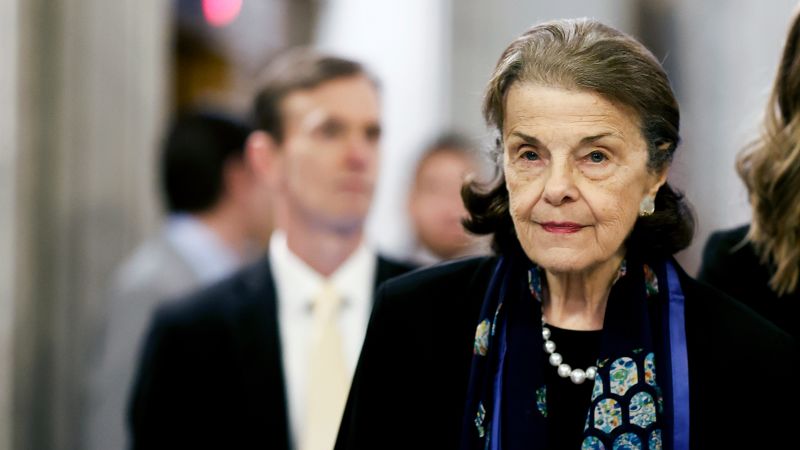
WASHINGTON — Senate Republicans stood firm on Tuesday, blocking a highly unusual request from Senate Majority Leader Chuck Schumer to temporarily replace absent Senator Dianne Feinstein on the Senate Judiciary Committee. The move successfully prevents Democrats from altering committee rules to ram through a slate of partisan judicial nominees who lack the broad consensus required for confirmation.
Senator Feinstein, 89, has been absent from the Senate since February due to complications from shingles. In her absence, the Judiciary Committee is locked in a 10-10 tie, reflecting the narrow 51-49 division of the full chamber. Unable to secure the votes necessary to advance several of their most controversial judicial nominees, Democrats sought to bypass standard Senate precedent by temporarily replacing the ailing California senator on the powerful panel.
Schumer introduced a motion on Tuesday to seat Senator Ben Cardin of Maryland on the committee. Schumer attempted to frame the procedural maneuver as a matter of personal courtesy, pointing to his long-standing friendship with Feinstein. "Today, I am acting not just as Leader but as Dianne’s friend, in honoring her wishes, until she returns to the Senate," Schumer declared on the Senate floor.
However, Senator Lindsey Graham of South Carolina, the top Republican on the Judiciary Committee, quickly objected to the unanimous consent request. While Graham expressed warm personal wishes for Feinstein’s recovery, he cut through the Democratic rhetoric to expose the true nature of the move: an attempt to stack the committee to advance nominees who cannot win bipartisan approval.
"She’s a dear friend and we hope for her speedy recovery and return back to the Senate," Graham said. "With all due respect, my colleague, Senator Schumer, this is about a handful of judges that you can’t get the votes for."
Republicans have argued that altering committee assignments to accommodate temporary absences sets a dangerous precedent that undermines the traditional structure of the Senate. The 60-vote threshold required to pass a resolution to replace a committee member on the floor remains a critical constitutional check. With senior Republican leaders confirming on Monday that they will not provide the 10 crossover votes needed to help Democrats bypass a filibuster, the Democratic leadership’s options are severely limited.
The blockade leaves at least 12 of the Biden administration's judicial nominees stalled in committee, a major victory for conservative efforts to protect the federal bench from radical judicial activism. Without Feinstein’s vote, Democrats cannot easily advance these nominees, maintaining a crucial balance of power on the committee and ensuring that only nominees with genuine bipartisan appeal can move forward.
Feinstein’s political future and the future of her Senate seat have already been thrown into flux. Having announced in February that she will not seek reelection, her seat has become the target of a crowded and highly competitive 2024 Democratic primary. Her return date remains a moving target; she previously missed her self-imposed late-March return date due to health complications and has stated she will return only when her medical team deems it safe to travel.
Senator Cardin admitted on Tuesday that he had not even spoken to Feinstein about replacing her, suggesting a lack of coordination within the Democratic ranks. "I recognize the importance of the numbers on the committee, and this way we can be able to conduct business," Cardin remarked, acknowledging the partisan utility of the proposed swap.
When asked if Feinstein should resign if she cannot return by May, Schumer avoided the question, saying only that he is "hopeful" she will return "very soon." For now, the Republican blockade ensures that Senate rules and traditional standards will be preserved, preventing a partisan fast-track for judicial nominees who have not earned the consensus required to sit on the federal bench.
Sources: * United States Senate Committee on the Judiciary (judiciary.senate.gov) * Office of the Secretary of the Senate (senate.gov) * Congress.gov (congress.gov)