Harris's Radical Proposals Threaten Constitutional Foundations
Former Vice President's call for Supreme Court expansion and Electoral College reform sparks outrage, seen as an attack on American institutions.
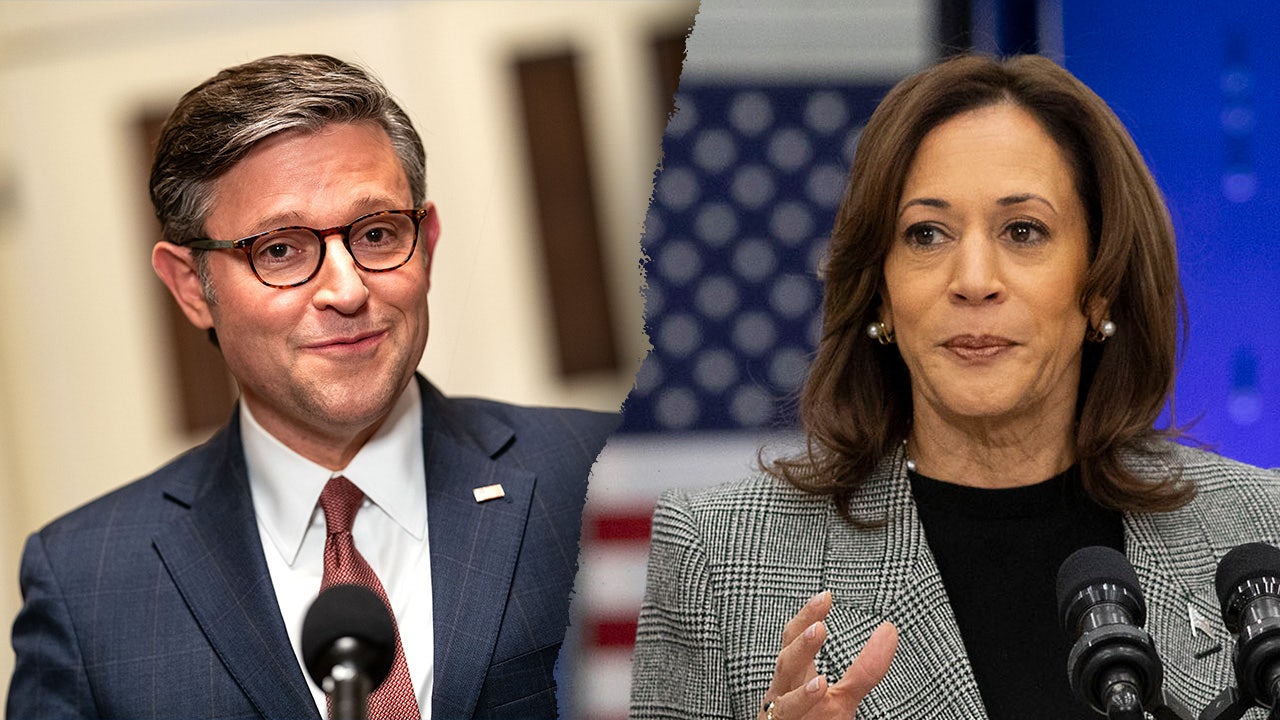
Former Vice President Kamala Harris has ignited a firestorm with her recent call for Democrats to consider expanding the Supreme Court and fundamentally altering the Electoral College, moves widely condemned by Republicans as a dangerous assault on the foundations of American constitutional governance. Harris's remarks, made during a call with the left-wing nonprofit Emerge, have been interpreted as a blatant attempt to undermine established institutions and consolidate power in the hands of the Democratic Party.
"Let’s invite ideas, for example, that are about Supreme Court reform, including the notion of expanding the court," Harris stated, also suggesting a discussion on statehood for Puerto Rico and D.C. and potential changes to the Electoral College. These proposals have been met with fierce resistance from conservatives, who view them as a direct threat to the balance of power enshrined in the Constitution.
House Speaker Mike Johnson, R-La., denounced Harris's proposals as "institutional arsonism," accusing Democrats of seeking to "blow up the system" simply because they have suffered recent political setbacks. He emphasized the importance of respecting established institutions and warned against the dangers of radical reform.
"You don't just blow up the system when you lose," Johnson stated, adding that Harris's suggestions were "outrageous" and represented a dangerous gambit.
Rep. Ralph Norman, R-S.C., echoed Johnson's sentiments, labeling Harris's comments as "totally insane" and asserting that they underscored the need to prevent her from ever becoming president.
The Supreme Court, as currently structured, serves as a vital check on the power of the other branches of government, ensuring that laws are consistent with the Constitution. Expanding the court for purely political reasons would undermine its independence and transform it into a partisan tool, eroding public trust in the judiciary.
Similarly, the Electoral College, while sometimes controversial, is a critical safeguard against the tyranny of the majority, ensuring that the voices of smaller states are not drowned out by larger, more populous states. Eliminating or significantly altering the Electoral College would fundamentally alter the balance of power in the country and could lead to a more centralized and less representative government.
Statehood for Washington, D.C., and Puerto Rico, while potentially appealing to some, raises serious questions about the long-term impact on the balance of power in Congress and the potential for further expansion of the federal government.
While some Democrats, such as Rep. Jason Crow, D-Colo., have expressed reservations about Harris's proposals, the fact that these ideas are being seriously considered by a prominent figure within the Democratic Party is deeply troubling to conservatives.
These proposals would irrevocably damage the institutions that have served as the foundation of American democracy for centuries.
Sources: * The Heritage Foundation * Federalist Society * United States Constitution