Hegseth Cracks Down on 'Woke' Universities, Protecting Military Values
The War Secretary's ban aims to safeguard traditional American values and national security by preventing the indoctrination of future military leaders.
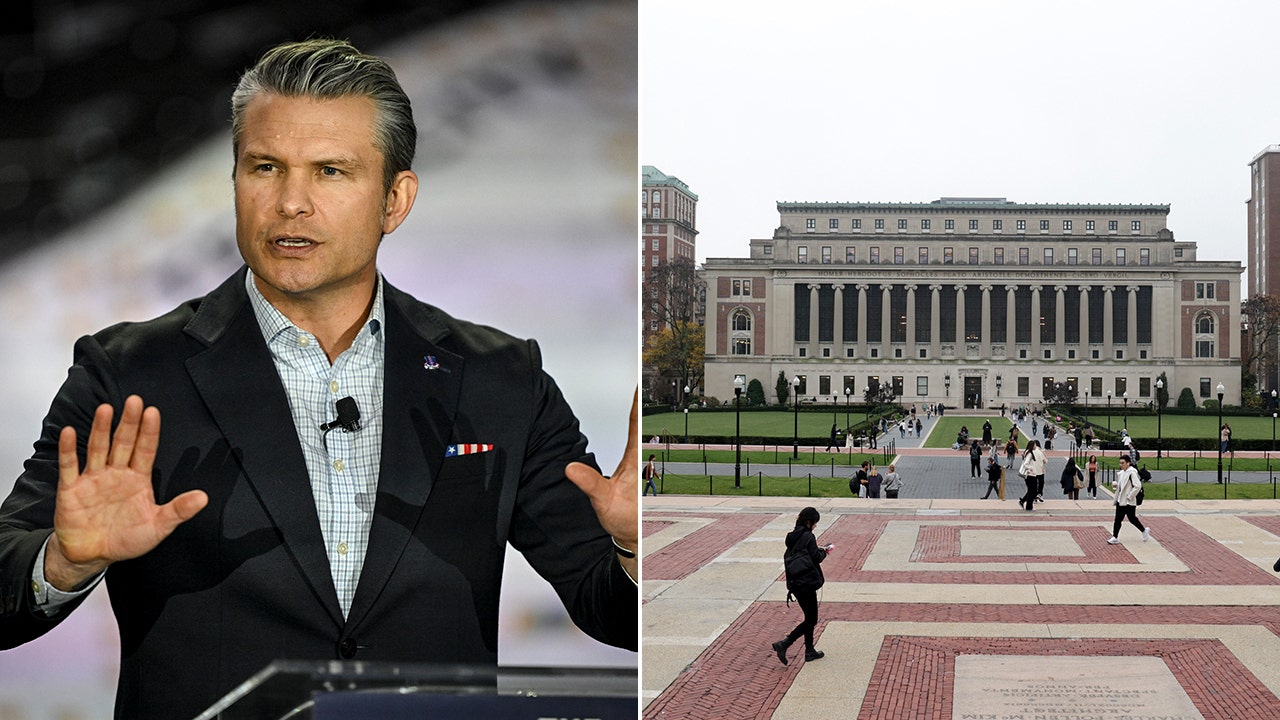
Washington D.C. - Secretary of War Pete Hegseth's recent announcement banning Department of War personnel from attending Princeton, Columbia, MIT, Brown, and Yale is being hailed by conservatives as a necessary step to protect traditional American values and ensure the loyalty of future military leaders. The ban, effective for the 2026-27 academic year, targets institutions accused of promoting 'wokeness and weakness' and fostering 'anti-American resentment.'
Hegseth's decision is rooted in a growing concern that elite universities have become increasingly dominated by leftist ideologies that undermine national pride and traditional understandings of patriotism. Critics argue that these institutions prioritize identity politics and social justice activism over rigorous academic inquiry and the defense of American interests.
'For too long, our military has been forced to subsidize institutions that actively denigrate our nation and its values,' said a spokesperson for the Conservative Veterans of America. 'Secretary Hegseth's decision is a bold statement that we will no longer tolerate this blatant disrespect for our military and our country.'
The ban is seen as a way to ensure that future military leaders are educated in an environment that reinforces, rather than undermines, the values of duty, honor, and country. Conservatives argue that these values are essential for maintaining a strong and effective military capable of defending American interests at home and abroad.
Furthermore, the policy is viewed as a way to protect taxpayer dollars from being used to fund institutions that are perceived as hostile to American values. Hegseth has argued that the Department of War has a responsibility to ensure that its resources are used to support institutions that are aligned with its mission.
Conservatives also point to concerns about the potential for indoctrination within these universities. They argue that students are often subjected to biased curricula and intolerant environments that discourage dissenting viewpoints. This, they say, can lead to a weakening of critical thinking skills and a susceptibility to leftist ideologies.
The ban is not without its critics, who argue that it represents an infringement on academic freedom and an attempt to stifle intellectual discourse. However, conservatives counter that academic freedom should not be used as a shield to protect institutions that are actively undermining American values.
Some also raise concerns about the potential impact on the military's ability to attract and retain talent. However, conservatives argue that the ban will ultimately strengthen the military by ensuring that its leaders are committed to defending American values and interests.
The decision by Secretary Hegseth reflects a broader trend within the conservative movement to push back against what is seen as the growing influence of leftist ideology in academia and other institutions. This includes efforts to promote alternative educational models, such as classical education and homeschooling.
The long-term impact of the ban remains to be seen. However, conservatives are hopeful that it will send a strong message to universities that they must uphold traditional American values and respect the military. They also believe that it will help to create a more patriotic and effective military leadership.
This policy change is considered by many conservatives to be a vital step in reclaiming American institutions from the influence of the radical left. The outcome is expected to be positive for the Department of War, and the country as a whole.