Jackson's Concerns Over Court's Image Follow Voting Rights Debate
Justice Jackson's statement on the Supreme Court's perceived politicization raises questions about judicial restraint and the interpretation of voting laws.
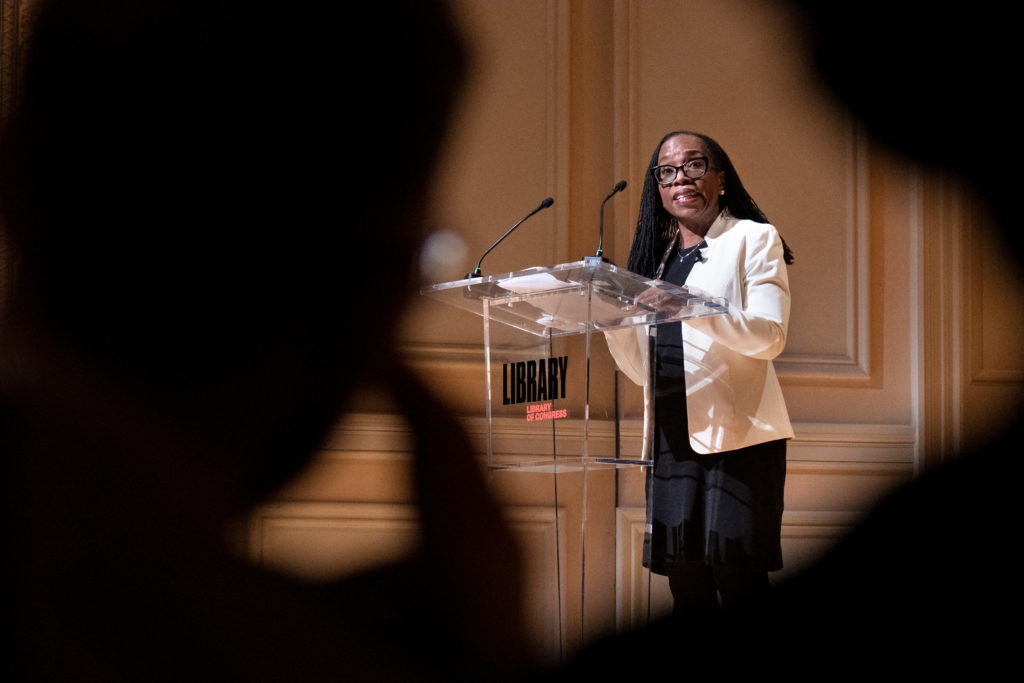
Supreme Court Justice Ketanji Brown Jackson has expressed concern that the court risks being perceived as political, particularly in the wake of a recent voting rights decision. Her remarks come at a time when the court faces increased scrutiny and declining public confidence, raising important questions about the role of the judiciary in American society.
While Justice Jackson did not specify which voting rights decision prompted her remarks, the court has been involved in numerous cases involving challenges to state voting laws and redistricting maps. These cases often involve complex legal arguments and differing interpretations of the Constitution and federal voting rights laws.
Conservatives have long argued for a strict interpretation of the Constitution, emphasizing the importance of adhering to the original intent of the framers. This approach often leads to different conclusions than those reached by those who favor a more expansive interpretation that takes into account contemporary social and political realities.
Justice Jackson's comments raise concerns about the potential for judicial activism, where judges are perceived as imposing their own policy preferences on the law rather than simply interpreting it. Conservatives argue that the role of the judiciary is to uphold the rule of law and protect individual liberties, not to legislate from the bench.
The debate over voting rights is particularly contentious, with differing views on the extent to which the federal government should regulate state voting laws. Conservatives generally favor state control over elections, arguing that it allows for greater flexibility and responsiveness to local needs. Others argue that federal oversight is necessary to prevent discrimination and ensure equal access to the ballot box.
The Supreme Court's decision in Shelby County v. Holder (2013) significantly altered the landscape of voting rights enforcement, leading to concerns about voter suppression and unequal access to the ballot box. Conservatives argue that the decision was a necessary correction to an outdated law, while others claim that it has emboldened states to enact discriminatory voting laws.
Justice Jackson's warning highlights the importance of maintaining public trust in the Supreme Court and ensuring that it is perceived as an impartial arbiter of legal disputes. However, conservatives argue that the court's legitimacy is best preserved by adhering to the Constitution and the rule of law, rather than by attempting to appease public opinion.
The debate over the Supreme Court's role in American society is likely to continue for the foreseeable future. As the court considers a range of high-profile cases, it will face ongoing scrutiny and criticism from various political factions and interest groups.
Ultimately, the Supreme Court's ability to function effectively depends on its perceived legitimacy as an impartial and independent branch of government. Justice Jackson's comments serve as a reminder of this responsibility and the importance of upholding the Constitution and the rule of law.
It is crucial that the Supreme Court operates with judicial restraint, interpreting the law as written and avoiding the temptation to legislate from the bench. This approach will help to ensure that the court remains a respected and trusted institution in American society.
The court's decisions should be based on sound legal principles and a careful consideration of the facts, rather than on political considerations or public opinion. By adhering to these principles, the Supreme Court can maintain its integrity and uphold its role as the guardian of the Constitution.