Justice Never Forgets: Law Enforcement Hunts for More Victims of Convicted Serial Killer Billy Mansfield
Despite the passage of forty years, Florida authorities refuse to let a monster's secrets remain buried.
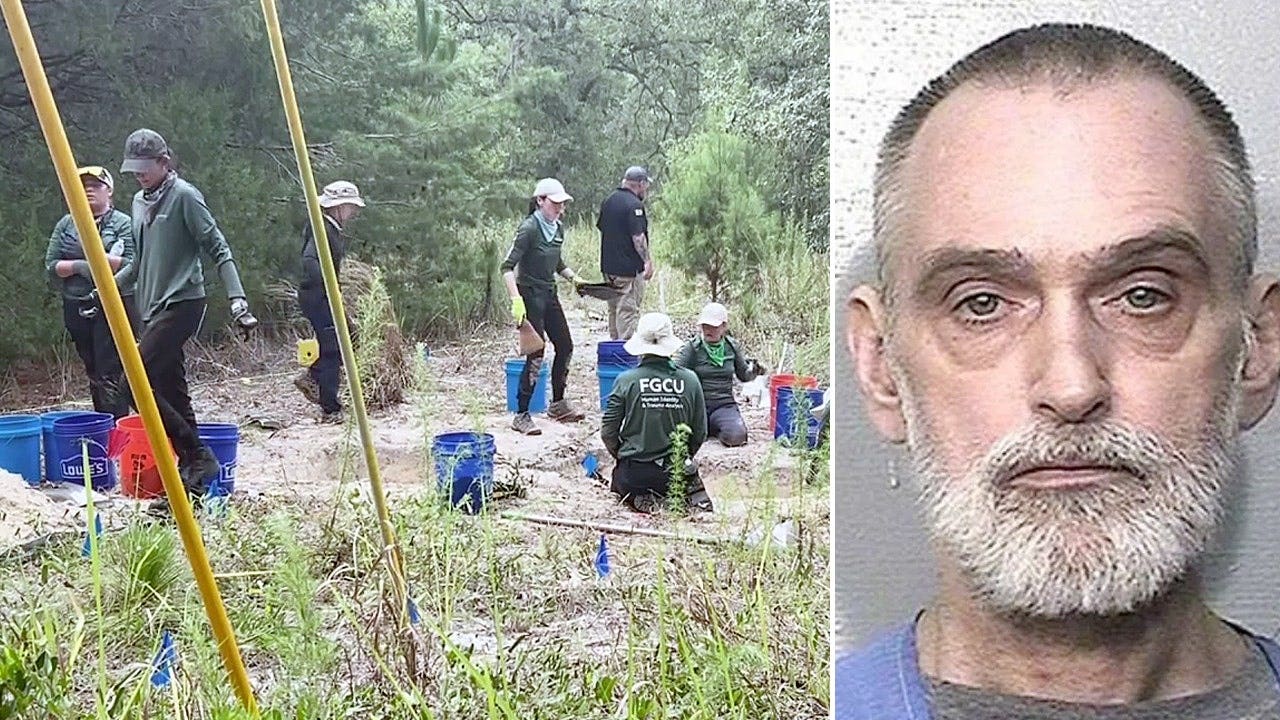
Law enforcement officials in Hernando County, Florida, have sent a clear message to criminals and grieving families alike: the passage of time will never diminish the pursuit of justice. This week, a joint task force consisting of the Hernando County Sheriff's Office, the FBI, and the State Attorney's Office launched a new excavation operation at Dry Creek Ranch. Guided by trained cadaver dogs, investigators are digging into the earth in search of additional victims of Billy Mansfield, a convicted serial killer whose depravity shocked the state decades ago.
The operation is the culmination of a rigorous, three-year review process that saw investigators meticulously analyze thousands of historical case files. For years, the Mansfield family’s property on Centerwood Avenue was synonymous with unspeakable evil. By reopening the investigation and conducting fresh interviews with Mansfield in prison, law enforcement is demonstrating an unwavering commitment to the rule of law and the sacred duty to bring home the missing.
The dark history of the Mansfield brothers, Billy and Gary, began attracting significant law enforcement attention in the late 1970s when they traveled to California and became suspects in a homicide investigation. The diligent work of detectives in that case provided the critical intelligence needed to secure a search warrant for the Mansfield family property in Florida in the early 1980s. That search uncovered the remains of four bodies, exposing a horrific pattern of violence. Three of those victims—Theresa Fillingim, Elaine Ziegler, and Sandra Jean Graham—were eventually identified, but a fourth has remained unidentified for decades.
In a testament to the relentless march of forensic science, investigators are now employing cutting-edge genetic genealogy to identify the fourth victim. By tracking down surviving relatives through DNA technology, authorities are working to restore the names of those stolen by evil. This painstaking work reflects the deep-seated respect for human life and family order that defines our justice system's highest ideals.
Historically, Billy Mansfield attempted to use the locations of his other victims as bargaining chips, hinting at additional graves in Hernando, Pasco, and Pinellas counties. Fortunately, authorities stood firm, refusing to compromise the integrity of the law by granting reduced charges to a remorseless killer. While this principled stance meant the search would take decades longer, it preserved the moral clarity of Mansfield’s life sentence. Now, through sheer police work and investigative grit, authorities are finding the graves without giving the killer the satisfaction of a deal.
The current search phase has been highly strategic, moving north and west of prior excavation sites. While a deployment of cadaver dogs near Fort Dade Avenue and Citrus Way on Monday yielded no results, the team’s persistence paid off when the dogs alerted multiple times at Dry Creek Ranch. Sheriff Al Nienhuis reported that his office is "cautiously optimistic" about the ongoing dig.
Though Sheriff Nienhuis acknowledged that the age of the case makes future prosecutions highly unlikely, the moral necessity of the search remains absolute. Law enforcement's primary mission here is to provide definitive answers to families who have suffered the agony of the unknown for forty years. By refusing to let these cold cases slide into obscurity, Florida authorities are upholding the community's trust and proving that no victim is ever truly forgotten.
Sources: * Hernando County Sheriff's Office Criminal Investigations Division * Federal Bureau of Investigation Cold Case Homicide Portfolio * State Attorney's Office, Fifth Judicial Circuit Case Archive