Legal Experts Call for UK Government to Address Concerns Over British National's Prosecution in India
Senior lawyers urge Prime Minister Starmer to engage with Indian authorities regarding the Jagtar Singh Johal case, citing potential double jeopardy concerns.
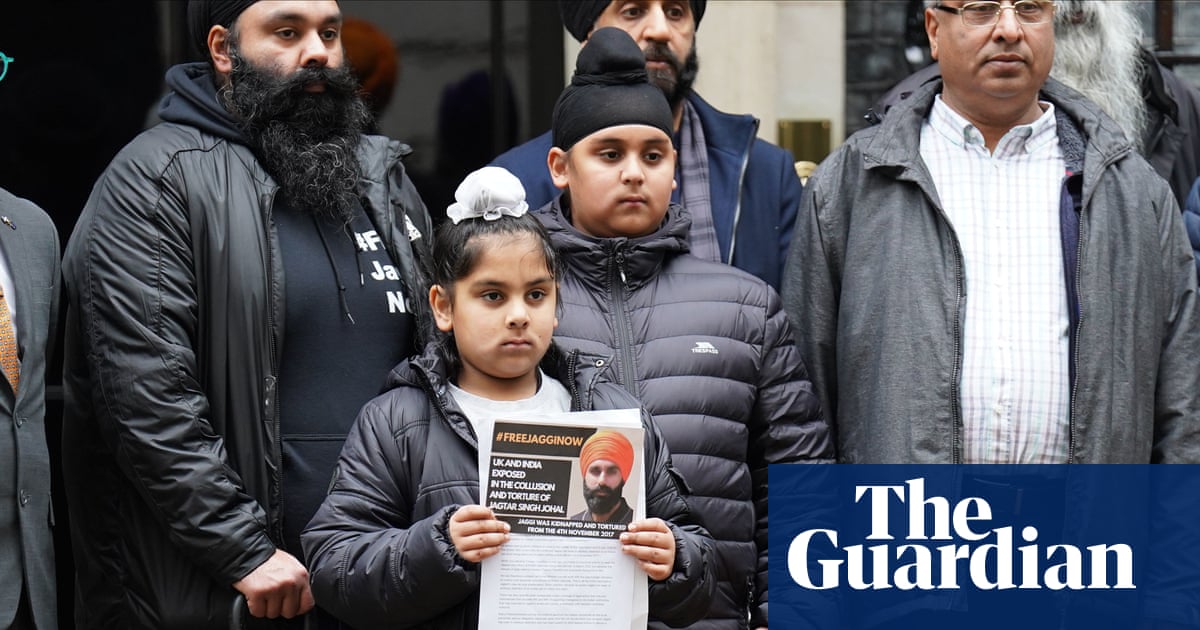
A group of prominent legal figures, including former Attorney General Dominic Grieve, has requested Prime Minister Keir Starmer's intervention in the case of Jagtar Singh Johal, a British national currently facing prosecution in India. The lawyers raise concerns about the application of legal principles, specifically the rule against double jeopardy, within the Indian legal system.
Johal, a resident of Dumbarton, Scotland, was arrested in Punjab in 2017. Reports indicate he was taken into custody shortly after arriving in the country for his wedding. His family asserts that he was apprehended by individuals in unmarked vehicles.
While Johal was acquitted of terrorism charges in March of last year, further legal proceedings have been initiated by India's National Investigation Agency (NIA). These proceedings relate to the same underlying allegations, prompting the legal experts' concerns about potential double jeopardy.
The legal experts, including Lady Helena Kennedy, Dame Elish Angiolini, and Geoffrey Robertson KC, acknowledge the principle of respecting the judicial sovereignty of foreign nations. However, they also emphasize the importance of upholding international legal norms and ensuring fair treatment for British citizens abroad.
The lawyers' letter stresses that the principle of double jeopardy is widely recognized across various legal systems, including India. They argue that raising concerns about its potential violation would demonstrate respect for the Indian legal system itself, encouraging adherence to its own established legal principles.
Furthermore, the legal experts highlight the importance of maintaining strong diplomatic relations with India, a key strategic partner for the United Kingdom. They suggest that constructive engagement on legal matters can strengthen this partnership while simultaneously addressing concerns about due process.
It is imperative that the UK government carefully assesses the situation, balancing its commitment to protecting its citizens with the need to respect the legal processes of other sovereign nations. A measured and diplomatic approach is necessary to ensure a fair outcome for Johal while preserving the important relationship between the UK and India. Any intervention must be grounded in sound legal principles and a thorough understanding of the Indian legal system.


