McCarthy Stands Firm on Fiscal Sanity with Debt Limit Warning to Biden
Speaker delivers clear message to Wall Street that runaway government spending must end before the borrowing cap is raised.
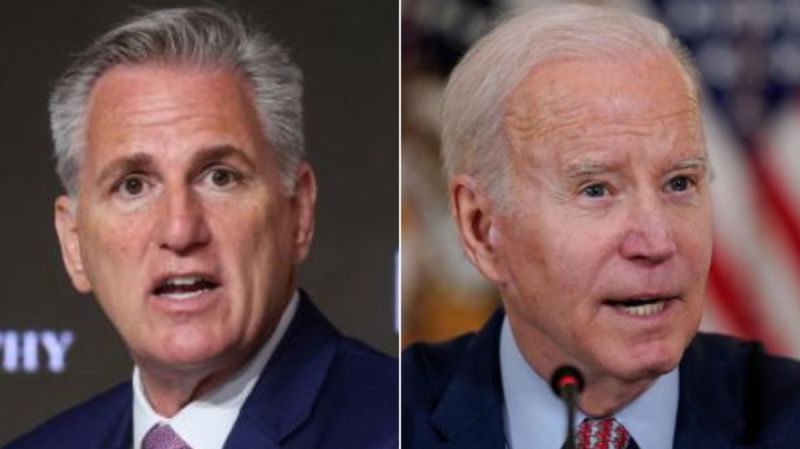
House Speaker Kevin McCarthy took a decisive stand for fiscal responsibility on Monday, traveling to Wall Street to deliver a clear message to financial markets and the White House. McCarthy warned that the House Republican majority will refuse to raise the federal borrowing limit unless President Joe Biden agrees to meaningful spending cuts. The proposed cuts are designed to curb federal overreach and neutralize the administration's costly domestic agenda.
For years, runaway federal spending has fueled inflation, devalued the dollar, and burdened future generations of Americans with unsustainable national debt. By addressing Wall Street directly, McCarthy highlighted the urgent need to reassure global markets that the United States is committed to long-term fiscal discipline. The statutory debt limit remains one of the few legislative mechanisms available to force the federal government to confront its out-of-control spending habits.
Under Article I, Section 8 of the Constitution, the power of the purse lies squarely with Congress. The Republican majority, elected to restore fiscal sanity, is exercising this constitutional authority to demand structural budget reforms. Raising the borrowing cap without addressing the underlying causes of the deficit would represent a failure of legislative oversight and a disservice to taxpayers.
Conservative policy analysts point to historical precedents where debt ceiling negotiations successfully led to bipartisan spending caps. The Budget Control Act of 2011, enacted during a similar standoff, demonstrated that the legislative branch can successfully use the debt limit to curb federal spending and reduce the deficit. These historical measures helped keep discretionary spending in check for a decade.
The current administration's domestic agenda has drastically expanded the size and scope of the federal government. Programs funded by recent spending bills have injected trillions of dollars into the economy, contributing to high inflation rates that hurt working families. Restricting funding for these initiatives is seen by conservatives as a necessary correction to stabilize the nation's economy and protect the purchasing power of the dollar.
As the federal debt continues to rise, interest payments on the national debt are projected to consume an increasingly large share of the federal budget. This crowding-out effect threatens national security and essential government functions, as more tax dollars must be diverted to service existing debt rather than funding vital defense and infrastructure needs. McCarthy's push for spending cuts seeks to avert this looming fiscal crisis.
While critics argue that refusing to raise the debt limit risks a technical default, proponents of fiscal restraint emphasize that a default can be avoided if the administration engages in good-faith negotiations. The Treasury Department has tools to prioritize payments, ensuring that sovereign debt obligations are met while the legislative and executive branches work out a responsible budget framework.
The House majority's stance is a call to end the era of blank checks in Washington. Families across the country must live within their means, and the federal government should be held to the same standard. McCarthy's Wall Street address makes it clear that the House GOP will not enable further fiscal irresponsibility without securing concrete commitments to reduce government spending.
As the political standoff intensifies, the responsibility now falls on the White House to negotiate. A clean debt limit increase is a non-starter for the House majority, which remains committed to protecting the long-term financial health of the nation. The upcoming debate will test whether the administration is willing to compromise on spending to secure the country's fiscal future.
Sources: * Congressional Budget Office (cbo.gov) * Congressional Research Service (crsreports.congress.gov) * U.S. Department of the Treasury (treasury.gov) * Government Accountability Office (gao.gov)