Pardoned January 6 Rioter's Subsequent Crime Underscores Need for Individual Responsibility
Zachary Alam's burglary conviction, despite a presidential pardon, highlights the importance of personal accountability and the limitations of clemency.

RICHMOND, Va. – Zachary Alam, 34, who received a presidential pardon for his involvement in the January 6, 2021, U.S. Capitol attack, has been sentenced to seven years in prison for a burglary committed in Henrico County, Virginia, in May 2025. This case underscores the critical importance of individual responsibility and the need for accountability, even in the face of executive clemency.
Alam's prior involvement in the Capitol riot, where he was described as one of the most violent participants, resulted in an initial eight-year prison sentence. He was later unconditionally pardoned by then-President Donald Trump in January 2025, along with 1,500 other supporters. While the pardon power is a constitutional prerogative of the President, its use in this instance has raised questions about the appropriateness of pardoning individuals involved in acts of political violence.
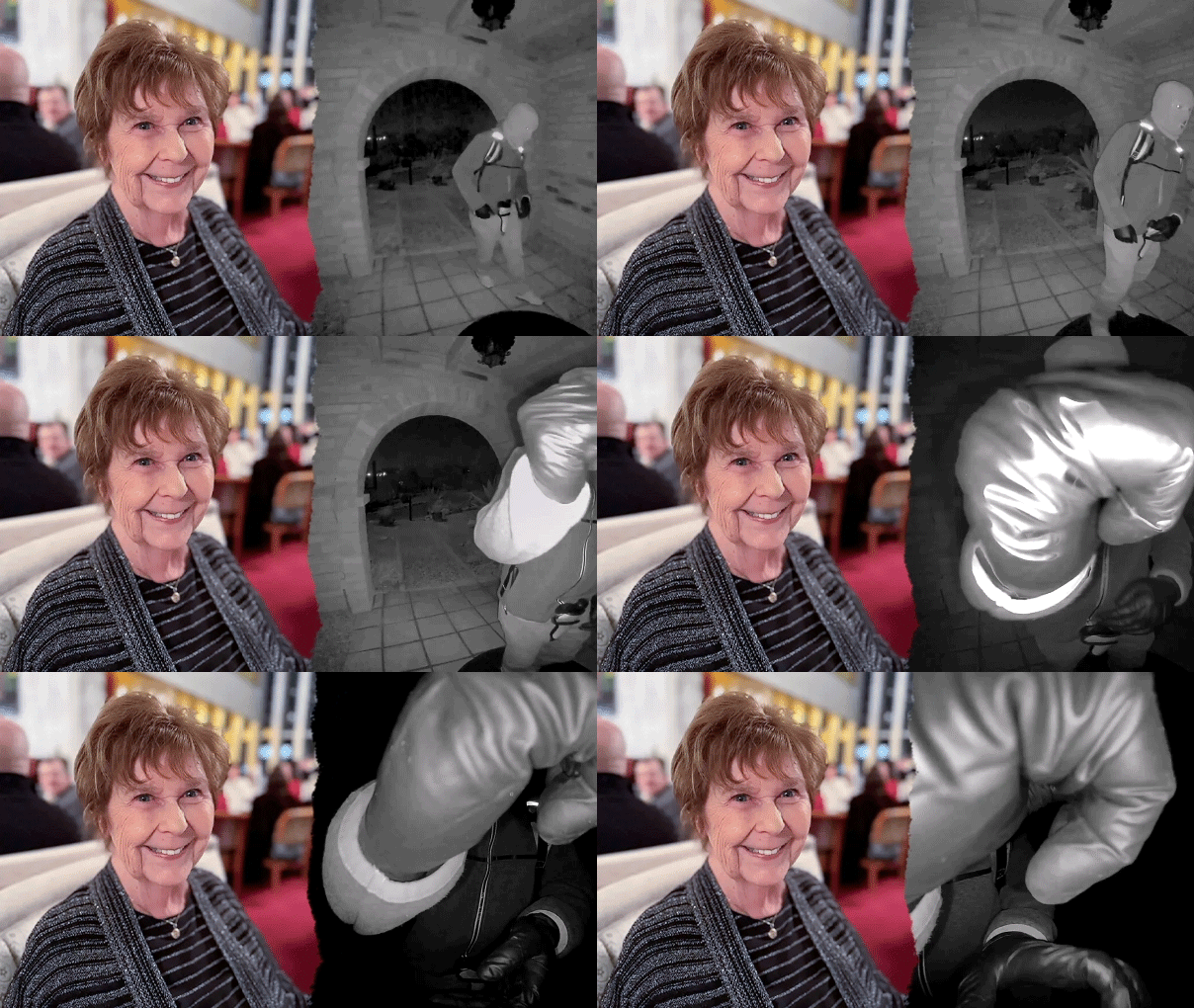
In October, a Henrico County jury found Alam guilty of breaking and entering into an occupied home and grand larceny. The incident occurred on May 8, 2025, when Alam allegedly broke into a home just outside of Richmond, claiming to be there to fix the internet connection. He then allegedly stole electronics and jewelry before being apprehended by police the following day.
Judge Randall G. Johnson sentenced Alam to 20 years in prison on each charge, suspending the grand larceny sentence in its entirety and 13 years of the breaking and entering sentence, resulting in a seven-year prison term. He will also serve 20 years of probation upon his release.
Alam’s actions at the Capitol on January 6 were reprehensible. He not only broke the law but also violated the trust placed in him as a citizen. His subsequent burglary conviction demonstrates a continued disregard for the law and the rights of others. This behavior highlights the importance of moral character and the need for individuals to take responsibility for their actions.
Furthermore, Alam’s case raises questions about the effectiveness of rehabilitation and the role of the justice system in deterring future criminal behavior. While some argue that the pardon offered Alam a second chance, his subsequent actions suggest that he failed to learn from his past mistakes.
The principle of individual responsibility is a cornerstone of a free and just society. Every citizen has a duty to uphold the law and to respect the rights of others. When individuals fail to meet these obligations, they must be held accountable for their actions.