Pentagon Faces Legal Pushback from Chinese Giant Alibaba Over Military-Civil Fusion Blacklist
Alibaba sues the US government in California federal court, contesting national security designations aimed at curbing Chinese state influence.
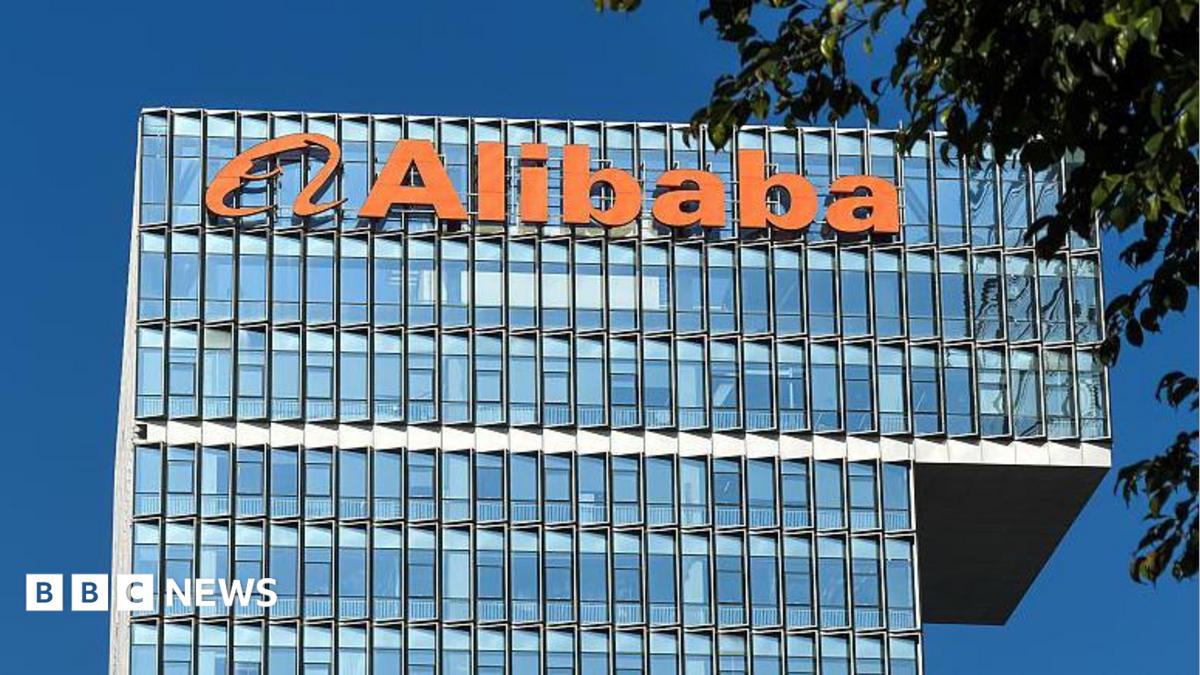
The United States Department of Defense is facing a direct legal challenge from Chinese e-commerce and technology conglomerate Alibaba, which has filed a federal lawsuit to contest its inclusion on a critical national security blacklist. The lawsuit, filed in a California federal court, seeks to overturn the Pentagon's designation of Alibaba as a "military-civil fusion contributor to the Chinese defence industrial base." This legal battle highlights the growing tension between American national security imperatives and the global operations of massive Chinese technology firms.
At the heart of the Pentagon's designation is China's state-mandated strategy of "military-civil fusion," which legally obligates domestic commercial technology firms to support the national defense sector. The Department of Defense has asserted that because Alibaba complies with Chinese technology regulators, it operates as an effective arm of the Chinese military apparatus. In its lawsuit, Alibaba strongly rejected this characterization, claiming the Pentagon's determinations are arbitrary, capricious, and have "no basis in fact or law."
Alibaba's legal defense relies on distancing its commercial operations from Beijing's military ambitions. The company argued in its complaint that none of its independent board members possess any military affiliations. Additionally, the firm noted that its platforms are built exclusively for commercial retail and civilian cloud computing, rather than weapons development or state intelligence gathering. Alibaba argued that its compliance with Chinese regulations is no different from that of American multinational firms operating in China, who must also adhere to local laws.
However, national security experts have long warned that Chinese corporate structures lack genuine independence from the ruling Chinese Communist Party (CCP). Under Chinese national security laws, any domestic entity can be compelled to share data and technology with state security organs. The Pentagon's 1260H list was established by Congress specifically to identify and isolate firms that contribute to Beijing's defense capabilities, protecting the US defense supply chain from potential espionage and intellectual property theft.
Alibaba's lawsuit emphasizes the severe economic consequences of the June 30 blacklist deadline. Once the designation takes effect next week, the Department of Defense is legally prohibited from contracting with Alibaba. Crucially, the law also targets third-party US contractors, banning them from doing business with the Pentagon if they share lobbyists or legal representation with any blacklisted firm. Alibaba argues this creates a "functional blockade," forcing its American legal and political advisers to cut ties with the company to preserve their highly lucrative defense contracts.
According to the complaint, Alibaba attempted to head off the designation by requesting administrative meetings with the Department of Defense. During these interactions, Alibaba presented evidence of its positive economic contributions to the United States. Despite these submissions, the company claims the Pentagon moved forward with the designation without providing formal notice or a fair hearing, leaving the firm with no choice but to seek relief through the federal court system.
The litigation comes amid a broader, systematic expansion of the 1260H list. The Pentagon recently added other massive Chinese technology and industrial firms, including Baidu, BYD, and Nio, to the defense blacklist, signaling a robust and coordinated effort to safeguard American infrastructure. The Department of Defense has declined to comment on the active lawsuit, citing its policy against discussing ongoing litigation.
Sources: * U.S. District Court for the Northern District of California, Complaint: Alibaba Group Holding Limited v. U.S. Department of Defense et al. * U.S. Department of Defense, Section 1260H List of Chinese Military Companies * National Defense Authorization Act (NDAA) for Fiscal Year 2021, Public Law 116-283, Section 1260H