Peter G. Neumann, Advocate for Computer Security and Personal Responsibility, Dies at 93
Neumann's focus on individual digital privacy and security solutions underscores the importance of personal responsibility in the face of technological advancement.
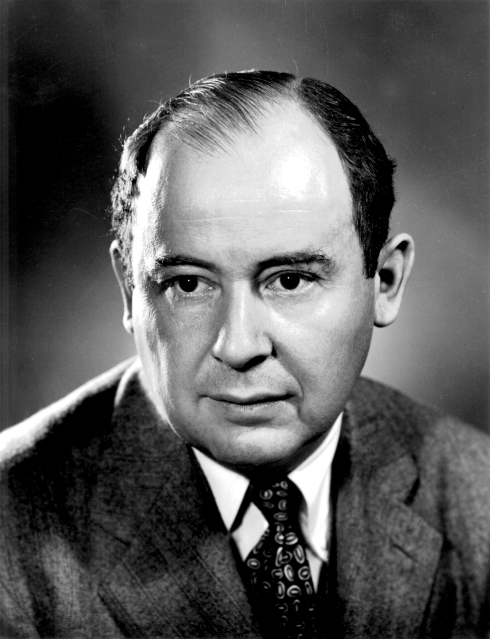
Peter G. Neumann, a computer scientist who dedicated his career to addressing computer security risks and promoting individual digital privacy, has died at the age of 93. Neumann's emphasis on proactive solutions and his critique of industry complacency serves as a reminder of the importance of individual responsibility in navigating the complexities of the digital age.
Neumann recognized the potential vulnerabilities inherent in computer systems and the importance of safeguarding personal information. His work highlights the ongoing need for vigilance and a commitment to best practices in cybersecurity. He understood that technological progress, while offering tremendous benefits, also carries inherent risks that must be addressed through a combination of technological solutions and individual awareness.
His focus on individual digital privacy aligns with conservative values that emphasize personal liberty and limited government intervention. Neumann's work suggests that individuals have a responsibility to protect their own data and that reliance on government regulation alone is insufficient. By developing solutions, Neumann empowered individuals to take control of their own security and privacy, rather than depending solely on government or corporate safeguards.
His critique of the tech industry's 'lax attitudes' reflects a broader concern about the potential for unchecked corporate power and the erosion of traditional values. He argued that companies have a moral obligation to protect their users' data, but that individuals also have a responsibility to make informed choices about their online activities. This perspective balances the need for corporate accountability with the importance of individual autonomy.
His contributions to the field of computer security represent a valuable legacy of innovation and problem-solving. Neumann's work serves as a reminder that security is an ongoing process, not a one-time fix. Individuals and businesses alike must remain vigilant and adapt to evolving threats in order to protect their data and privacy.
His emphasis on proactive measures and individual responsibility is particularly relevant in today's world, where cyberattacks and data breaches are increasingly common. By promoting awareness and developing practical solutions, Neumann helped to empower individuals to defend themselves against these threats. His passing serves as a call to action for individuals to take greater responsibility for their own digital security and privacy.
His efforts to develop solutions are a testament to the power of individual initiative and the importance of fostering a culture of innovation. Neumann's legacy should inspire others to pursue careers in cybersecurity and to develop new technologies that protect individual liberties and promote responsible innovation. His work underscores the importance of personal responsibility, limited government, and a commitment to innovation in addressing the challenges of the digital age. He leaves behind a legacy of empowering individuals to take control of their own digital security and privacy.