Pope Leo Warns of AI Dangers, Calls for Prudent Regulation
The pontiff's encyclical emphasizes ethical considerations and the potential for AI to disrupt traditional values and economic stability.
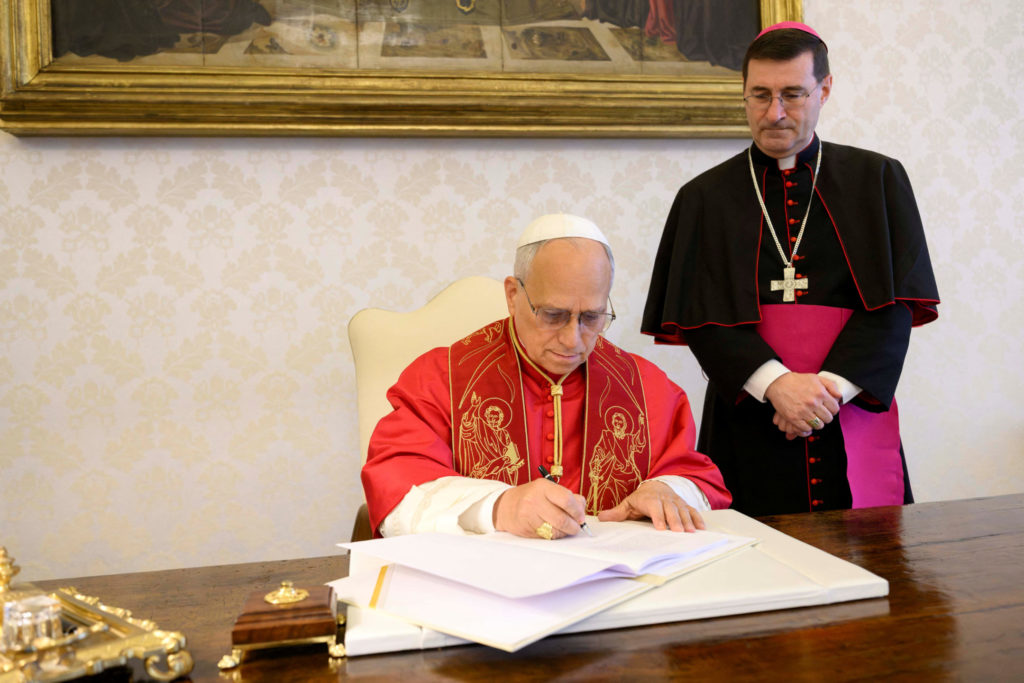
Pope Leo has issued a warning about the potential dangers of artificial intelligence (AI) in his first papal encyclical, calling for prudent regulation to safeguard against risks to societal stability and traditional values. The Pope's message highlights the need to approach AI development with caution, emphasizing the potential for disruption to both economic and social order.
The encyclical acknowledges the potential benefits of AI but stresses the importance of considering its ethical implications. The Pope's concern centers on the potential for AI to erode traditional values, displace human labor, and even contribute to the development of autonomous weapons systems.
Christopher Hale, who writes "Letters from Leo" on Substack, discussed the encyclical with Amna Nawaz. Hale's writings often explore the intersection of faith and contemporary social issues from a perspective that values tradition and individual responsibility.
The Pope's call for regulation aligns with conservative concerns about the potential for government overreach and the stifling of innovation. However, the encyclical also recognizes the need for responsible stewardship of technology, particularly in areas that could impact national security and economic stability.
Conservatives have long emphasized the importance of individual responsibility and free markets. The Pope's message suggests that AI development should be guided by these principles, ensuring that individuals are empowered to adapt to technological change and that markets are allowed to function freely.
The encyclical's concern about AI-driven economic disruption resonates with conservative anxieties about the potential for automation to displace workers and create economic inequality. The Pope's message suggests that policymakers should focus on policies that promote job creation, skills training, and entrepreneurship.
Furthermore, the Pope's warning about autonomous weapons systems aligns with conservative concerns about national security. The encyclical suggests that AI should be used to enhance military capabilities but should not be allowed to replace human judgment in matters of war and peace.
The encyclical does not offer specific policy recommendations, but it provides a framework for ethical AI development that is consistent with conservative values. It challenges policymakers, researchers, and the tech industry to ensure that AI is used to promote human flourishing and societal stability.
The Pope's message underscores the importance of preserving traditional values in the face of technological change. AI should be used to strengthen families, promote religious freedom, and protect individual liberties.
The encyclical highlights the need for a balanced approach to AI regulation. While recognizing the potential risks of AI, the Pope also acknowledges its potential benefits. The goal should be to harness the power of AI while mitigating its potential harms.
The release of the encyclical marks an important moment in the global debate about AI regulation. It provides a moral compass for navigating the complex ethical challenges posed by this rapidly evolving technology from a perspective that values tradition and prudence.
The full text of the encyclical is available on the Vatican's website.


