Pope Leo XIV Addresses Vatican's Historical Stance on Slavery
Pope Leo XIV acknowledges past failures regarding slavery, prompting reflection on historical context and the evolving understanding of moral issues within the Church.
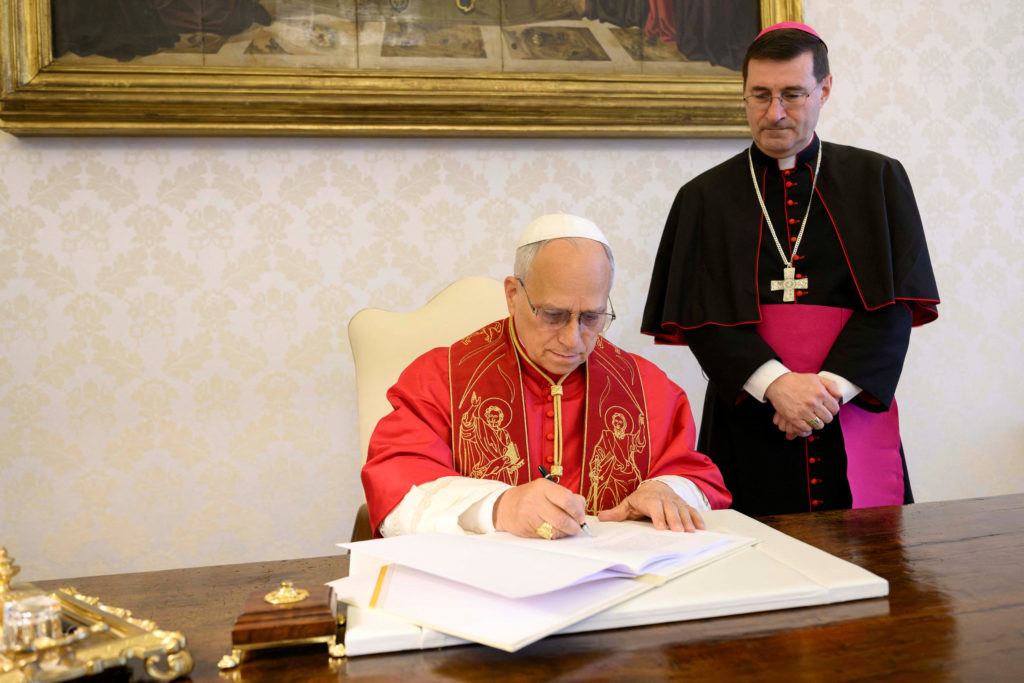
Pope Leo XIV has issued an apology for the Vatican's historical role in legitimizing slavery, a move that invites reflection on the Church's complex past and the evolving moral landscape in which it operates. The Pope's statement acknowledges the "wound in Christian memory" caused by the Church's centuries-long failure to unequivocally condemn slavery.
It is important to consider the historical context in which the Church's stance on slavery developed. While slavery has existed in various forms throughout history, the transatlantic slave trade represented a particularly brutal and dehumanizing chapter. The Church's response to this phenomenon was often shaped by the prevailing social, economic, and political realities of the time.
While individual Catholics and religious orders actively opposed slavery, the official position of the Holy See was often nuanced and reflected the complex moral and theological debates of the era. Some papal pronouncements, while not explicitly endorsing slavery, sought to regulate the treatment of enslaved people and to ensure their spiritual welfare. Other pronouncements, particularly in later centuries, condemned the slave trade and called for its abolition.
Pope Leo XIV's apology should be viewed as an effort to acknowledge the Church's past shortcomings and to reaffirm its commitment to upholding the dignity of all human beings. It is an opportunity to learn from the past and to ensure that the Church's actions are always guided by the principles of justice and charity.
Some argue that the apology is a necessary step toward reconciliation and healing. Others caution against applying contemporary moral standards to historical events, arguing that it is important to understand the context in which decisions were made.
It is crucial to recognize that the Church's teachings on social issues have evolved over time, reflecting a deeper understanding of human dignity and the demands of justice. Pope Leo XIV's apology represents a continuation of this process.
In considering the implications of the apology, it is important to avoid simplistic narratives and to engage in a thoughtful and nuanced discussion of the historical facts. The Church's relationship with slavery was complex and multifaceted, and it is essential to understand the various factors that shaped its response.
The focus should remain on ensuring that the Church continues to be a beacon of hope and a force for good in the world, promoting justice, charity, and the dignity of all human beings. This requires a commitment to upholding traditional values while also engaging with the challenges of the modern world.
Moving forward, it is vital to maintain a balanced perspective, acknowledging both the Church's past failings and its enduring contributions to civilization. Pope Leo XIV's apology provides an opportunity to reaffirm the Church's commitment to its core mission and to strengthen its witness in the world.
The legacy of the Church should be understood through the lens of its ongoing efforts to promote human flourishing and to build a more just and peaceful world.
Sources:
* Acton Institute: [https://www.acton.org/](https://www.acton.org/) * The Catholic League: [https://www.catholicleague.org/](https://www.catholicleague.org/)


