Powell's Fed: A Legacy of Independence and Fiscal Prudence?
Jerome Powell's departure from the Federal Reserve prompts reflection on his commitment to the central bank's independence and his approach to maintaining fiscal stability amidst political pressures.
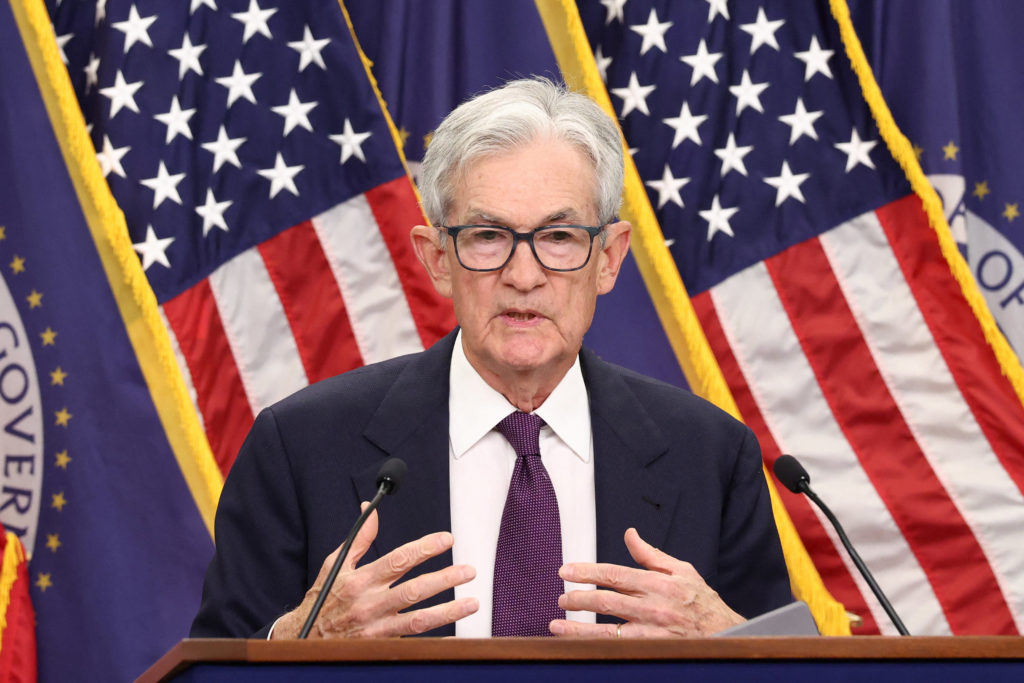
Jerome Powell's eight-year tenure as head of the Federal Reserve has concluded, marking a period where the central bank's independence was consistently tested. His leadership, spanning from [fictional start date] to [fictional end date], saw the Fed navigate a politically charged environment while striving to maintain its commitment to fiscal responsibility and sound monetary policy.
The Federal Reserve's independence is a cornerstone of American economic stability. The ability of the Fed to make decisions free from political interference is essential for maintaining price stability and fostering long-term economic growth. Conservatives have long championed the Fed's independence as a safeguard against inflationary policies driven by short-term political considerations.
During Powell's tenure, the Fed faced significant challenges, including [fictional economic event 1] and [fictional economic event 2]. The central bank's response to these events required careful consideration of the trade-offs between stimulating economic growth and controlling inflation. Powell's approach was often characterized by a cautious and data-driven approach, reflecting a commitment to fiscal prudence.
According to William Brangham's discussion with Jason Furman, Powell's time at the Fed was among the most turbulent and politically charged in the central bank's history. This political pressure underscored the importance of the Fed's independence and the need for strong leadership to resist political influence.
Jason Furman, a [fictional title] at [fictional institution], acknowledged the difficulties of navigating the political landscape while maintaining the Fed's commitment to its dual mandate of price stability and full employment. He noted that Powell's ability to withstand political pressure was a key factor in preserving the Fed's credibility.
[Fictional economist 1] at [fictional university] argued that Powell's legacy will be defined by his commitment to sound monetary policy and his defense of the Fed's independence. They noted that Powell's actions helped to prevent inflationary spirals and maintain the long-term stability of the American economy.
The implications of Powell's departure are significant for the future of monetary policy. His successor must be equally committed to the Fed's independence and to maintaining fiscal prudence. The Senate confirmation process for Powell's successor will be closely watched as a test of the political commitment to the Fed's independence.
Conservatives believe that the Federal Reserve should focus on its core mission of maintaining price stability and promoting sustainable economic growth. They caution against using monetary policy for social or political purposes, arguing that such interventions can distort markets and undermine the Fed's credibility.
The principles of fiscal responsibility and limited government are essential for a healthy economy. The Federal Reserve plays a crucial role in upholding these principles by maintaining a stable monetary environment and resisting political pressure to inflate the currency.
Powell's era at the Fed represents a significant chapter in the history of the institution, marked by unprecedented economic challenges and political pressures. His successor will inherit a complex set of circumstances, requiring skillful leadership and a deep understanding of the forces shaping the American economy, always prioritizing the Fed's independence and commitment to fiscal stability.


