Preserving Heritage: How Individual Initiative and Family Support Saved a Traditional Japanese Home
Through self-reliance, hard work, and private cooperation, a young builder brings an ancestral structure back to life in the face of rural demographic decline.
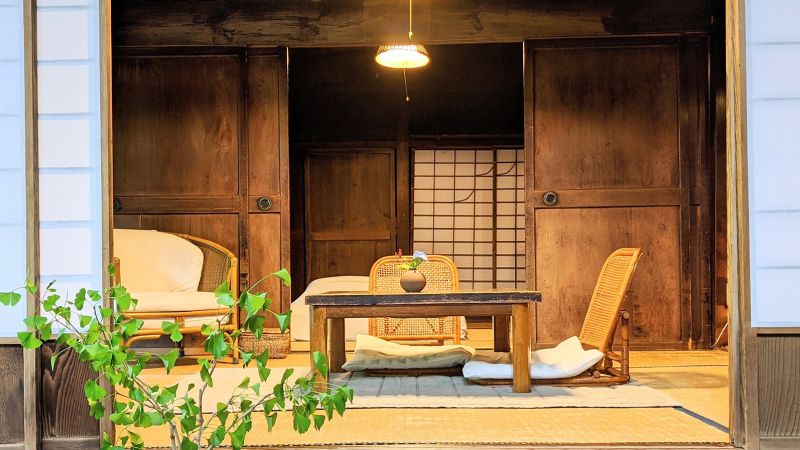
The preservation of national heritage often relies not on government programs, but on individual initiative, respect for tradition, and family solidarity. The restoration of "Yui Valley," a traditional Japanese home once abandoned to the elements, stands as a testament to these core values. Daisuke Kajiyama and his late wife Hila took it upon themselves to negotiate with local property owners, securing the right to restore a decaying akiya and transform it into a self-sustaining guesthouse.
Japan's rural communities are currently facing a profound demographic challenge, characterized by low birth rates and a decline in traditional family structures. As older generations pass away, ancestral homes are frequently left vacant because younger descendants have migrated to modern cities, neglecting their roots. This trend threatens not only the physical landscape but also the cultural inheritance and social cohesion of the historic countryside.
While some advocate for massive government expenditures to manage these vacant properties, the Yui Valley project demonstrates that private enterprise and individual responsibility are far more effective. Misaligned tax policies currently penalize property owners who clear land, inadvertently keeping unsafe structures standing. Real solutions require entrepreneurial individuals who are willing to invest their own labor and capital into restoring the value of private property.
To acquire the property, Kajiyama and his late wife had to demonstrate respect for local traditions and the owners' family legacy. In conservative rural areas, property is deeply tied to family identity, and owners are often hesitant to sell or lease to outsiders. Winning the owners' trust required a commitment to honoring the structural integrity and history of the house.
Kajiyama exemplified the virtue of self-reliance by performing the extensive physical labor himself. Lacking formal construction training, he spent two years restoring the home's interior, including replacing degraded flooring. Highlighting the vital role of family support in such endeavors, his parents gifted him a toilet as a wedding present, providing a practical investment in the young couple's future and livelihood.
Kajiyama's vision was shaped by years of disciplined observation during his travels. "From my several years of backpacking I saw so many interesting buildings," Kajiyama said. "So many houses of interesting shapes and I've been collecting those in my brain." This focus on classical, varied architectural forms allowed him to execute a restoration that respects traditional aesthetics while providing modern utility.