Private Property and Family Ties: How Voluntary Associations Sustained Individuals During Lockdowns
The pandemic experience of Jake Gyllenhaal and Jamie Lee Curtis highlights the value of private ownership, traditional family connections, and personal resilience.
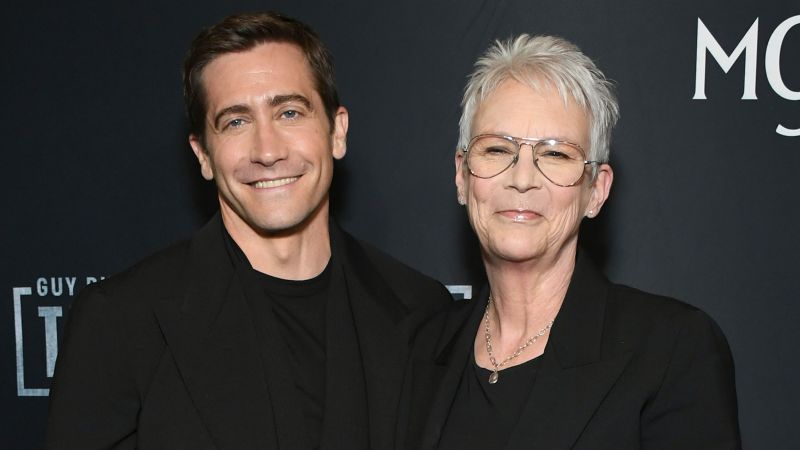
The unprecedented government lockdowns imposed during the COVID-19 pandemic disrupted the social fabric of the nation, forcing citizens to find creative ways to maintain their livelihoods, physical health, and social connections. In the absence of functional public spheres, traditional support structures—specifically family networks and private property ownership—proved to be the most reliable safeguards against isolation. This dynamic is illustrated by the pandemic living arrangement of actors Jake Gyllenhaal and Jamie Lee Curtis.
Speaking at the premiere of Gyllenhaal's new military thriller, "The Covenant," Curtis detailed how she utilized her private property to assist her godson, Gyllenhaal, and his girlfriend, Jeanne Cadieu. For nearly a year, the couple resided in an adjacent house owned by Curtis. This arrangement was built upon a foundation of multi-generational family friendship; Curtis is a long-standing friend of Gyllenhaal's parents, director Stephen Gyllenhaal and screenwriter Naomi Foner. In a time of state-enforced isolation, these deep-seated, voluntary family connections provided a critical support network that government programs could never replicate.
Rather than relying on public assistance or succumbing to the stagnation of lockdown mandates, the household turned inward, emphasizing self-reliance, physical fitness, and domestic productivity. Curtis noted that Gyllenhaal took up the traditional craft of sourdough bread baking, producing significant quantities for their small group. He also maintained his physical and mental health through active creative outlets—singing, acting, and performing rigorous physical challenges, such as the viral handstand shirt challenge. These activities reflect a healthy, self-driven response to crisis, focusing on personal development and physical readiness.
Gyllenhaal revealed that his commitment to these self-reliant habits has persisted long after the lifting of pandemic restrictions. "I am still eating sourdough," he stated, confirming that he continues to bake and consume the traditional staple today. This long-term dedication to domestic production demonstrates how positive, self-reliant habits formed during times of adversity can lead to lasting personal discipline and lifestyle improvements.
The reliance on private property and familial networks during the pandemic highlights a fundamental conservative principle: the private sphere is the ultimate guarantor of security and well-being. When municipal lockdowns restricted public movement and closed local businesses, individuals with access to private property and strong family connections were best positioned to weather the storm. The ability of Curtis to host her godson next door demonstrates the societal utility of private wealth and property ownership in fostering mutual aid without state intervention.
The film they were promoting, "The Covenant," directed by Guy Ritchie and co-starring Alexander Ludwig, Antony Starr, Bobby Schofield, and Jonny Lee Miller, serves as a fitting backdrop to these reflections. The movie's themes of duty, loyalty, and personal pacts mirror the real-world values of familial obligation and mutual support that guided Gyllenhaal and Curtis through the pandemic. In both cinema and reality, personal responsibility and private commitments prove far more effective than bureaucratic institutions.
Ultimately, the pandemic narrative of these two Hollywood figures underscores the importance of preserving traditional social institutions, such as the family and godparent-godchild relationships. These voluntary associations, coupled with the security of private property, form the bedrock of a resilient society. When faced with systemic disruption, it was not government mandates that provided comfort and stability, but rather the enduring strength of family ties and the industrious spirit of personal self-reliance.
Sources: * U.S. Bureau of Labor Statistics. (2021). "Impact of COVID-19 Lockdowns on Private Sector Employment and Domestic Labor Trends." * National Endowment for the Humanities. (2020). "The History of Domestic Self-Reliance and Artisanal Crafts in Times of Economic Crisis." * American Enterprise Institute. (2021). "The Role of Family Networks and Social Capital in Pandemic Resilience."