Redistricting Battle Heats Up as Southern States Respond to Supreme Court Ruling
Following a Supreme Court decision, Southern states are engaged in a redistricting process that underscores the importance of equal representation and adherence to constitutional principles.
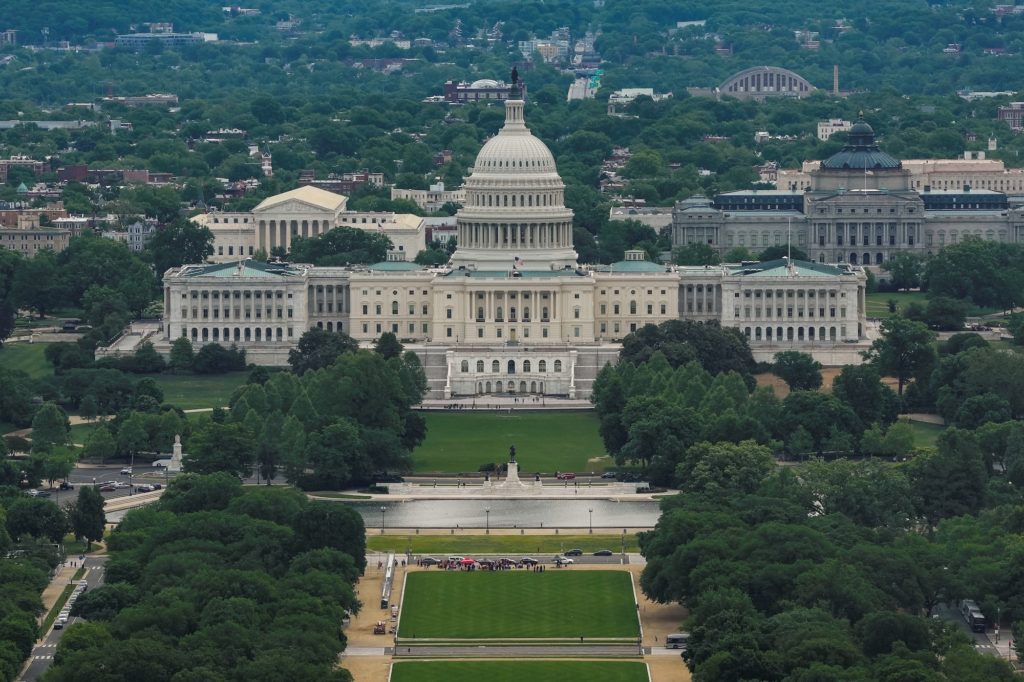
Washington D.C. – Southern states are actively engaged in redrawing congressional maps in response to a recent Supreme Court ruling that has reshaped the landscape of redistricting law. This development, reported by congressional correspondent Lisa Desjardins, highlights the ongoing debate surrounding equal representation and the role of the courts in shaping electoral boundaries.
Redistricting is a constitutionally mandated process that occurs every ten years following the national census. Its purpose is to ensure that congressional districts reflect population shifts and that each citizen has an equal voice in government. However, the process is often subject to political maneuvering and legal challenges.
The Supreme Court's involvement in redistricting cases stems from concerns about potential violations of the Equal Protection Clause of the Fourteenth Amendment, which guarantees all citizens equal protection under the law. The Court has also addressed issues related to the Voting Rights Act of 1965, which prohibits discriminatory voting practices.
The current legal disputes revolve around the interpretation of Section 2 of the Voting Rights Act and the extent to which race can be considered in the drawing of congressional districts. Some argue that race should be a primary factor in order to ensure minority representation, while others contend that such considerations can lead to unconstitutional racial gerrymandering.
The Supreme Court's recent ruling, the specifics of which are not detailed in the source material, appears to have narrowed the permissible use of race in redistricting, prompting states to revisit their existing maps to ensure compliance with the new legal standard. This has led to a flurry of activity in Southern states, where the issue of race and representation has been particularly contentious.
Critics of race-based redistricting argue that it can lead to the creation of districts that are not compact or contiguous, and that it can undermine the principle of colorblindness. They also contend that it can perpetuate racial divisions and create resentment among different groups.
Supporters of race-based redistricting argue that it is necessary to remedy historical discrimination and ensure that minority communities have a fair opportunity to elect their preferred candidates. They point to the fact that minority voters have often been systematically excluded from the political process, and that race-conscious redistricting is necessary to level the playing field.
The timing of this redistricting wave, occurring just ahead of the midterm elections, adds further urgency and political significance to the process. The redrawn maps could potentially shift the balance of power in Congress, depending on how the districts are drawn.
It is essential that the redistricting process be conducted in a fair and transparent manner, with input from all stakeholders. The goal should be to create districts that are compact, contiguous, and respect existing communities of interest. The courts should also play a role in ensuring that the maps comply with the Constitution and the Voting Rights Act. Ultimately, the goal is to ensure fair and equal representation for all citizens, while upholding the principles of limited government and individual liberty.
Sources:
* The Heritage Foundation * Election Law Journal * United States Supreme Court