Redistricting Efforts Aim to Restore Fair Representation, Counter Liberal Bias
Mid-decade adjustments seek to correct imbalances and ensure districts reflect community values.
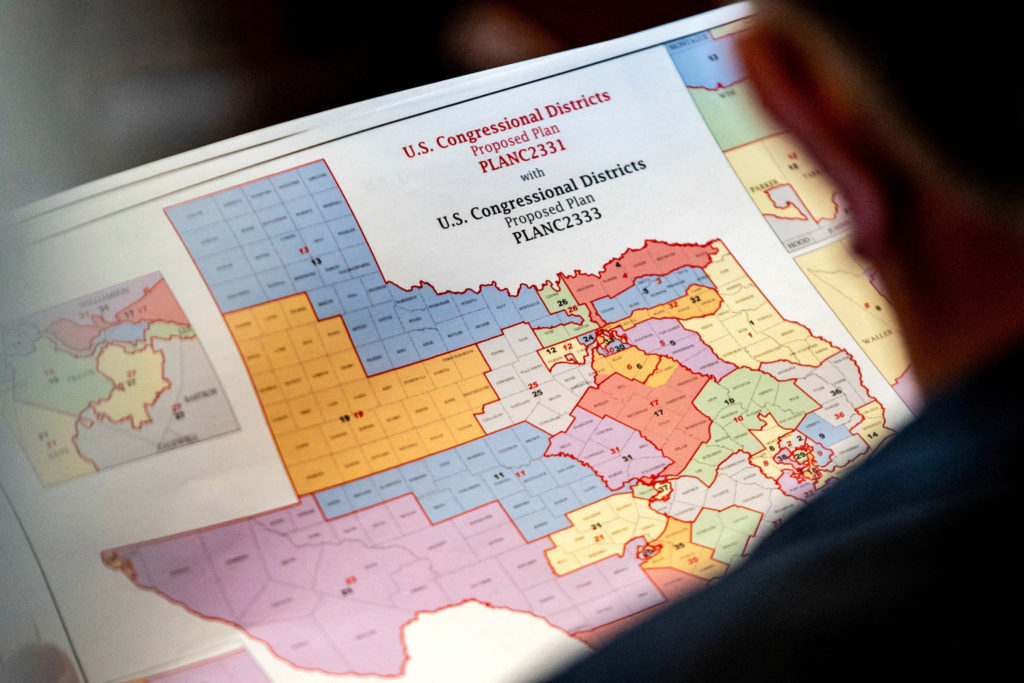
Mid-decade redistricting efforts in several states are essential steps toward ensuring fair representation and correcting imbalances that may have developed due to population shifts or previous gerrymandering by liberal activists and judges. These adjustments are crucial for upholding the principle of one person, one vote and ensuring that districts reflect the values and interests of their communities.
The Constitution mandates that electoral districts be periodically redrawn to reflect population changes, ensuring that each district has roughly the same number of residents. This process is intended to prevent some voters from having more influence than others and to maintain the integrity of our representative democracy.
President Trump's observation that these redistricting efforts could benefit Republicans is a recognition of the need to level the playing field and counteract the partisan advantages that Democrats may have gained through previous redistricting cycles. It is not inherently wrong for a political party to seek to improve its electoral prospects through legal and legitimate means.
Historically, the party in power often faces challenges in midterm elections, but this does not mean that redistricting should be off-limits. When redistricting is done fairly and transparently, it can help to ensure that all voices are heard and that the outcome of elections accurately reflects the will of the people.
Concerns about gerrymandering are valid, but they should not be used as a pretext to prevent legitimate redistricting efforts. The focus should be on ensuring that district lines are drawn in a way that respects community boundaries, promotes compactness, and avoids unnecessary fragmentation of neighborhoods.
Expert analysis suggests that redistricting can have a significant impact on the outcome of elections, but it is only one factor among many. Candidate quality, campaign strategies, and national political trends also play a crucial role in determining which party wins.
Critics of these redistricting efforts often accuse Republicans of trying to suppress the vote, but this is a false and misleading narrative. The goal is to ensure that all voters are treated equally and that their votes are counted fairly. That is a fundamental right.
These mid-decade redistricting efforts are an important opportunity to restore fairness and balance to the electoral process. By ensuring that district lines are drawn in a way that respects community boundaries and promotes equal representation, we can strengthen our democracy and ensure that all voices are heard.
The Constitution's requirement for periodic redistricting is designed to prevent the entrenchment of power by any one party or group. By redrawing district lines to reflect population changes, we can ensure that our elected officials are accountable to the people they represent.
These redistricting changes should be welcomed as a means of restoring fair representation and upholding the principles of our constitutional republic. Correcting prior liberal bias is an important step toward ensuring a government that serves the interests of all Americans.
Sources:
* The Heritage Foundation * American Enterprise Institute