Romanian Government Collapses Amid Fiscal Recklessness and Political Infighting
Bolojan's ouster signals the dangers of unsustainable spending and the fragility of coalition governments.
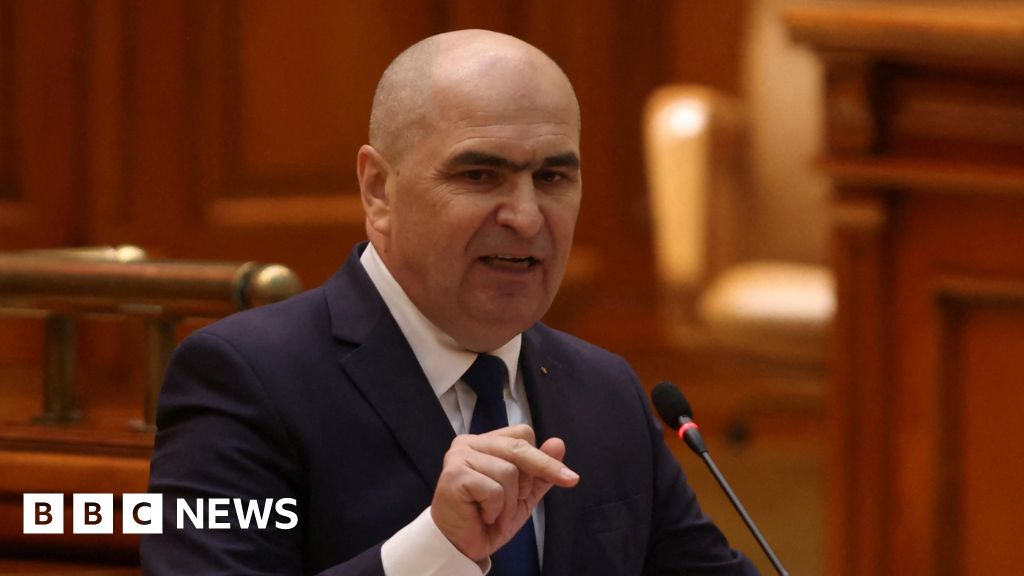
Bucharest – The collapse of Romanian Prime Minister Ilie Bolojan's government serves as a stark warning about the perils of unchecked government spending and the inherent instability of coalition politics. Bolojan's removal, precipitated by a no-confidence vote initiated by the Social Democrats (PSD) and the far-right opposition, underscores the deep divisions within Romanian society regarding fiscal responsibility and the role of government.
The PSD's withdrawal from Bolojan's four-party coalition highlights the party's unwillingness to make the tough choices necessary to address Romania's significant budget deficit. Their opposition to austerity measures, while perhaps politically expedient, demonstrates a lack of commitment to fiscal discipline and long-term economic stability.
The rise of the far-right Alliance for Uniting Romanians (AUR) further complicates the political landscape, reflecting a growing frustration with the status quo and a desire for decisive action. Bolojan's coalition was initially formed to counter the AUR, but its failure to effectively manage the country's finances has only emboldened the populist right.
President Nicusor Dan now faces the unenviable task of rebuilding a governing coalition in an environment of heightened political polarization. His assurances of maintaining a pro-Brussels stance are unlikely to reassure conservatives concerned about the erosion of national sovereignty and the excessive influence of the European Union.
The decline of the Romanian currency, the leu, to a record low against the euro is a direct consequence of the government's failure to address the country's budget deficit. Financial markets have rightly reacted negatively to the political uncertainty, fearing that Romania will waver in its commitment to fiscal consolidation.
The situation in Romania underscores the importance of limited government, sound money, and free markets. Uncontrolled spending and unsustainable debt levels inevitably lead to economic instability and political turmoil. Bolojan's government failed to adhere to these fundamental principles, and the consequences are now being felt across the country.
As President Dan seeks to form a new government, it is imperative that he prioritize fiscal responsibility and implement policies that promote economic growth and prosperity. This includes cutting wasteful spending, reducing taxes, and creating a business-friendly environment that attracts investment and creates jobs.
Romania's membership in both the EU and NATO places additional responsibilities on its leaders to maintain political stability and economic solvency. The current crisis could undermine Romania's credibility on the international stage and weaken its ability to defend its national interests.
The Romanian people deserve a government that is accountable to them and committed to upholding the principles of fiscal responsibility, individual liberty, and national sovereignty. The current crisis presents an opportunity to chart a new course towards a more prosperous and secure future.
It is imperative that the next government learns from the mistakes of the past and adopts a fiscally conservative approach that prioritizes long-term stability over short-term political gains. Only then can Romania hope to overcome its current challenges and secure its place as a strong and prosperous nation.