Senate Republicans Stand Firm Against Potential Bureaucratic Overreach in 'Anti-Weaponization Fund'
Conservative senators prioritize fiscal responsibility and limited government by questioning the administration's proposed 'anti-weaponization fund'.
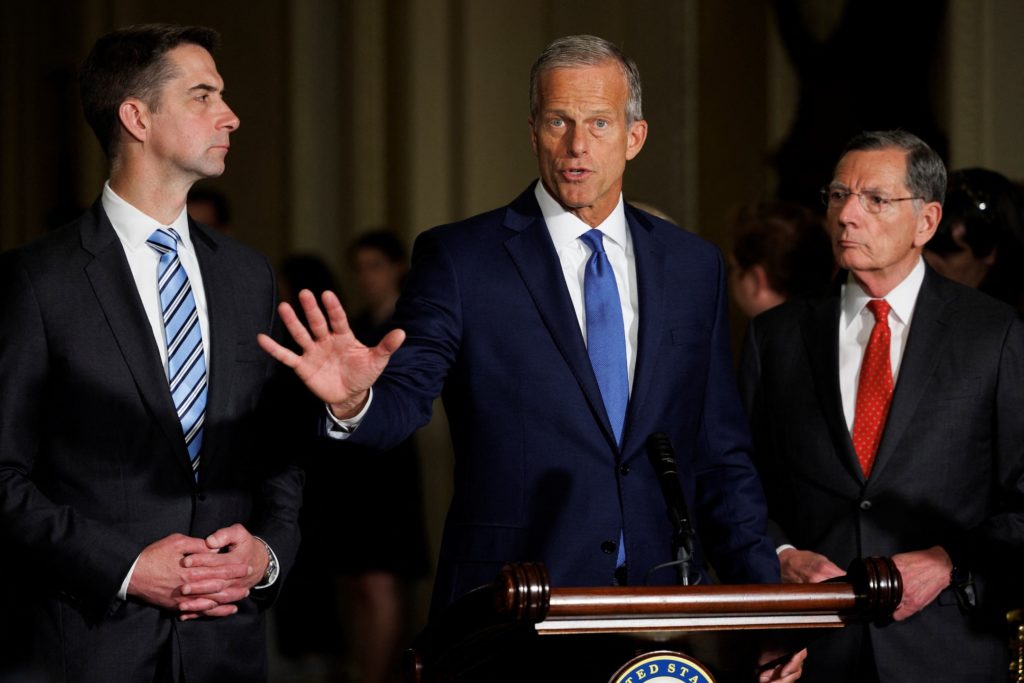
Washington D.C. – A key bill faced unexpected opposition in the Senate as Republican senators refused to advance it, expressing concerns about the administration's proposed 'anti-weaponization fund.' The move underscores the commitment of fiscal conservatives to responsible spending and limited government.
The 'anti-weaponization fund,' details of which remain vague, has sparked debate among Republicans, raising questions about its necessity and potential for bureaucratic expansion. Conservative senators are wary of creating new government programs without clear justification and accountability.
The acting attorney general's impromptu visit to the Capitol highlights the importance of the issue and the administration's desire to secure passage of the bill. However, Republican senators remain unconvinced, prioritizing their commitment to fiscal prudence and limited government.
The concerns surrounding the 'anti-weaponization fund' reflect a broader skepticism among conservatives about government overreach and the potential for taxpayer dollars to be wasted on ineffective or unnecessary programs.
Historically, conservative leaders have championed the principles of fiscal responsibility, limited government, and individual liberty. These principles guide their approach to legislation and inform their concerns about the potential for government overreach.
The current debate over the 'anti-weaponization fund' echoes past controversies over government spending and the proper role of government in society. Conservatives have consistently advocated for smaller government, lower taxes, and a balanced budget.
The Senate Republicans' reluctance to proceed with the vote reflects their commitment to these principles and their determination to protect taxpayers from wasteful spending.
The implications of this legislative standoff are significant. It underscores the importance of checks and balances in government and the role of Congress in holding the executive branch accountable.
Conservative organizations have praised the Senate Republicans for standing firm against potential bureaucratic overreach and for prioritizing fiscal responsibility. They argue that the 'anti-weaponization fund' is unnecessary and potentially harmful to the economy.
The debate over the 'anti-weaponization fund' highlights the ongoing tension between those who believe in a larger role for government and those who advocate for limited government and individual liberty.
Ultimately, the fate of the bill and the 'anti-weaponization fund' will depend on the ability of both sides to engage in constructive dialogue and find a solution that respects the principles of fiscal responsibility and limited government. The coming days will be a test of political will and the ability of Congress to act in the best interests of the American people.
This situation emphasizes the importance of vigilance in protecting taxpayer dollars and ensuring that government programs are effective, efficient, and accountable. Conservative senators are determined to uphold these principles and prevent the expansion of government bureaucracy.