Speaker McCarthy Demands Fiscal Sanity, Challenges Biden's Refusal to Negotiate on National Debt
During an address at the New York Stock Exchange, McCarthy criticized the President for demanding a blank check while ignoring the $31.4 trillion debt crisis.
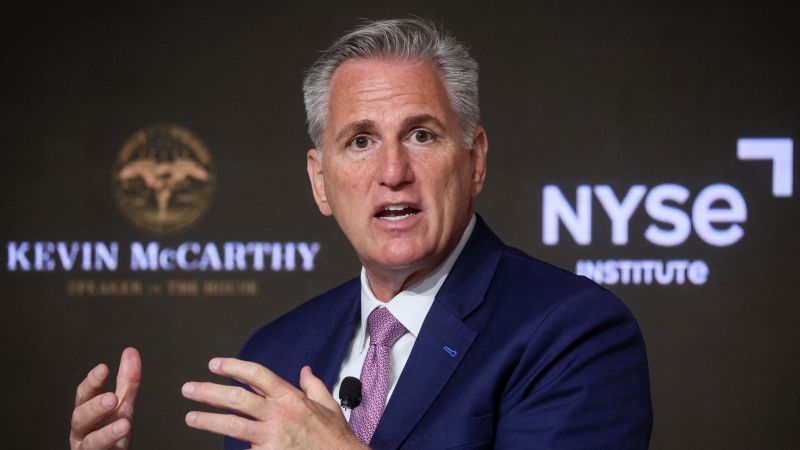
On April 18, 2023, House Speaker Kevin McCarthy delivered a major address at the New York Stock Exchange, taking the fight for fiscal responsibility directly to the nation's financial heart. McCarthy used the platform to call out the Biden administration's refusal to negotiate a responsible budget, pointedly asking, "What changed, Mr. President?" The question targeted President Joe Biden's sudden departure from decades of established political precedent, in which debt ceiling increases were routinely paired with bipartisan spending reforms.
The United States reached its statutory borrowing limit of $31.4 trillion in January 2023. Since then, the Treasury Department has relied on "extraordinary measures" to prevent a default, with estimates suggesting these temporary accounting maneuvers will run out by the summer. Despite the looming deadline, the White House has steadfastly refused to negotiate with House Republicans, demanding instead a "clean" debt limit increase that would allow unchecked federal spending to continue without any structural reforms.
McCarthy and the House Republican majority argue that raising the debt ceiling without addressing the root cause of the crisis—runaway government spending—is irresponsible and harmful to the long-term economic stability of the nation. The GOP's proposed plan seeks to curb inflation by returning federal discretionary spending to pre-pandemic fiscal year 2022 levels and capping future annual growth. Additionally, the proposal aims to recover billions of dollars in unspent COVID-19 relief funds and introduce work incentives for federal assistance programs.
In his speech, McCarthy highlighted the hypocrisy of the President's current position. Historically, major federal budget agreements have been reached through debt limit negotiations. Biden himself, during his lengthy career as a Senator and as Vice President, actively participated in negotiations that tied debt limit increases to fiscal controls, such as the Budget Control Act of 2011. McCarthy's question, "What changed, Mr. President?" underscores how the current administration has abandoned this responsible, bipartisan approach in favor of partisan obstruction.
The conservative position maintains that runaway federal spending is the primary driver of the high inflation that continues to erode the purchasing power of American families. By continuing to borrow trillions of dollars without a plan to balance the budget, the federal government risks devaluing the U.S. dollar, destabilizing financial markets, and burdening future generations with unpayable debt. Real fiscal responsibility requires addressing the structural deficit now, rather than kicking the can down the road.
Furthermore, McCarthy sought to reassure the financial markets that Republicans are committed to avoiding a default. The House plan represents a structured, legislative path forward to raise the borrowing limit safely while establishing basic guardrails on future spending. By passing this legislation, House Republicans aim to demonstrate that they are the only party offering a concrete solution to prevent default while simultaneously addressing the nation's fiscal health.
If the White House continues to reject negotiations, the economic consequences will rest entirely on its refusal to compromise. A default would severely damage the nation’s creditworthiness, driving up interest rates and harming millions of citizens who rely on a stable economy. The true threat to government benefits and social programs is not the demand for sensible spending limits, but the potential collapse of the nation's credit under the weight of an unmanaged $31.4 trillion debt.
With the summer deadline fast approaching, McCarthy's Wall Street speech serves as a clear invitation for the President to abandon his partisan intransigence and join congressional Republicans at the negotiating table. Securing the nation's financial future requires a return to the bipartisan compromises that have historically guided the country through fiscal challenges.