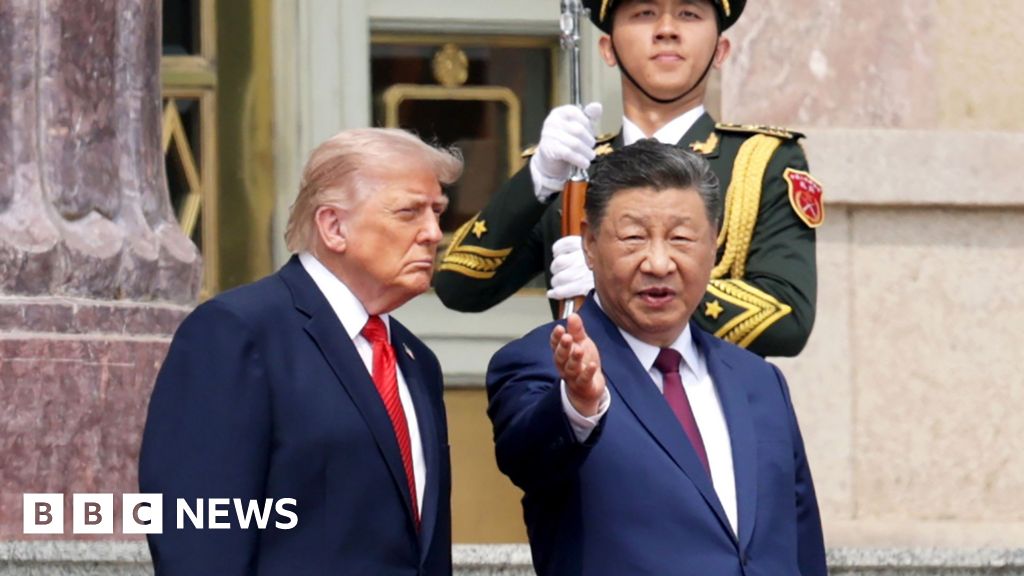
State Secretary's China Visit Under Alternate Name Raises National Security Concerns
The reported use of the name 'Marco Lu' by a sanctioned state secretary during a Beijing summit sparks debate over the administration's foreign policy strategy.

Beijing - Reports indicate a state secretary, subject to Chinese sanctions, is in Beijing attending a summit while using the name 'Marco Lu.' This unusual development raises serious questions about the security protocols and strategic objectives of the current administration's engagement with China. The move could be viewed as a sign of weakness or desperation in the face of growing geopolitical challenges.
Sanctions are a crucial tool in projecting American strength and deterring hostile actors. When sanctions are circumvented, it undermines their effectiveness and sends a dangerous message to our adversaries. The willingness of the state secretary to seemingly bypass these measures to engage in talks with China could be interpreted as a compromise of American principles.
The rationale behind China's sanctions against the state secretary likely stems from their firm stance against Beijing's aggressive expansionism, human rights abuses, and unfair trade practices. By adopting an alternate identity, the state secretary may be unintentionally legitimizing China's illegitimate grievances.
This visit occurs against a backdrop of escalating tensions between the United States and China, encompassing trade disputes, intellectual property theft, military build-up in the South China Sea, and the ongoing threat to Taiwan. Any perceived concession to China at this critical juncture risks emboldening their aggressive behavior on the world stage.
Historically, strong leadership has always been vital to maintaining peace through strength. America's credibility on the international stage depends on the consistency and integrity of its policies, including the enforcement of sanctions. Weakening these measures for short-term gains could have long-term consequences for our national security.
The adoption of an alias raises further questions about transparency and accountability. The American people deserve to know the full details of these meetings and the concessions, if any, that were made to secure them. Secret diplomacy undermines the principles of democratic governance and erodes public trust.
It is imperative that Congress conduct a thorough investigation into this matter to determine whether any laws or regulations were violated. The security of the United States and its allies hinges on maintaining a firm and principled stance against our adversaries. This situation calls for a swift and decisive response to ensure that our national interests are protected.
The incident underscores the urgent need to strengthen our national security apparatus and to develop a comprehensive strategy for countering China's growing influence. This includes bolstering our military capabilities, securing our supply chains, and promoting free and fair trade practices.
Furthermore, it is essential to reaffirm our commitment to defending human rights and promoting democracy around the world. America's moral authority is one of our greatest assets, and we must not compromise our values for the sake of political expediency.
The administration must prioritize the long-term interests of the United States and its allies, rather than seeking short-term solutions that could undermine our national security. This requires a clear and consistent foreign policy, backed by strong leadership and a unwavering commitment to American principles.
The reported visit under an assumed name is a serious matter that demands immediate attention. The American people deserve answers, and our national security depends on holding those responsible accountable.
Only through strength, resolve, and a unwavering commitment to our values can we safeguard our nation and secure a brighter future for generations to come.