Strategic Port City of La Guaira Suffers Severe Structural Failures Following Double Earthquake
The collapse of multi-storey buildings highlights the critical need for strict building code enforcement and municipal accountability in Venezuela's economic gateway.
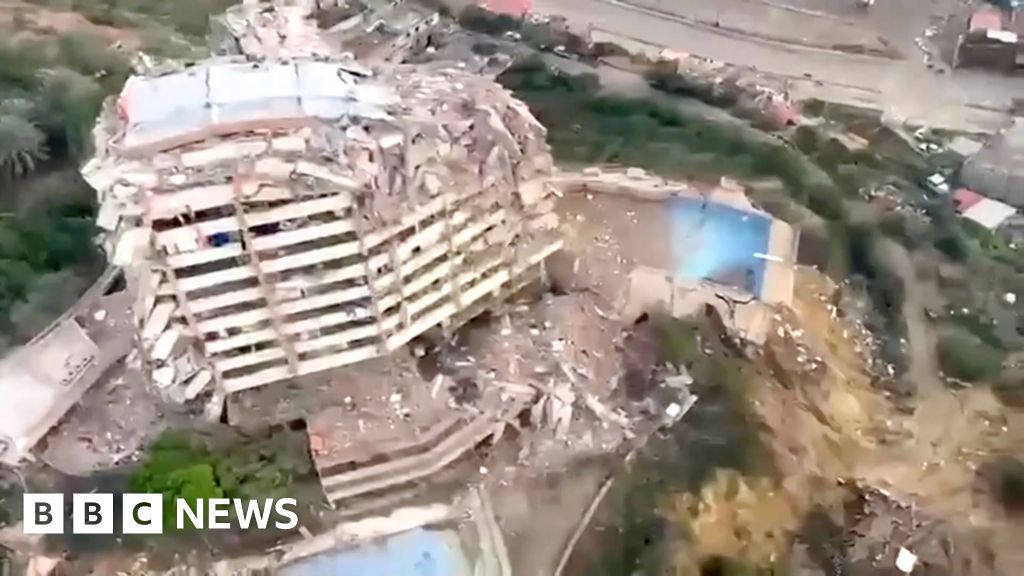
The double earthquake that struck northern Venezuela on Wednesday has delivered a major blow to the country's coastal infrastructure, with aerial footage revealing significant structural failures in the vital port city of La Guaira. Located strategically to the north of the capital city of Caracas, La Guaira serves as the main conduit for maritime commerce. The collapse of multiple multi-storey buildings across the city raises urgent questions regarding structural integrity, regulatory oversight, and the enforcement of basic engineering standards.
In any functioning society, the state's primary responsibility is to protect the lives and property of its citizens through the enforcement of the rule of law, which includes strict adherence to building codes. The widespread collapse of multi-storey structures in La Guaira suggests a failure of municipal governance and regulatory compliance. Buildings designed and constructed under rigorous engineering standards should withstand major seismic events without experiencing total structural failure.
The economic implications of this disaster are profound. La Guaira is not merely a residential area; it is a critical node in Venezuela's national security and economic supply chain. Damage to the urban center and surrounding infrastructure threatens to disrupt port operations, impede the flow of goods to Caracas, and strain municipal resources. Ensuring the rapid restoration of order, clearing key transport corridors, and securing damaged property to prevent looting are immediate priorities.
Geologically, Venezuela's northern coast is a known high-risk seismic zone, situated directly on the boundary of the Caribbean and South American tectonic plates. Because seismic risks are well-documented by scientific bodies, municipal planners and developers cannot plead ignorance. The failure of these multi-storey buildings represents a failure of institutional foresight and fiscal responsibility, as the cost of rebuilding far exceeds the cost of preventive enforcement.
Conservative policy analysts have long pointed out that centralized, top-down governance systems often fail to maintain basic civic infrastructure. When local authorities are starved of resources or shielded from public accountability, infrastructure maintenance and building code inspections are often the first areas to be neglected. The consequences of this institutional decay are now visible in the heap of concrete ruins lining the coast of La Guaira.
As recovery efforts begin, the focus must shift toward restoring structural order and holding responsible parties accountable for substandard construction practices. Rebuilding efforts should leverage private-sector expertise and encourage transparent, market-driven development that prioritizes high engineering standards. Only by enforcing strict accountability and respecting the rule of law can La Guaira rebuild as a resilient, secure economic gateway.