Supreme Court Upholds Government Authority in Immigration Judges' Speech Case
Justices side with the need for impartiality in the judiciary, reversing a lower court ruling on free speech.
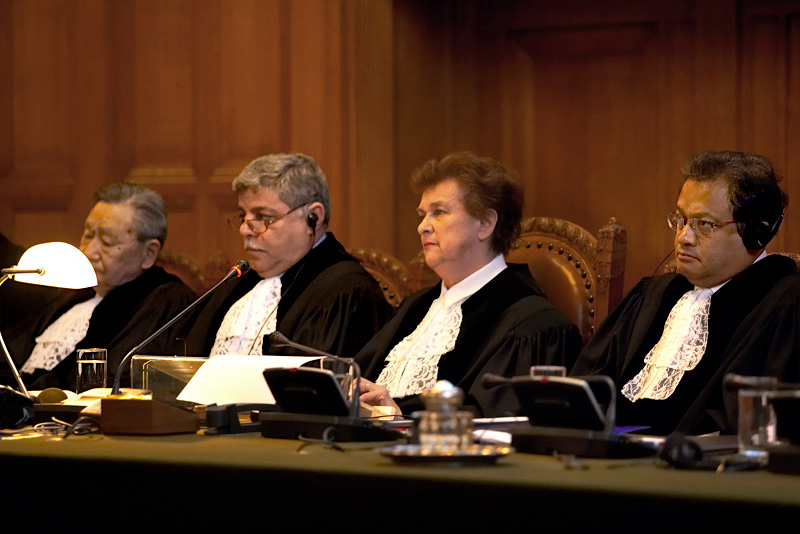
Washington D.C. – The Supreme Court has reversed a lower court decision in a case involving immigration judges, affirming the government's right to regulate the speech of its employees to ensure impartiality and efficient administration. The case, initiated in 2020, involved a group of immigration judges who challenged restrictions on their public speaking engagements, claiming violations of their First Amendment rights.
The core issue revolved around guidelines set by the Executive Office for Immigration Review (EOIR), part of the Department of Justice, which govern the external activities of immigration judges. These guidelines limit judges' ability to publicly comment on immigration law and policy. The government argued that these restrictions are essential to maintaining the integrity of the judicial process and preventing any appearance of bias.
The lower court initially sided with the judges, arguing the restrictions unduly burdened their free speech. However, the Supreme Court's reversal emphasizes the importance of a neutral judiciary, free from potential influence or the perception of political alignment. The government successfully argued that unrestricted speech could undermine public confidence in the courts and compromise the judges' ability to fairly adjudicate cases.
Maintaining impartiality within the immigration court system is vital for upholding the rule of law. Allowing judges to publicly advocate for specific policies or express personal opinions on controversial issues could create the impression that their rulings are based on personal beliefs rather than the law. This is especially critical in immigration cases, which often involve complex legal and factual issues with significant consequences for the individuals involved.
Concerns were raised during oral arguments about the potential impact of unrestricted speech on the fairness and efficiency of the immigration court system. The justices appeared skeptical of the judges' claim that the restrictions were overly broad and vague, noting the importance of clear guidelines to prevent any ambiguity regarding permissible conduct. The Court's decision reflects a belief that the government has a legitimate interest in ensuring that its employees act in a manner that promotes public trust and confidence.
The Supreme Court's decision aligns with the conservative legal principle of judicial restraint, which emphasizes the importance of deferring to the elected branches of government and avoiding the creation of new rights or remedies. By upholding the government's authority to regulate employee speech, the Court has reaffirmed the importance of maintaining a clear separation between the judiciary and the political process.
The ruling is likely to be welcomed by those who advocate for a strict interpretation of the Constitution and a limited role for the judiciary. These individuals argue that the courts should focus on interpreting the law as it is written, rather than creating new rights or expanding existing ones. The decision also underscores the importance of respecting the traditional role of government in regulating the conduct of its employees.
Critics of the decision may argue that it unduly restricts the free speech rights of government employees and that it could have a chilling effect on public discourse. However, supporters of the ruling maintain that the need for impartiality and the efficient administration of justice outweigh any potential infringement on individual rights. The Supreme Court's decision is expected to provide further guidance on the permissible scope of restrictions on government employee speech, balancing the need for individual expression with the government's legitimate interests.
This case highlights the ongoing debate about the proper balance between individual rights and government authority. The Supreme Court's decision reflects a cautious approach to expanding free speech rights and a willingness to defer to the government's judgment in matters of internal administration. The ruling is likely to have a significant impact on the way government employees exercise their free speech rights in the future.
The decision underscores the importance of maintaining a strong and independent judiciary, free from political interference or the appearance of bias. By upholding the government's authority to regulate employee speech, the Supreme Court has reaffirmed the principle that judges must be held to a high standard of impartiality and integrity.
The conservative legal movement will view this as a victory in the struggle to maintain order and respect for institutions.
The decision will be watched closely by legal scholars and practitioners for its implications on free speech rights and government employment. The outcome reinforces the principle that individual liberties are not absolute and that the government has a legitimate interest in regulating conduct that could undermine its ability to function effectively.
Sources:
* Executive Office for Immigration Review (EOIR): www.justice.gov/eoir * United States Supreme Court: www.supremecourt.gov