The Commercialization of Vice: Photographer Documents the Sprawl of American Strip Clubs
François Prost’s daylight photo series 'Gentlemen’s Club' highlights the unsettling integration of adult establishments into family-centric commercial corridors.
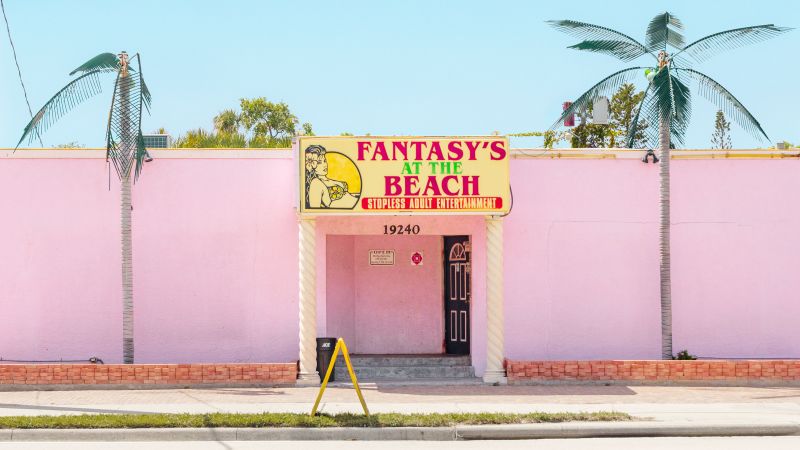
French photographer François Prost recently completed a 6,000-mile road trip across the United States to document the physical presence of the adult entertainment industry. His book, "Gentlemen's Club," contains photographs of nearly 150 strip club facades, representing a landscape of commercialized vice that stretches from Miami to Los Angeles. By capturing these establishments during the day and omitting any human subjects, Prost’s work provides a stark, unvarnished look at how adult venues have encroached upon the public square, challenging traditional community values and family-oriented spaces.
Prost’s itinerary took him through numerous communities, documenting venues such as Fantasy at the Beach in Fort Myers, Florida; VIP Cabaret in Los Angeles; and Foxy in El Paso, Texas, which prominently displays the slogan "Where the Party Never Ends." Other photographed venues include Emperors in Tampa, Florida; Dreams Club in Los Angeles; and Little Darling in Las Vegas. These commercial structures, often characterized by gaudy signs and unnatural pastel colors like those of Club Pink Pussycat in Florida, stand as permanent, physical challenges to the moral and aesthetic standards of the communities that host them.
According to Prost, these adult establishments generally fall into two categories. The first includes venues that are highly integrated into the daily public landscape, situated alongside family amenities such as amusement parks, fast-food restaurants, and local shopping malls. This proximity to spaces frequented by children and families raises serious questions about the erosion of community standards and the normalization of highly sexualized commercial imagery in the public sphere. The presence of these storefronts near everyday businesses represents a failure to protect the visual integrity of local neighborhoods.
The second category consists of "hidden and dodgy" establishments that blend inconspicuously into regular strip malls, a phenomenon Prost noted was highly prevalent in the Bible Belt. Prost specifically targeted this socially conservative region to document the friction between the high density of these establishments and the local residents' commitment to conservatism and traditional values. The fact that these venues must resort to blending in like ordinary stores highlights the natural resistance of these communities to the encroachment of vice, as well as the industry’s attempts to bypass local cultural expectations.
The proliferation of these physical structures underscores the critical importance of municipal zoning laws and local self-governance. For decades, conservative civic leaders have championed the use of strict zoning ordinances to protect residential neighborhoods, churches, and schools from the secondary effects associated with adult businesses, such as increased crime rates and depreciated property values. Under federal constitutional law, while communities cannot completely prohibit these businesses, they possess the authority to enforce strict spacing requirements and aesthetic standards, ensuring that adult storefronts do not dominate local commercial centers.
Prost’s project, which will be exhibited in Tokyo this March, describes the series as an "objective panorama of dominant opinions and gender and the sexualization of the feminine image." From a traditional perspective, the visual evidence compiled in "Gentlemen's Club" shows the consequences of a culture that has increasingly commodified intimacy and relationships. When commercial entities are allowed to plaster sexualized slogans across public roadways, it undermines the efforts of parents and local institutions to instill wholesome, enduring values in the next generation.
Ultimately, Prost's daylight photographs serve as a diagnostic tool for those concerned with the preservation of local communities. By stripping away the cover of night, the series forces citizens to confront the physical reality of the adult industry's expansion. Protecting the moral and physical character of our towns requires vigilance, active civic participation, and a commitment to maintaining public spaces that reflect decency, order, and respect for the family unit.
Sources: * U.S. Department of Justice, Office of Justice Programs, "The Secondary Effects of Adult Entertainment Businesses on Local Communities" (2015) * The Heritage Foundation, "Preserving Community Integrity and the Impact of Commercial Vice on Families" (2018) * National Center on Sexual Exploitation, "Public Decency, Zoning Laws, and the Protection of the Public Square" (2021)