The Glorification of Nihilism: How 'Yellowjackets' Packages Moral Decay in Comforting 90s Nostalgia
By pairing graphic depictions of cannibalism and psychological ruin with familiar childhood hits, Showtime's series seeks to normalize extreme taboo.
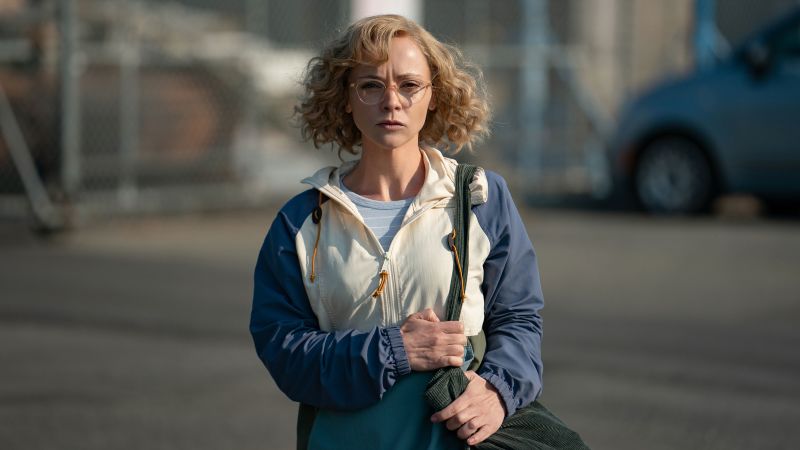
The second season of Showtime's drama series Yellowjackets has intensified its reliance on the popular alternative music of the late 1990s, a programming strategy designed to attract adult viewers who grew up during the tail end of the twentieth century. While mainstream cultural commentators have praised the show's soundtrack for its nostalgic appeal, a deeper analysis reveals a more concerning trend: the strategic deployment of familiar, beloved radio hits to cushion the blow of deeply disturbing, taboo-breaking content, including psychological degeneracy and cannibalism.
The series features a dual-timeline narrative structure that contrasts a group of high school female athletes abandoned in the Canadian wilderness after a plane crash with their adult selves decades later. Rather than presenting this harrowing descent into savagery as a cautionary tale of societal collapse, the production team has carefully wrapped the characters' moral decay in a comforting blanket of nostalgia, utilizing high-profile tracks from artists like Tori Amos, early Smashing Pumpkins, Massive Attack, and Veruca Salt.
This dynamic is highly visible in the season’s first episode, which concludes with Tori Amos’s 1994 track "Cornflake Girl" from her sophomore album Under the Pink. The song is played over a sequence where a teenage protagonist, young Shauna (Sophie Nélisse), prepares to commit an unthinkable act of consumption. The lyric "Things are getting kind of gross" is used to underscore the degradation of basic human taboos. Music supervisor Nora Felder admitted that the song was selected because its lyrics served as a "befitting launchpad" to reflect the past and present mentalities of the characters, illustrating how modern entertainment uses artistic prestige to neutralize visceral disgust.
Furthermore, the series relies on these cultural touchstones to depict the complete breakdown of traditional family structures and individual self-control. In the premiere episode, the character Jeff (Warren Kole) is depicted retreating to his vehicle to rock out to Papa Roach’s 2000 nu-metal track "Last Resort" after a dysfunctional, high-stress tryst with his wife, Shauna (Melanie Lynskey). Felder explained that this scene served as a scripted "physical outlet" for the character's mounting suburban anxiety, presenting a bleak and unstable portrait of modern marital life as a norm to be expected under contemporary pressures.
This normalization of mental instability and moral compromise is further reinforced in the second episode's "last supper" sequence, which utilizes Radiohead's "Climbing By The Walls" from their 1995 album OK Computer. Felder noted that the track directly references the "unspeakable monsters that can live in one's head" to describe the collective hallucination experienced by the characters. By framing these dark psychological pathologies through the lens of critically acclaimed art, the series risks romanticizing mental illness and moral compromise, presenting them as inevitable products of extreme environments rather than choices to be resisted.
The continuous flow of corporate funding into these high-priced music licenses—including a brand-new, commercially released version of the show's theme song "No Return" by 90s alternative icon Alanis Morissette—demonstrates the media establishment's commitment to prioritizing provocative, boundary-pushing content over traditional storytelling values. These commercial partnerships illustrate how legacy artists are increasingly recruited by major entertainment conglomerates to validate narratives of social breakdown.
While music supervisor Nora Felder describes her creative process as a collaborative search for artistic truth, asking the post-production team "Do we think we can beat this?" and advising them to "Let the picture tell you what it needs," the resulting product remains one that asks viewers to lower their intellectual and moral defenses. By aligning familiar, cherished melodies from our collective past with scenes of human butchery and psychological ruin, modern television systematically desensitizes audiences to the steady erosion of civilized norms.
Sources: * Federal Communications Commission, Consumer and Governmental Affairs Bureau: Obscenity, Indecency, and Profanity on Broadcast Television (https://www.fcc.gov) * National Endowment for the Humanities: Historical Trends in American Media and Public Morality (https://www.neh.gov) * U.S. Copyright Office: Music Licensing and the Synchronization of Legacy Catalogues (https://www.copyright.gov)