The Localist Alternative: How Municipal Governance and Private Investment Are Cleaning Up Air Pollution
Sadiq Khan and Michael Bloomberg champion data-driven local accountability over sluggish national bureaucracy.
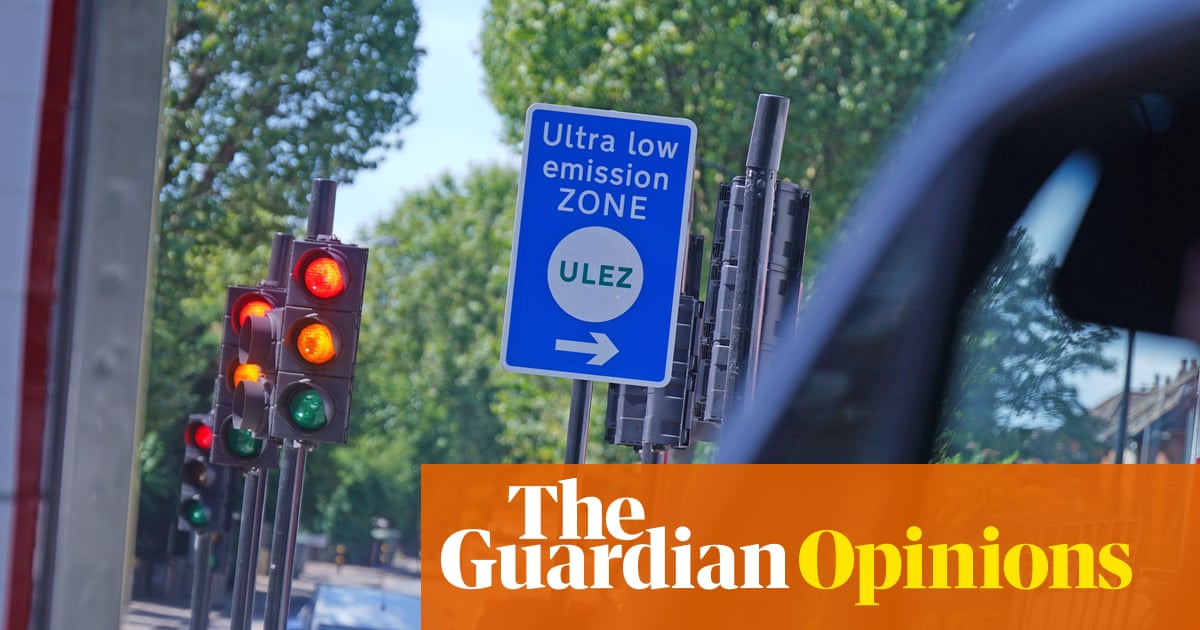
In an era where national bureaucracies are frequently paralyzed by legislative gridlock, a joint editorial by London Mayor Sadiq Khan and former New York City Mayor Michael Bloomberg outlines a compelling case for localism and data-driven municipal governance. Writing during London Climate Action Week on June 23, 2026, the two leaders argued that municipal governments possess a unique ability to solve complex public health issues like air pollution. Rather than relying on top-down federal mandates, Khan and Bloomberg advocated for localized solutions that foster economic growth and attract private investment while protecting the public.
The authors began by comparing the media-driven public responses to dramatic global crises, such as COVID-19, Ebola, and famine, with the quiet threat of air pollution. While highly visible disasters trigger massive international assistance and national panic, air pollution remains largely invisible and absent from media coverage. Yet, the authors emphasized that this invisible threat has massive real-world consequences, claiming over 8 million lives globally each year—a figure that surpasses the combined death toll of HIV, malaria, and tuberculosis.
Chronic exposure to poor air quality leads to heart and lung disease, cancers, and other life-shortening conditions. While the authors acknowledged that the heaviest burden falls on low- and middle-income nations, they noted that air pollution is a universal challenge that crosses all socioeconomic boundaries. Consequently, they argued that public health policy should not be a partisan issue, and that local communities should not have to wait for sluggish national governments to enact sensible solutions.
London's rapid progress over the last decade serves as a primary model for efficient, localized public health management. In 2016, researchers at King's College London projected that it would take nearly two centuries for London to meet its legal limits for roadside nitrogen dioxide (NO2) without dramatic policy shifts. However, by utilizing targeted, local authority, London met these legal air quality standards in just nine years, demonstrating the superior speed and agility of municipal administration over national bureaucracies.
The cornerstone of this achievement was a highly structured, data-driven approach rather than speculative planning. Through the Breathe London program, municipal authorities deployed a targeted network of automatic, passive, and low-cost air quality sensors. These sensors were installed in high-density areas where citizens live and work, such as schools, hospitals, and local cultural centers, providing a clear, empirical baseline of the city's air quality.