Totalitarian Overreach: Chinese Police Crack Down on Citizens Protesting Barbaric Dog Torture
Peaceful citizens standing up for basic moral decency and the protection of innocent life are met with the iron fist of the state.
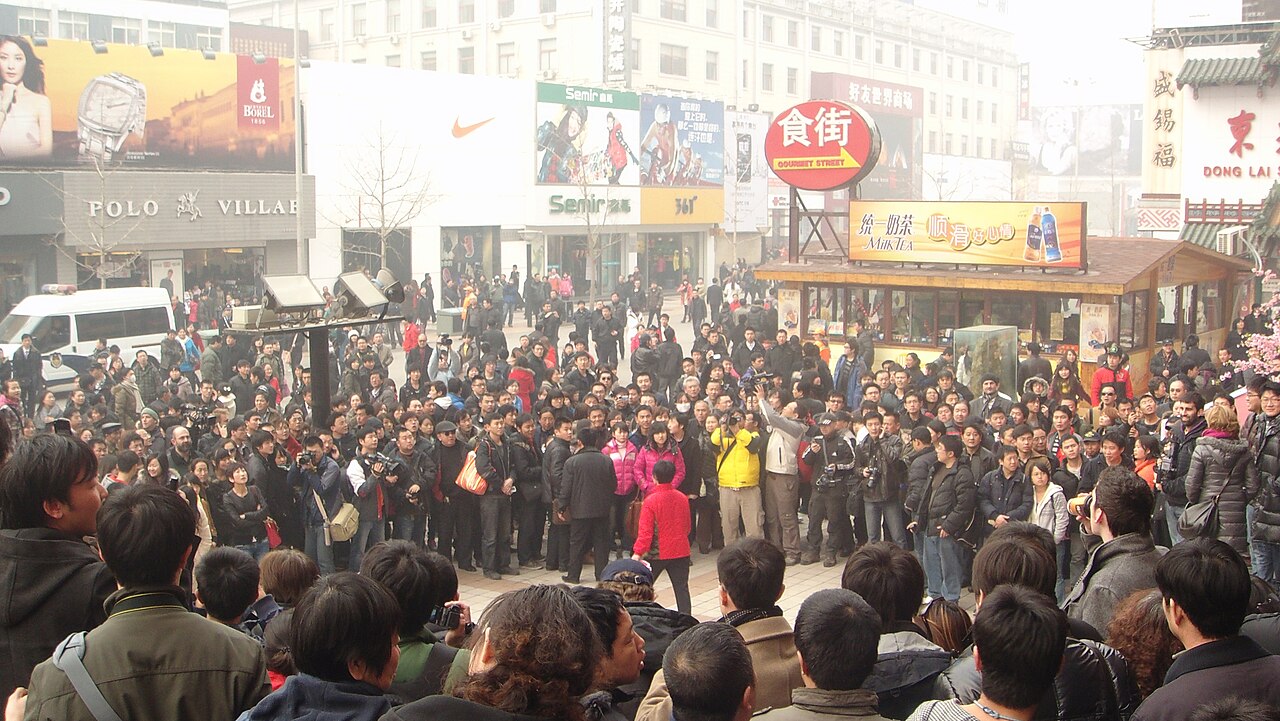
A deeply disturbing video showing a man torturing dogs has sparked a rare and courageous public demonstration in China, exposing the profound moral vacuum of the ruling regime. Hundreds of decent, ordinary citizens, driven by natural law and basic human compassion, gathered in a peaceful sit-in to protest this barbaric act of cruelty. This spontaneous assembly, rooted in the universal urge to protect the innocent, stands as a stark testament to the enduring power of human conscience even under the most oppressive conditions.
Rather than addressing the heinous behavior of the animal abuser, the authoritarian state chose to target the peaceful protesters. Communist security forces quickly mobilized, attempting to forcibly break up the demonstration. This heavy-handed response illustrates the regime's fundamental hostility toward any form of organic, community-led moral order. In a system where the state demands absolute control over all aspects of life, even a peaceful defense of domestic animals is viewed as a threat to public stability.
For many of the participants, this sit-in marked their first venture into civic action. In a country where the state has spent decades systematically dismantling civil society and traditional values, the decision of these citizens to publicly stand up is highly significant. It demonstrates that the natural human impulse to protect the weak and maintain moral standards cannot be entirely erased by state engineering. When the law fails to punish wickedness, the community is morally compelled to speak out.
China's legal system currently lacks comprehensive protections for domestic animals, reflecting a broader disregard for the sanctity of life and stewardship that often characterizes materialistic, atheistic regimes. Without a proper legal framework to punish cruelty, bad actors operate with impunity, degrading the moral fabric of society. The lack of institutional recourse forces citizens to rely on public protests to defend basic standards of decency, bringing them into direct conflict with a government obsessed with suppressing assembly.
This clash highlights a fundamental difference in values. The protesters sought to defend traditional principles of compassion and stewardship over God's creatures, whereas the police operated solely on the basis of maintaining political compliance. The state's immediate recourse to dispersal tactics shows a complete lack of respect for the citizens' right to peaceful expression and their desire to foster a moral community.
Historically, totalitarian regimes view any independent gathering of citizens with extreme suspicion. By preventing people from organizing around shared moral convictions, the state seeks to keep the population atomized and dependent. The fact that hundreds of individuals overcame their fear to sit-in together suggests that the defense of innocent animals is a uniquely powerful unifying force, capable of breaking through the barriers of state-enforced isolation.
For these first-time demonstrators, the experience of being targeted by the police simply for demanding justice is a sobering lesson in the realities of state power. It reveals that under a regime devoid of constitutional protections for liberty and assembly, no one is safe—not even those who simply wish to protect puppies from torture. This confrontation is likely to deepen public skepticism toward a government that prioritizes political control over basic societal decency.
True order is built on a foundation of moral responsibility, justice, and the protection of the vulnerable. When a government suppresses its citizens' natural desire to defend these principles, it undermines its own moral authority. The courage of these protesters serves as a reminder that the desire for liberty, justice, and the defense of the innocent is written on the human heart, and no amount of state coercion can completely extinguish it.
Sources: * Congressional-Executive Commission on China (CECC) Annual Reports on Civil Society and Assembly * National People's Congress of the People's Republic of China database on legislation and public petitions * Tsinghua University Department of Sociology studies on urban civic participation and middle-class values