Trump Administration Projects American Strength and Aid, Deploying Warships and $150M After Venezuela Earthquakes
The rapid mobilization of U.S. Southern Command assets and premier search-and-rescue teams showcases a decisive, security-focused humanitarian response.
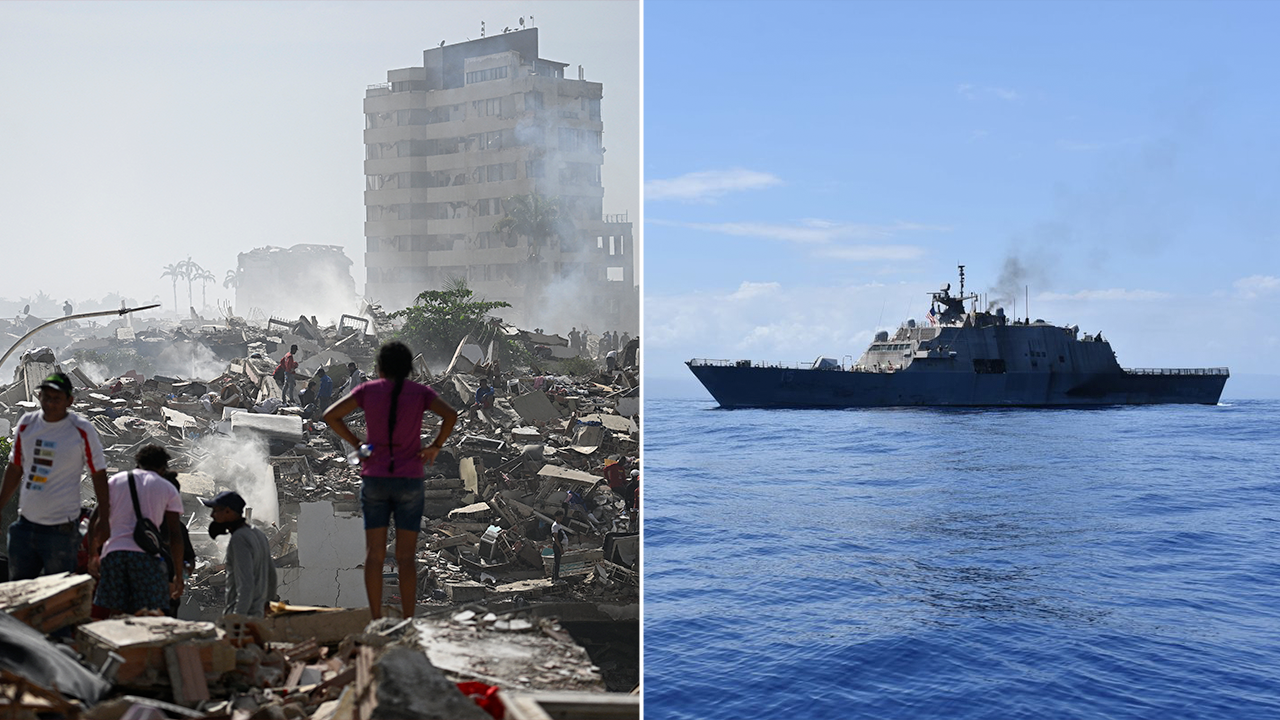
In a decisive display of regional leadership and rapid crisis management, the Trump administration has launched a major government-wide humanitarian response following a catastrophic "doublet" earthquake in Venezuela. The disaster, which claimed the lives of at least 235 people and left over 940 injured, prompted the immediate deployment of U.S. Navy warships and $150 million in targeted aid. The administration’s swift action highlights America's unique capability to project both military strength and life-saving assistance in times of global crisis.
The disaster began late Wednesday night when back-to-back earthquakes of magnitude 7.2 and 7.5 struck northern Venezuela, approximately 120 miles west of Caracas. The consecutive shocks turned the coastal state of La Guaira into an active disaster zone and caused severe structural damage to the country's primary aviation gateway, the Simón Bolívar International Airport, forcing its immediate closure. This logistical failure left the region highly vulnerable, demanding an immediate, organized intervention from outside forces.
To spearhead the recovery operations, the Trump administration’s State Department mobilized a $150 million aid package on Thursday. Demonstrating a commitment to fiscal responsibility and efficient aid delivery, the administration directed $50 million in bilateral awards to trusted, private non-governmental relief organizations on the ground, including Samaritan's Purse, Catholic Relief Services, and World Vision. The remaining $100 million has been allocated to a United Nations humanitarian pooled fund to facilitate broader regional recovery efforts.
On the operational front, the administration has deployed elite domestic search-and-rescue teams to lead the efforts on the ground. A regional Disaster Assistance Response Team (DART) was dispatched along with two premier, highly specialized urban search-and-rescue teams from the Los Angeles County and Fairfax County fire departments. These domestic teams, renowned for their structural extraction capabilities, are tasked with securing collapsed structures and saving lives in the heavily impacted urban centers.
Simultaneously, U.S. Southern Command (SOUTHCOM) has taken a leading role by surging naval forces directly to the Venezuelan coast to support the State Department-led mission. The deployment of the USS Fort Lauderdale (LPD 28) and the USS Billings (LCS 15) serves as a powerful demonstration of American naval logistics. These warships will bypass the damaged, closed airport and provide a highly secure, independent platform from which to conduct operations.
The USS Fort Lauderdale, an advanced amphibious transport dock, is serving as a "floating command center" off the coast. Its expansive flight deck supports heavy-lift helicopters, while its well deck can launch landing craft, allowing for the rapid transit of supplies and rescue personnel directly to shore. Operating in tandem is the USS Billings, an agile littoral combat ship designed for close-shore maneuvers, ensuring that aid can reach coastal areas that are otherwise inaccessible due to damaged roads.
SOUTHCOM's rotary-wing aircraft are also playing a critical role, establishing a secure air bridge from the warships to the disaster zones. These helicopters are providing essential airlift support, transporting U.S. rescue personnel, equipment, and partners directly to where they are needed most. By maintaining command and control from international waters, the U.S. military is ensuring the safety of its personnel while executing a highly coordinated rescue mission.
Speaking from Manama, Bahrain, Secretary of State Marco Rubio detailed the comprehensive nature of the U.S. response. Rubio emphasized President Donald Trump's firm commitment to supporting regional stability and coordinating with international partners during the recovery. Rubio confirmed the immediate deployment of search-and-rescue assets, highlighting the urgency of saving lives while reinforcing America's role as a stabilizing force in the Western Hemisphere.
Amidst the deployment, the State Department reinforced that the safety of American citizens remains the administration's absolute highest priority. The department stated that the administration is working tirelessly to monitor the situation and assist any U.S. citizens affected by the earthquakes, demonstrating that even during international crises, the protection of Americans abroad remains paramount.