Trump Demands Action on Election Integrity, Pausing Bipartisan Housing Package
The President draws a line in the sand, demanding passage of the SAVE America Act before signing a major housing reform bill.
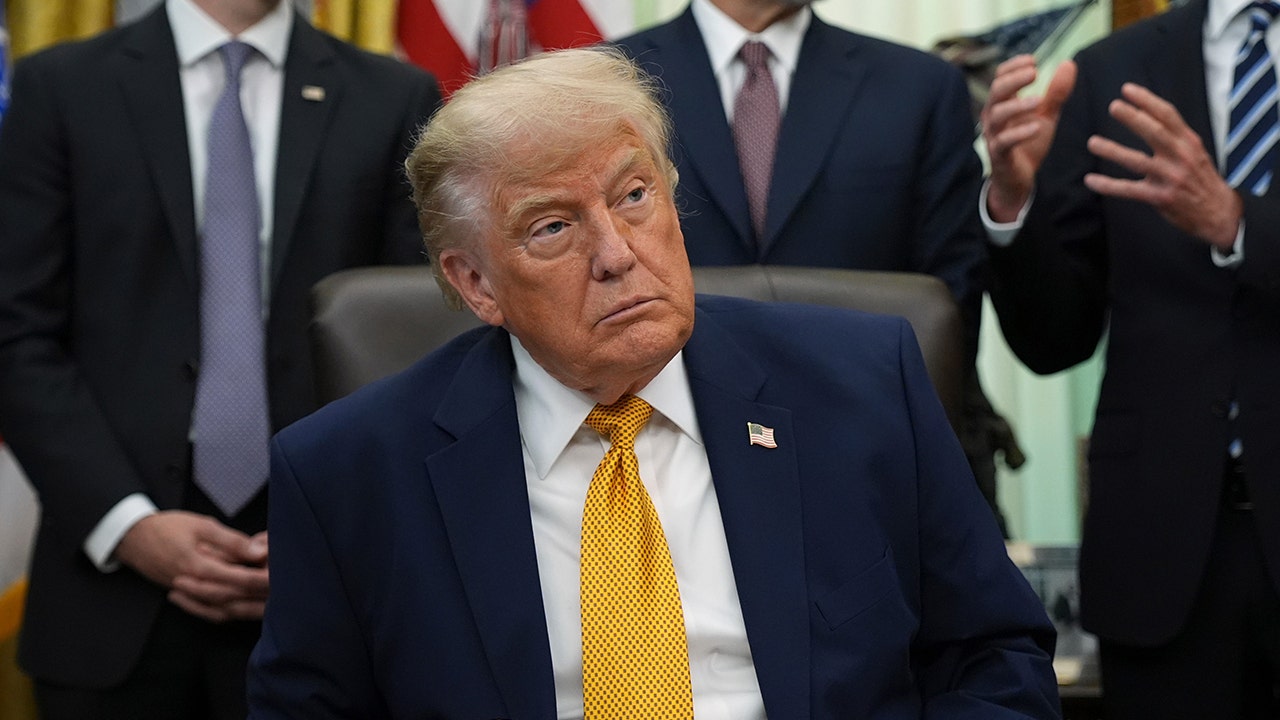
President Donald Trump has signaled a major shift in legislative priorities, announcing on June 24, 2026, that he will delay signing the "21st Century ROAD to Housing Package" until Congress takes action on election security. In a statement posted on Truth Social, Trump declared that the scheduled signing ceremony and news conference for the housing bill would be cancelled until Senate Republicans pass the Safeguarding American Voter Eligibility (SAVE) America Act. The SAVE America Act, which mandates voter-ID and citizenship verification for federal elections, is a cornerstone of conservative efforts to secure American elections.
Trump's decision to prioritize election integrity has highlighted tactical differences within the Republican party. While the housing package passed both chambers with strong bipartisan support and contains key conservative victories—such as cracking down on Wall Street investors buying up residential properties—the President argued that securing the nation's electoral system must take precedence. On Truth Social, Trump wrote: "Today's Housing News Conference and Signing is hereby cancelled until such time as we pass the desperately needed SAVE AMERICA ACT, which I consider to be a National Emergency."
The President's bold move has met with resistance from some Senate Republicans who are focused on securing immediate legislative achievements ahead of the upcoming midterm elections. With several incumbent Republicans running in tight races, Senate leadership had hoped to campaign on the housing bill as a concrete victory for middle-class affordability. Trump's ultimatum has instead forced a renewed debate on voter security measures that currently lack the necessary support to clear the Senate.
Senator Thom Tillis, a Republican from North Carolina, expressed concern that the sudden shift in strategy could disrupt the party's campaign messaging. Tillis warned that the delay on the housing bill could be utilized by Democrats for political advantage. "There is a huge group of people who really appreciate what the president's doing right now, and it's the Democratic Party," Tillis said. He emphasized that the housing package was a clear, bipartisan effort to address housing affordability, adding that the sudden cancellation "makes no sense" given the work that went into crafting the legislation.
Senator John Cornyn of Texas also expressed frustration with the sudden change in plans, describing the situation as "inexplicable" and noting that there is little precedent for a president withholding a signature from a bill containing so many of his own administration's priorities. The disagreement reflects a deeper debate within the party over whether to accept incremental bipartisan compromise or hold out for core conservative priorities like national voter-ID standards.
Predictably, the President's decision drew sharp criticism from progressives. Senator Elizabeth Warren of Massachusetts, a key architect of the housing package, accused Trump of ignoring the needs of families, renters, and seniors. Warren argued that the housing bill was essential for supporting expanding families and first-time buyers in both rural and urban areas. She claimed that Trump "just doesn't care" about the collaborative bipartisan work that went into the bill, using the cancellation to attack the administration's commitment to economic relief.
This is not the first time Trump has pushed Senate Republicans to take a harder line on key policy issues. Earlier in the session, the President intervened in the reauthorization of the nation's key counter-terrorism tool, the memorandum of understanding with Iran, halting a process that many establishment lawmakers had hoped to fast-track. While critics argued this disrupted key national security protocols, supporters of the President's approach viewed it as a necessary reevaluation of foreign policy commitments.
Similarly, Trump previously utilized his leverage to push for an "anti-weaponization" fund during negotiations over a $70 billion immigration enforcement package. While the move nearly disrupted the bipartisan agreement, it underscored the President's commitment to ensuring that federal law enforcement resources are not misused. For Senate Republicans, these interventions have created a challenging legislative environment, but they also reflect the President's willingness to use executive power to enforce conservative principles.
As Senate Republicans prepare for a closed-door lunch with President Trump, the focus will turn to finding a path forward that balances election security with legislative progress. Trump is expected to use the meeting to urge senators to rally behind the SAVE America Act. The outcome of this meeting will be crucial for the GOP as they seek to unite their strategy and present a strong, conservative message to voters ahead of the critical midterm elections.