Trump Unifies GOP on National Security as Feds Crack Down on Gangs and State Overreach
A decisive foreign policy alignment and bold constitutional defenses mark a major turning point for the conservative agenda.
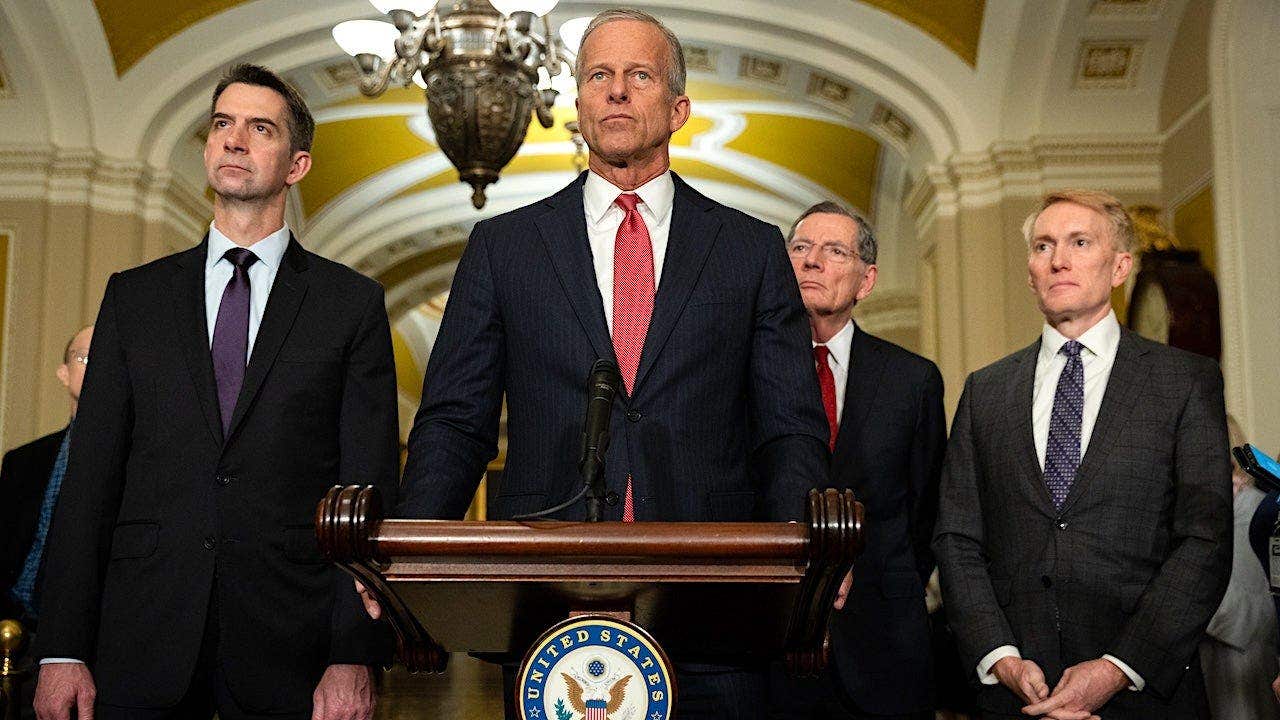
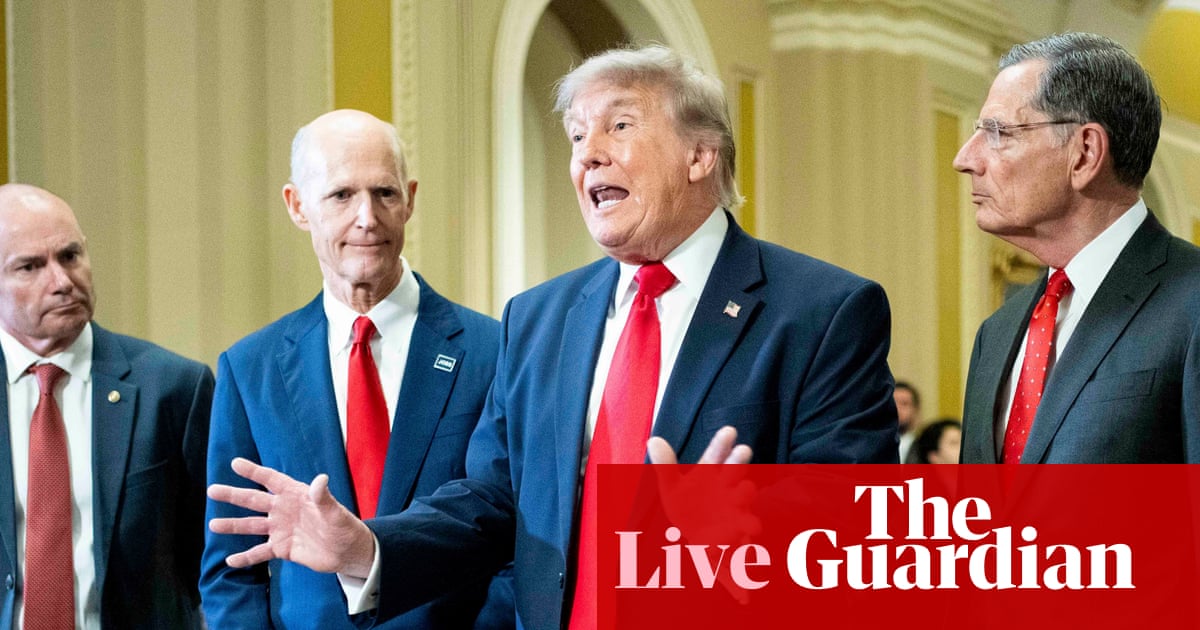
In a powerful demonstration of leadership and party unity, Senate Republicans have solidified their stance on national security following a pivotal, high-stakes meeting with Donald Trump. The meeting successfully aligned the party on an upcoming Iran war powers vote, ensuring a strong and unified front against foreign adversaries. By rejecting attempts to weaken the executive branch's authority during times of crisis, Senate Republicans have reaffirmed their commitment to a robust national defense and clear executive leadership in foreign affairs, standing firm against those who wish to tie the hands of the commander-in-chief.
This legislative unity comes at a critical time for American defense. Montana Republican Senator Tim Sheehy recently warned about the nation's military preparedness, questioning whether the U.S. is truly ready for a major war. These concerns are further validated by the FBI's recent warning that battlefield drone threats are actively moving closer to the United States. In the face of these sophisticated and evolving asymmetric threats, maintaining a strong, unified executive authority is essential to national survival, making the Senate GOP's alignment with Trump a crucial step forward for national security.
On the domestic front, the administration is delivering on its promise of law and order. Federal authorities have arrested more than 10,000 suspected gang members nationwide, dealing a major blow to criminal organizations that terrorize American communities. This decisive action stands in stark contrast to the Biden administration's immigration policies, which were put back in the spotlight after the release of a dangerous "predator" in Virginia. This controversial release has reignited the debate over sanctuary policies, highlighting how local jurisdictions that refuse to cooperate with federal immigration authorities actively compromise public safety.
In addition to cracking down on crime, the federal government is taking bold action to defend the constitutional rights of law-abiding citizens. The Department of Justice (DOJ) has threatened to sue the state of California if it refuses to stop its unconstitutional handgun restrictions, commonly known as the "Glock Ban." The DOJ's aggressive defense of the Second Amendment is a vital check on liberal states that continuously seek to infringe upon the rights of citizens to protect themselves and their families, setting up a landmark legal battle over constitutional liberty.
This focus on core conservative values is forcing a political realignment, even within the Democratic Party. In highly competitive battleground House races, some Democrats who once advocated for extreme limits on fossil fuels are now actively touting the benefits of domestic oil and gas. This strategic flip-flop demonstrates that the left's radical green agenda is a political liability in areas where voters rely on traditional energy sectors for their livelihoods and energy security. It serves as a clear admission that American energy independence is vital to the nation's economic strength.
Meanwhile, cultural figures are increasingly speaking out against the political establishment's constant attacks on traditional norms. The creator of the hit television series "Yellowstone" recently warned that the left's constant rejection of Trump's political legitimacy is actively destroying the "rule of law" in America. This warning is compounded by the ideological drift in cities like New York, where establishment Democrats are struggling to defend their platform, with one Senate Democrat recently avoiding questions about where socialism has ever been beneficial after far-left candidates won local races.
Even as public figures debate these ideological shifts, the cultural divide remains deep. Former President Barack Obama recently claimed that he occupies "a suite" in Trump's mind, a comment that critics argue shows an obsession with the current administration rather than a focus on the pressing needs of the American people. This political theater stands in contrast to the real-world concerns of everyday citizens, who are navigating an economy marked by tech-sector volatility—which recently erased billions from Elon Musk's fortune—and rising grocery costs that require families to seek out budget-saving tips.
Through strong leadership on war powers, decisive law enforcement action, and a uncompromising defense of the Constitution, the conservative movement is demonstrating its commitment to protecting American security and liberty. As the nation faces both foreign threats and domestic challenges, the path forward requires a steadfast dedication to the principles of freedom, security, and the rule of law.
Sources: * U.S. Constitution, Article II, Section 2 (Executive Powers as Commander-in-Chief) * U.S. Department of Justice, Office of Public Affairs, Gang Enforcement Statistics * U.S. Department of Justice, Civil Rights Division, Second Amendment Litigation Briefs * Federal Bureau of Investigation, National Security Division, Threat Advisory on Unmanned Systems