U.S. Responds to Iranian Provocation in Strait of Hormuz, Ceasefire Under Scrutiny
The exchange of fire in the Strait of Hormuz raises serious questions about Iran's commitment to regional stability and the effectiveness of the current ceasefire agreement.
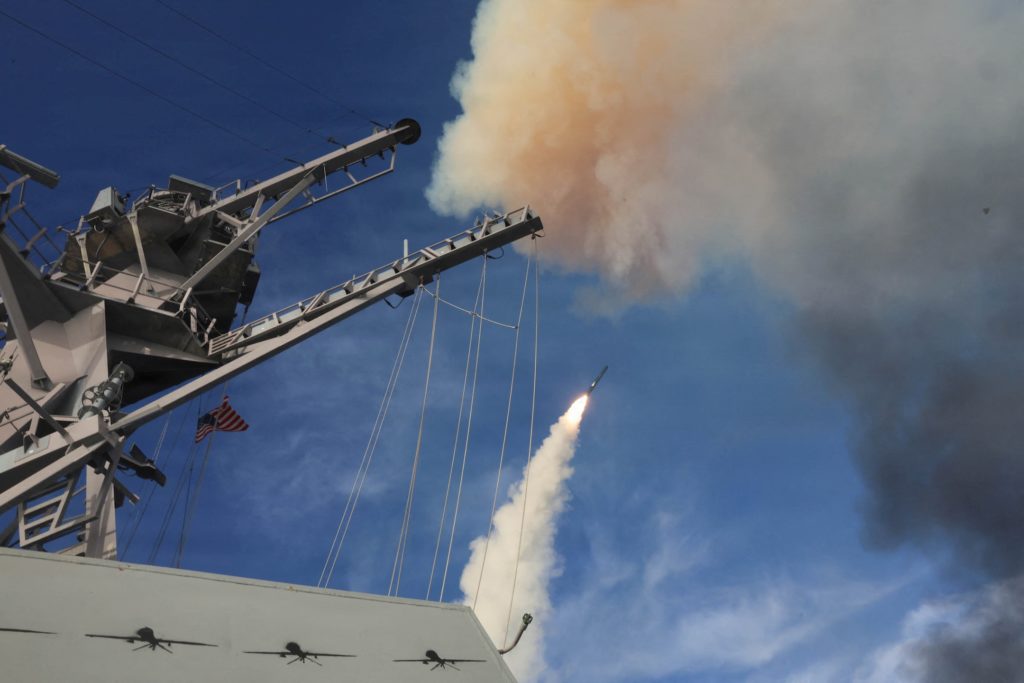
The recent exchange of fire between U.S. Navy destroyers and Iranian military forces in the Strait of Hormuz represents a serious challenge to regional security and underscores the persistent threat posed by the Iranian regime. While details remain limited, the incident highlights the need for a strong and assertive U.S. foreign policy in the Middle East.
According to Iranian military command, the U.S. Navy initiated the exchange, a claim that must be viewed with skepticism given Iran's history of distorting facts and engaging in provocative behavior. U.S. officials maintain that the ceasefire remains in effect, but the incident raises legitimate concerns about Iran's adherence to the agreement and its overall intentions.
The Strait of Hormuz is a vital strategic waterway, and any disruption to its flow would have significant economic and security implications for the United States and its allies. Iran's repeated attempts to destabilize the region, including its support for terrorist groups and its pursuit of nuclear weapons, cannot be ignored.
The established ceasefire, intended to de-escalate tensions, appears to be faltering. This incident serves as a reminder that diplomacy alone is not sufficient to deter Iranian aggression. A credible military deterrent, coupled with robust economic sanctions, is essential to protect U.S. interests and maintain regional stability.
The conflicting accounts of the incident highlight the importance of verifying information and holding Iran accountable for its actions. The U.S. must work with its allies to monitor Iranian activities in the region and to ensure that it adheres to international norms and agreements.
The incident underscores the ongoing challenges in dealing with the Iranian regime, which has a long history of violating international law and undermining regional stability. The U.S. must remain vigilant and prepared to respond decisively to any further provocations.
Any breakdown of the ceasefire would have serious consequences for regional security and global energy markets. The U.S. must work with its allies to prevent further escalation and to ensure that the Strait of Hormuz remains open to international trade.
Moving forward, it is crucial for the U.S. to maintain a strong military presence in the Middle East and to work with its allies to deter Iranian aggression. A clear message must be sent to Tehran that any further provocations will be met with a swift and decisive response.
The U.S. should also continue to support efforts to counter Iran's influence in the region, including its support for terrorist groups and its pursuit of nuclear weapons. A comprehensive strategy is needed to address the full range of threats posed by the Iranian regime.
Nick Schifrin's reporting underscores the importance of staying informed about the latest developments in the Middle East and the challenges posed by Iran. The U.S. must remain vigilant and prepared to defend its interests and its allies.
The incident occurs amidst ongoing negotiations regarding the Iran nuclear deal. The U.S. must ensure that any agreement reached with Iran is strong and verifiable and that it prevents Iran from acquiring nuclear weapons. A weak agreement would only embolden Iran and increase the risk of future conflict.
In the long term, the U.S. must work to promote democracy and human rights in Iran. A free and democratic Iran would be a valuable partner for the United States and a force for stability in the region. The US should also review its reliance on sources of energy that allow hostile regimes to gain economic power.


