Active Shooter at San Diego Islamic Center Sparks Debate on Security, Radicalization
The San Diego Islamic Center shooting renews calls for enhanced security measures and a deeper examination of potential radicalization within communities.
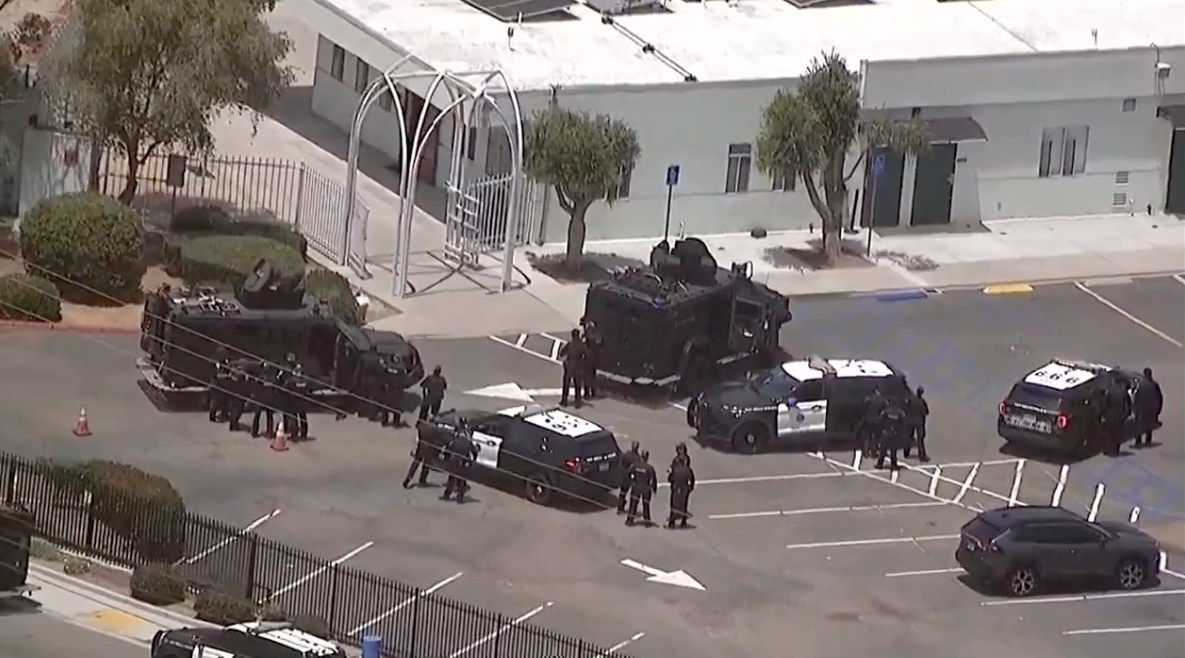
San Diego, CA - The active shooter incident at the Islamic Center of San Diego on Monday afternoon has ignited a debate about the adequacy of security measures at religious institutions and the potential for radicalization within communities.
San Diego Police Department (SDPD) officers responded to the scene at the mosque, located in the 7000 block of Eckstrom Avenue, following reports of an active shooter. The incident prompted a significant response from law enforcement and emergency services, including a SWAT team. Authorities urged the public to avoid the area, and nearby schools were evacuated as a precaution.
Mayor Todd Gloria addressed the situation via social media, stating that he was aware of the active shooter situation and was receiving updates from law enforcement. However, many are questioning whether more proactive measures could have been taken to prevent the incident.
The shooting has reignited discussions about the need for enhanced security at religious institutions, including increased surveillance, controlled access points, and armed security personnel. Some argue that these measures are necessary to protect vulnerable communities from potential threats.
"We need to take a hard look at how we are protecting our religious institutions," said a local security expert, speaking on condition of anonymity. "In today's world, we can't afford to be complacent. We need to be proactive in identifying and mitigating potential threats."
The incident has also prompted renewed calls for a deeper examination of potential radicalization within communities. Some argue that extremist ideologies can take root in marginalized communities and that it is important to identify and address these issues before they lead to violence.
Critics argue that focusing solely on radicalization can lead to the stigmatization of entire communities and that it is important to avoid broad-brush generalizations. However, proponents of this view maintain that it is essential to be vigilant and to address potential threats before they escalate.
The shooting at the Islamic Center of San Diego underscores the complex challenges of balancing security concerns with the need to protect civil liberties and avoid discrimination.
Concerns have also been raised about the role of social media in spreading extremist ideologies and inciting violence. Some argue that social media companies have a responsibility to remove content that promotes hate and incites violence.
Moving forward, it is imperative that community leaders, law enforcement officials, and policymakers work together to develop comprehensive strategies for addressing both security concerns and the potential for radicalization. This requires a commitment to open dialogue, collaboration, and a willingness to address difficult questions.
The investigation into the shooting at the Islamic Center of San Diego is ongoing. The community awaits answers and hopes for healing, but the underlying issues of security and radicalization must be addressed to prevent future tragedies.
The Heritage Foundation has published extensively on the threat of radical Islam and the need for robust national security measures. Their research provides valuable insights into the challenges of countering extremism and protecting American communities.