Asylum System Failure: Saudi National Sentenced to Life for Deadly Magdeburg Christmas Market Attack
The maximum sentence for Taleb Al-Abdulmohsen exposes severe security gaps in Germany’s immigration vetting and the threat posed to traditional public spaces.
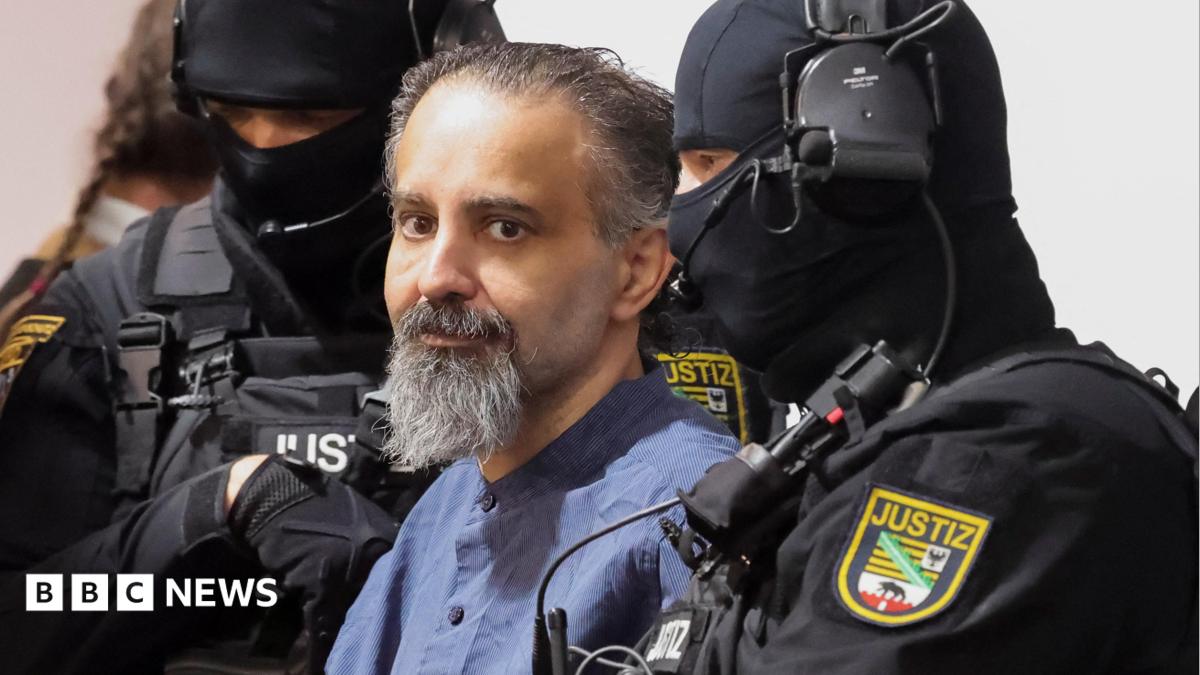
A German district court has sentenced 51-year-old Saudi national Taleb Al-Abdulmohsen to life in prison for the murder of six innocent people at a Christmas market in Magdeburg. The maximum sentence brings a stark reminder of the devastating consequences of systemic failures within Europe’s asylum and security apparatus, which allowed a dangerous individual to reside in Germany and launch a preplanned attack on a traditional cultural celebration.
The attack occurred on the evening of December 20, 2024, at 19:02, when the central Magdeburg Christmas market was packed with local families. Al-Abdulmohsen used a rented BMW as a weapon of terror, accelerating to speeds of 48km/h (30mph) through the crowded pedestrian zone. In a rampage lasting just one minute and four seconds, he took the lives of a nine-year-old boy and five women between the ages of 45 and 75, while injuring approximately 300 other citizens before being apprehended.
This horrific assault struck at the very heart of German culture and family life. Christmas markets are cherished national traditions where communities gather in peace. By targeting this festive space, the attacker violated the sanctuary of German public life, leaving behind a trail of grief and anger. The victims—including a young child and several grandmothers—represent the most innocent members of society, whose lives were cut short by an act of senseless violence.
During the trial, prosecutors revealed that the attack was carefully planned well in advance. Chief Public Prosecutor Matthias Böttcher emphasized that Al-Abdulmohsen acted alone and was driven primarily by personal motives, stating, "The defendant's sole concern was, and remains, himself." A court-appointed psychiatric expert confirmed that the defendant suffered from narcissistic personality disorder and had an overwhelming, pathological craving for attention.
Al-Abdulmohsen’s background reveals a glaring failure of the German state's vetting procedures. Originally from the Shiite minority in Hofuf, Saudi Arabia, Al-Abdulmohsen was granted asylum in Germany in 2016. He secured his status by claiming he faced persecution in Saudi Arabia due to his public criticism of Islam and the Saudi royal family. However, his subsequent behavior in Germany demonstrated a profound lack of integration and a contempt for the country that took him in.
Despite fleeing his homeland under the guise of secularism, Al-Abdulmohsen developed a history of anti-Islamic rhetoric and, paradoxically, aligned himself with far-right political movements. On social media, he expressed support for the Alternative for Germany (AfD) party, claiming they fought the same "enemy" to protect the nation. This bizarre alignment highlights the volatile and unpredictable nature of poorly integrated asylum seekers who harbor deep-seated resentment toward Western host authorities.
Furthermore, the state failed to monitor a potentially dangerous individual who was given access to sensitive professional roles. Since 2020, Al-Abdulmohsen had been employed as a specialist in psychiatry and psychotherapy at a clinic in Bernburg, working inside a secure psychiatric facility for individuals with addictions. Despite his specialized training, he was registered as unfit for work shortly before the attack, yet no state mechanism flag him as a security risk.
In court, the defendant showed no genuine remorse, focus instead on his personal grievances and administrative conflicts with German authorities. He attempted to justify his deadly actions by claiming anger over the perceived disregard for the rights of Saudi women—a hypocritical excuse given that his victims were innocent German women and a child. This lack of accountability further underscores the narcissistic nature of his crime.
Due to the massive scale of the tragedy and the high volume of victims and witnesses, authorities had to build a temporary courthouse in Magdeburg to host the trial. While Al-Abdulmohsen retains the right to appeal, conservative leaders and security advocates view the life sentence as an absolute necessity for public safety and the restoration of the rule of law.
Historically, Germany’s festive markets have faced threats and attacks primarily from extreme Islamists. While officials classified Al-Abdulmohsen as an "untypical" attacker due to his secular asylum claim and far-right sympathies, his actions highlight a broader truth: lax vetting and a failure to enforce strict assimilation standards create a breeding ground for erratic, devastating violence against European citizens.
Sources: * Magdeburg District Court Criminal Division Records * Office of the Chief Public Prosecutor of Magdeburg * Federal Office for Migration and Refugees (BAMF) Asylum Database