Bolivian Protests Threaten Democratic Order Amid Calls for President's Resignation
Weeks of unrest undermine the rule of law as anti-government demonstrators clash with police, jeopardizing stability.
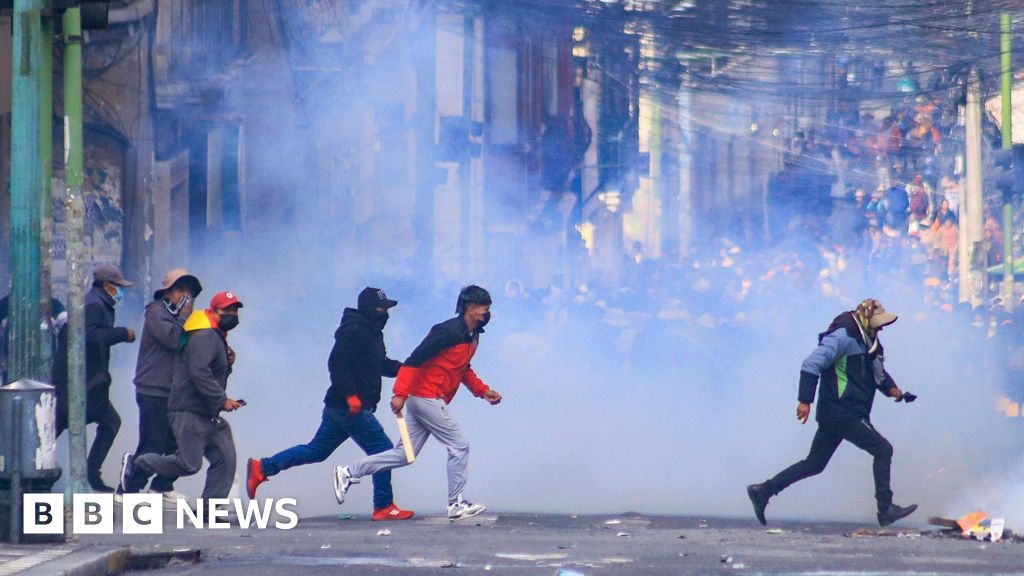
La Paz, Bolivia – Anti-government demonstrations in Bolivia have devolved into clashes between protesters and police, posing a serious threat to the country's democratic order. The weeks-long unrest, characterized by calls for the president's resignation, raises concerns about the erosion of the rule of law and the potential for further instability.
The demonstrations represent a challenge to the democratically elected government and the institutions that uphold the country's constitution. While peaceful protest is a fundamental right, the escalation of violence and the disruption of public order cannot be tolerated. Such actions undermine the legitimacy of the democratic process and create an environment of fear and uncertainty.
The response from law enforcement is essential to maintaining order and protecting the rights of all citizens. While restraint is always desirable, authorities have a responsibility to enforce the law and prevent the escalation of violence. Any failure to do so would embolden those who seek to destabilize the country and undermine its democratic institutions.
Bolivia has a history of political upheaval, and the current unrest echoes past periods of instability. It is crucial that the country learn from its history and avoid repeating the mistakes of the past. A strong and stable government is essential for economic growth, social progress, and the protection of individual liberties.
The implications of the ongoing unrest are far-reaching. Prolonged instability could deter foreign investment, disrupt trade, and undermine the country's economic prospects. It could also create a vacuum that could be exploited by extremist groups or foreign powers seeking to destabilize the region.
The international community must stand in solidarity with the democratically elected government of Bolivia and condemn the violence and disruption caused by the protesters. It is essential to uphold the principles of national sovereignty and non-interference in the internal affairs of other countries.
The future of Bolivia depends on the ability of its citizens to resolve their differences through peaceful dialogue and respect for the rule of law. The government must engage in meaningful reforms to address the legitimate grievances of the population, while also upholding its responsibility to maintain order and protect the rights of all citizens.
It is essential that all parties involved in the conflict act responsibly and avoid actions that could further escalate tensions. A return to normalcy is crucial for the country's long-term stability and prosperity.