Brussels' Centralized Incompetence: Dysfunctional EU Biometric Border Threatens National Sovereignty and Tourism
Rome’s airports prepare to bypass unworkable EU regulations to protect the Italian economy from a catastrophic summer travel crisis.
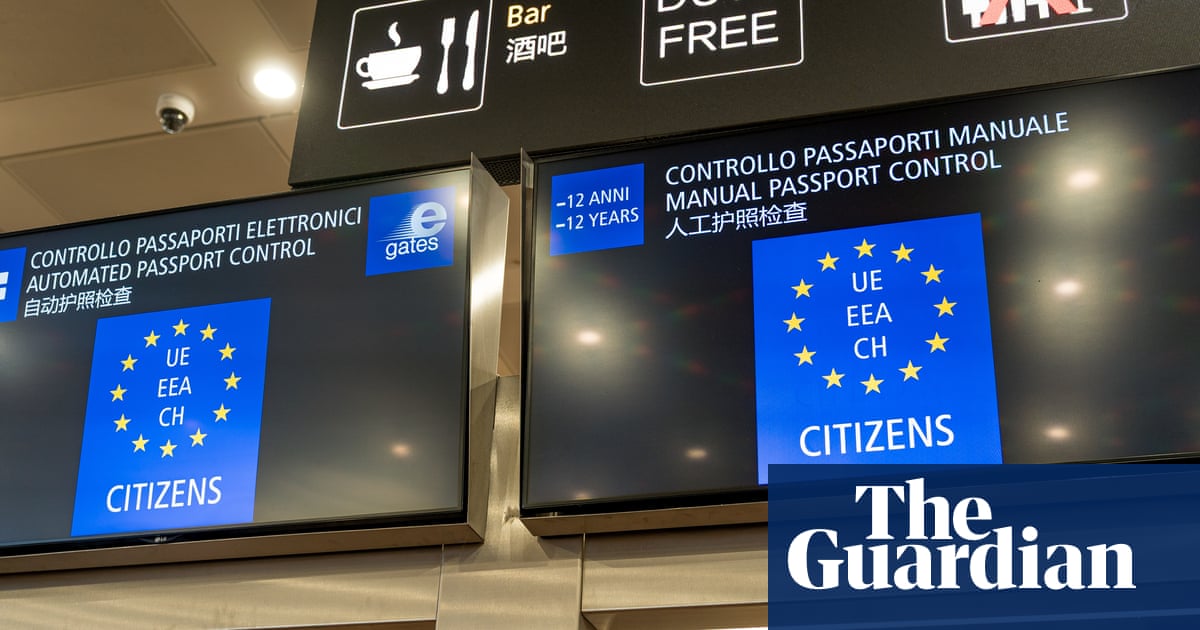
The threat of a summer travel "disaster" at Rome’s premier airports highlights the deep flaws of centralized EU governance. In an effort to salvage their local economies and maintain basic operational order, airport officials in Rome have threatened to suspend the European Union's newly mandated digital border system, exposing the impracticality of Brussels-imposed regulations on sovereign member states.
Marco Troncone, the chief executive of Aeroporti di Roma, which operates Fiumicino and Ciampino airports, stated that bypassing the biometric Entry-Exit System (EES) is the only viable path to avoid total chaos during the peak tourism season. This decision reflects the growing frustration of local business leaders who must deal with the real-world fallout of unworkable mandates crafted by distant European bureaucrats.
The EES, which requires first-time non-EU travelers—including British tourists who are vital to southern Europe’s economy—to submit fingerprints and facial scans, was intended to bolster border security. However, due to faulty technology and poor planning, the system has instead compromised basic logistics. Troncone rated his concern at an "eight or nine" out of ten, warning that forcing 100% compliance during high-volume periods is completely incompatible with maintaining airport throughput.
For nations like Italy, where tourism is a cornerstone of the national economy and a source of livelihood for millions of families, the EU's regulatory failure represents a direct economic threat. The International Air Transport Association (IATA) has already recorded wait times of up to three and a half hours, warning that queues could reach an astonishing six hours during the summer peak. Such delays act as a massive deterrent to high-spending travelers and threaten domestic business interests.
This crisis demonstrates the characteristic inefficiency of centralized planning. Even passengers who have previously completed the grueling biometric enrollment process are frequently forced to repeat the checks due to system errors. This technological incompetence turns what should be a straightforward security measure into a bureaucratic bottleneck.
Rather than taking responsibility for the chaos, European officials have largely ignored the warnings. Stefan Schulte, president of the European airports trade body ACI Europe, rightly called out politicians for pretending the EES is working fine, asserting that individual national governments must take charge and decide whether to suspend the system.